

Warning: this post discusses body image issues, treatment, and experiences. If this is a triggering discussion for you, please move on from this post. Always seek medical guidance from a professional following the best guidance from your physician. Be smart.
Last month, I discussed quite openly my own personal struggles with body dysmorphia and my weight. In this post, I also discussed something called fat bias which is defined as “… the prejudicial assumption of personality characteristics based on an assessment of a person as being overweight or obese.” This definition also had the term fat phobia which one study defined as “… a pathological fear of fatness.” I described how my unconscious fat bias was at the center of insufficient medical treatment and resulted in my own spiral of depression and psychologically-disordered thinking; I, too, was fat-biased against myself. 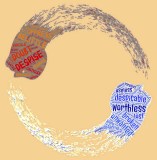 My own personal negative thinking was out of control and virtually undetectable except in bitter self-talk that was so ingrained, this talk “looped” into my own pattern of thinking…and to what I now realize is a heightened sense of shame.
What I did not touch on was how prevalent bias is how it impacted my own sense of self. Apparently, based on this study, affiliated with Yale University’s Department of Psychology professionals, this is not an unusual situation. The study states that, for “…although the strength of weight bias decreased as respondents’ body weight increased, a significant degree of anti-fat bias was still evident among even the most obese group of respondents, highlighting the pervasiveness of this bias.” This level of bias is rampant in our society because people don’t want to be fat and would actually give up a year of their life or divorce their partner to avoid being overweight. I inherently knew this, having been fat since I was born at 9+ pounds. I endured these feelings as a young child and teenager until I adopted them about myself. The feeling of separateness went away after that because I had adapted my own perspective to them so they assimilated into my own personal perspective of self. What an unfortunate event to join! To see this in writing, in a scientific study, just plain scared me into a better perspective…for myself. This is the reason I’m sharing this thinking in these posts that, hopefully, it may also help you, Dear Reader.
In my journey to form a better opinion of myself by myself, I recently found a YouTube channel from an brave and inspiring young woman who is recovering from anorexia nervosa which, one might think, is the total opposite of being obese. However, I found that her honest struggle discussion took on a decidedly similar tone to some of my own thinking relating to body image issues. How interesting a correlation yet no one really discusses that both of these psychological disorders seem to be two sides of the same coin. So that we are all on the same page, I wanted to review what is meant by “body dysmorphia” or “body dysmorphic disorder.” Body dysmorphic disorder is defined by this study as “…a distressing and impairing preoccupation with an imagined or slight defect in appearance.” The study continues to provide greater context on this disorder by noting that “…recent research findings indicate that body dysmorphic disorder is relatively common, causes notable distress and impairment in functioning, and is associated with markedly poor quality of life.” Oh, hallelujah.
My treatment was medical intervention on my 30th birthday. That fact was not random for I decided that I was not going to repeat my errors thus far and I wanted a better and improved life…which included drug treatment. This short-term treatment and diagnoses gave me the decided mental boost I needed sufficient for me to realize that I no longer needed to feel the way I did. I did not, however, have much formal cognitive-behavioral therapy and sought this out on my own, in my own timing, and at my own pace. That is how we arrived at this point in my life, decades later. Now, how do I sum this all up into a simple statement?
Unconscious self-bias matters.
In doing my research for this post – mostly to help myself find a sense of balance in this important topic- I’ve found this article in the New York Times which includes information from Dr. Rebecca M. Puhl and colleagues at the University of Connecticut, Rudd Center for Food Policy and Obesity – the study is also linked below:
Stigmatization is associated with more frequent binge eating and other “maladaptive eating patterns,” Dr. Puhl reported in a comprehensive review of the subject in the American Journal of Public Health. “In a study of more than 2,400 overweight and obese women who belonged to a weight loss support organization,” she wrote, “79 percent reported coping with weight stigma on multiple occasions by eating more food, and 75 percent reported coping by refusing to diet.”
Furthermore, experiencing weight stigma can result in a poor self-image, depression and stress that in turn increase the risk of poor eating habits and difficulty losing weight and keeping it off. People can internalize weight stigma, blaming themselves for their excess weight and the social discrimination they experience.
Dr. Puhl’s study along with other studies also concluded that “…overweight and obese people who experience weight-based bias and who manage to lose weight are less able to maintain their weight loss.” So, despite all odds, you successfully remove your excess weight and now are against the odds for maintaining said weight loss. So, how does one get help for this disorder? Personally, I found very little help from my doctors and therapists whose guidance was always, exercise more, restrict your food intake, and be happier.  Really? What is shocking is how bad this guidance is because wouldn’t any reasonable person think that, if I could do this, I would do this? Does my doctor or therapist really think I like being obese? If you’d taken the time to actually pay attention to me, you’d realize that I’m a highly intelligent and educated woman who is struggling. There was another answer for me and I couldn’t find a decent medical professional to actually help me.
Well, that, apparently, should not have been a surprise to me. In an article from the American Psychological Association, January 2004, Vol 35, No. 1, the following quote under “hidden bias” really helped me to see that the lack of proper medical treatment was not my fault. While I knew that there was an inherent bias, I had no idea how prevalent this bias really was in our society. Check THIS data – I’ve added the bold words for emphasis:
Particularly alarming are findings that even specialists in obesity fall prey to negative associations when working with obese patients. For example, a recent study found that even health professionals–including psychologists–who specialize in obesity often used words such as “lazy,” “stupid” and “worthless” to describe obese people they come into contact with in their personal and professional lives, according to a September 2003 study published in Obesity Research (Vol. 11, No. 9) by Marlene B. Schwartz, PhD, Heather O’Neal Chambliss, PhD, Kelly Brownell, PhD, Steven N. Blair and Charles Billington, MD. The researchers used a self-report questionnaire and the Implicit Associations Test–a timed measure to test automatic biases–to assess the attitudes of clinicians and researchers who work with obese patients.
Wow.
So, let’s get down to the “brass tacks” of this issue. People could suffer bias for their size their entire life, creating their own sense of self-bias, only to seek help from someone who also has this bias? That’s right, folks. Chilling, isn’t it? Given this is such a prevalent bias in our society, how likely is it that one may find a counselor without said bias? I’d argue that this is highly unlikely and to the detriment of the individual who is may be truly suffering both mentally and physically.
Another study actually measured the impact of weight bias and stigma on quality of care and outcomes for patients with obesity. [I know this because this is the exact name of the study.]
Many healthcare providers hold strong negative attitudes and stereotypes about people with obesity. There is considerable evidence that such attitudes influence person-perceptions, judgment, interpersonal behavior and decision-making. These attitudes may impact the care they provide. Experiences of or expectations for poor treatment may cause stress and avoidance of care, mistrust of doctors and poor adherence among patients with obesity. Stigma can reduce the quality of care for patients with obesity despite the best intentions of healthcare providers to provide high-quality care.
I’m just going to leave this right there. I had another study to highlight about this and realized that there is such a wealth of data out there to support this that all you, Dear Reader, need to do is “Google” “fat bias” and see what you find.
 So, now that you are educated in this area, why don’t you examine if you, too, have a fat bias? If you struggle with your weight, honestly consider if a fat bias is preventing you you from realizing your own goals. How might decades of ingrained thinking be impacting you? Are you looking for that magic pill to fix your situation? (Don’t, there isn’t one.) Be kind with yourself and accept that we are all trying our best and that you are a product of your environment and perceptions, self including. It is my hope that this information helps you to fight for what you need and to not let someone else’s – or your own – bias prevent you from living the life you were meant to live. Peace.
UPDATE: From May, I indicated I was going to begin a low carbohydrate way of eating to help my own health. I began slowly by substituting my breakfast with a more “ketogenic” style of eating. After two weeks, I began to incorporate my lunches in a similar style. While not fully ketogenic, I was eating a reduced amount of sugar and simple carbohydrate and saw some immediate positive results. I noted my psoraisis is less-inflamed and its spreading seems to be lessened, my moods and focus improved. I began my full ketogenic diet on June 1, 2020, and have kept to between 20-60 grams of “net” carbohydrates in any day. My mental fogginess has really lessened and my depression eased. My mood is much better and I think I’m laughing a bit more. I’m enjoying the experience and am excited to see where this journey to renewed health is taking me. This fact is extremely important to me.
 The Wobble