

In New York State, we have what are called ‘service roads’ on the side of some of the parkways. When I first moved to the East coast, this was a new phenomenon that I witnessed mostly on Long Island; these are streets that run parallel to the main road and allows people to enter and exit without many barriers. This also allows emergency vehicles to easily bypass traffic snarls to get to the problem. I see my gut health journey very similarly where I am the road, the traffic becomes snarled, and I take the service road to exit and try and address the cause of the traffic snarl. I’ve been on this road a long time and have had many traffic jams where the service road, or alternative thinking, allowed me to bypass the snarl and continue on my journey. The second milemarker is an important one because these issues are foundational, and I have discovered that fixing my gut may be key to my overall health improvement.

My gut issues began as a teenager, caused by both anxiety (I will explain this in a later post from Depression/Anxiety Lane) and overuse of antibiotics for teenage cystic acne. (I was on tetracycaline for almost a year. The acne was, I believe, a result of overeating of processed foods. My mother told me it was too much chocolate. I hate to admit that she was somewhat correct but I’ve discovered that my issues were both sugar and, more recently, the common oil ingredients found in processed foods.) As a child, I also suffered from mysterious allergies that caused sinus issues, headaches, coughing, mouth lesions, and assorted hay fever type of sympoms. Additionally, around the age of five, I was exposed to an outbreak of some bacteria from a public drinking fountain. This was also immediately treated as I had developed significant painful and puss-filled lesions in my mouth and was told to gargle with hydrogen peroxide. I cannot recall if I was given any other medications for the bacteria exposure; I do recall I started an alert for the local health department. 😀 For my ‘sinus conditions’, the doctor prescribed ‘Dimetapp’ which was only available by prescription. The year was 1969-ish and I drank this sweet grape syrup for years between the ages of 6 and 10. As a child, I was not allergy tested as the Dimetapp seemed to handle the effects of whatever was ailing me and the thought was that these symptoms would be outgrown.

I believe that these treatments had negative impacts to my gut which was exacerbated by food sensitivies yet to be diagnosed. These two factors (use of antibiotics and allergy medications) created a soup of sugar dependency and food sensitivities that ultimately lead me to a number of medical conditions including cancer. When I began to present with my first stomach issue, I was 16 years old. I took myself for my first ‘adult’ appointment to a gastroenterologist who gave me a diagnosis that, frankly, I don’t even remember. I think I was told to use antacids and needed to buy stock in the Tums company. Wouldn’t diet have been a topic that should have been covered? My weight had skyrocketed from 140 to over 215 pounds in about three years. This event, too, was seen as a my ‘personal failure’ by the medical establishment – and it never occurred to anyone to question this assumption. The only guidance I was provided by my family, friends, and doctors: Don’t eat as much. (This should have been called “How to Develop an Eating Disorder.”) In looking back, I recognize (and, importantly, accept) that volume of food was never my issue. I’m learning that it was the type of food and how my body reacted to it. My choices as a teenager and adult leaned into processed (fast) foods even though my genetics really would not support these ‘foods.’ I was raised differently. In hindsight, I had become addicted to the sugar “high” of the processed carbohydrate, and the resulting hormonal imbalances.
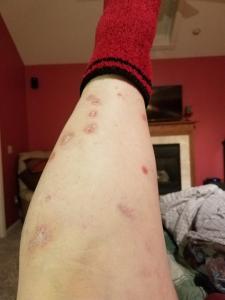
In my twenties and thirties, I had GERD, acid reflux, and all kinds of biological responses that were so innumerable, I can’t even recall the path. I also presented with physical symptoms resulting from massive stress, both physical and mental. I was diagnosed with PCOS having suffered through all kinds of female hormonal disasters. Again, no help. I received a seasonal affective disorder and body dysmorphia diagnosis at 30, or depression. (I have learned that this, too, for me, is gut related.) At 35, I was diagnosed with metabolic syndrome and was told there was nothing that could be done. (I now have learned that this is not true. My current endocrinologist who has diagnosed me with pre-diabetes stated that this diagnosis should have been a ‘heads up’ for me.) High blood pressure, thyroid cancer, gallbladder removal, and the psoriasis were clear signs – if someone were paying attention – that there was something significantly wrong. We treat each issue as its own problem, don’t we? Why would we do this if these symptoms are all in one person?
What I realize now in reviewing my journey, this viewpoint resulted in mistreatment by the medical establishment. My ‘issues’ were never seen as a part of something else because that physician was only focused on my gastric condition and not my overall health; there was too much volatility in my daily condition to really give an accurate diagnosis. Food, however, fed this variability but was never seen as part of the problem. The doctor did not consider what got me to their office examining table which, in my opinion, needs to be part of the assessment conversation. The term for this type of practice is ‘functional medicine’ However, our medical establishment does not focus on prevention but on treatment. In this article for a pre-natal care study, six countries with varying medical systems demonstrate that the cost of these systems for preventative treatment is more beneficial than the U.S. model of treating once diseased. Given the costs, it would appear that prevention has a greater financial benefit to a system that is based on treatment. While the study is old, another more recent study that discusses prevention actually created a quasi-road map to improving preventative treatment. Instead, the U.S. government attempts to gut these provisions. (Yes, that is true.) This behavior does not create a positive prognosis for the future of preventative health management. It is the younger generation which concerns me for they may not have the perspective needed to properly evaluate and challenge bad doctoring. This happened to me in 1979, and continues today.
Dietary restriction has always been the answer I was provided for most of anything that I had which required medical attention. Sprained ankle? You need to lose weight. Psoriasis? What are you doing to lose weight? I actually had a doctor ask me if I knew what a carbohydrate was…I told him that I did not get this weight by not understanding eating. In fact, I felt that doctors actually blamed me for my illnesses or injuries, having written me off based solely on my weight. The self-blame (really, it is shame) I used to carry is now gone for I understand that I was caught in a “Catch 22” of self-blame (shame) which caused my disordered eating views and the physical cravings for more sugar. In working to eliminate the self-blame (shame), I realized that the idea of restriction is an old style of thinking and does not work for my long term health. However, I do need to change my eating to help my gut which may include some form of restriction or ‘moderation’, right? My thinking has always focused on a mindset of: Eat ‘right’, exercise, and stay away from ‘bad’ foods. My knowledge included what should have been my course of action yet I could never take any action! To anyone who listened, I used to say that if I could figure out my ‘how’ I would be successful. In many ways, I was waiting for the momentum to be created and, finally, recognized that I needed to create my own momentum. The momentum created my ‘how’ – and this realization is what I wish for you.
How is this done, you may ask? I think I have found my own answer – and this is the key. Individual assessments must be made which cannot be ‘wholesalely’ marketed. (Again, prevention is hard to sell.) And, don’t underestimate your current mental state and the impact of your diet! While this post is a discussion of gut health, there is a correlation between gut health and mood or personality disorders. If the gut ‘feeds’ one’s mood disorders, how does one break a cycle of poor self image? In 1979, there was no path forward for me. In 2023, however, I now have a path forward. It took 44 years but I think I finally have an answer. What I now realize in writing this series of posts regarding my current journey, there was no consideration for me, as a teenager, presenting with very severe symptoms. I was compartmentalized into a medical ‘type’ and written off as having a self-induced sick when I followed medical guidance and guidance on a proper diet. Weight was not seen as a medical result of something but of a personal failure.
And, here is a more recent example of said failure which solidified these viewpoints. In my last doctor visit in March of this year, the proverbial camel’s back was broken by that psoriatic straw. In this visit, my psoriasis was, apparently, a surprise; I was asked if I needed a dermatological referral. I actually thought she was joking as I had been seriously discussing this with her for YEARS. YEARS! I decided I was done and the realization that I was on my own in helping myself became a drum beat or cadence on how I was going to move forward. My path is now clear.

Footnote: As I write this, I’m down 32 pounds and not through restriction. I’m making smart choices and determining what foods help me to thrive, and those which do not. I’m feeding my body what it likes to perform at its best. Interestingly, I learned that soybean oil makes me really sluggish and depressed. I also found I’m sensitive to sunflower oils which give me cramping, GERD, diarrhea, and, frankly, also foul mood. (With all of that bathroom stuff going on, it’s no wonder I was cranky! LOL) And, in doing my own reconnaisance, I found that sunflower oil is in a lot of our foods because it is supposedly superior. (Note who sponsored this story.) There is also science that debunks the current belief that seed oils, including sunflower oil, are bad for you. What isn’t discussed are the possible food sensitivities a person may have because the gut is not right. (BTW, this link is a very interesting article from the Cleveland Clinic that should be required reading for anyone with a stomach.) The moral of this story? Don’t accept the status quo. Follow your gut.








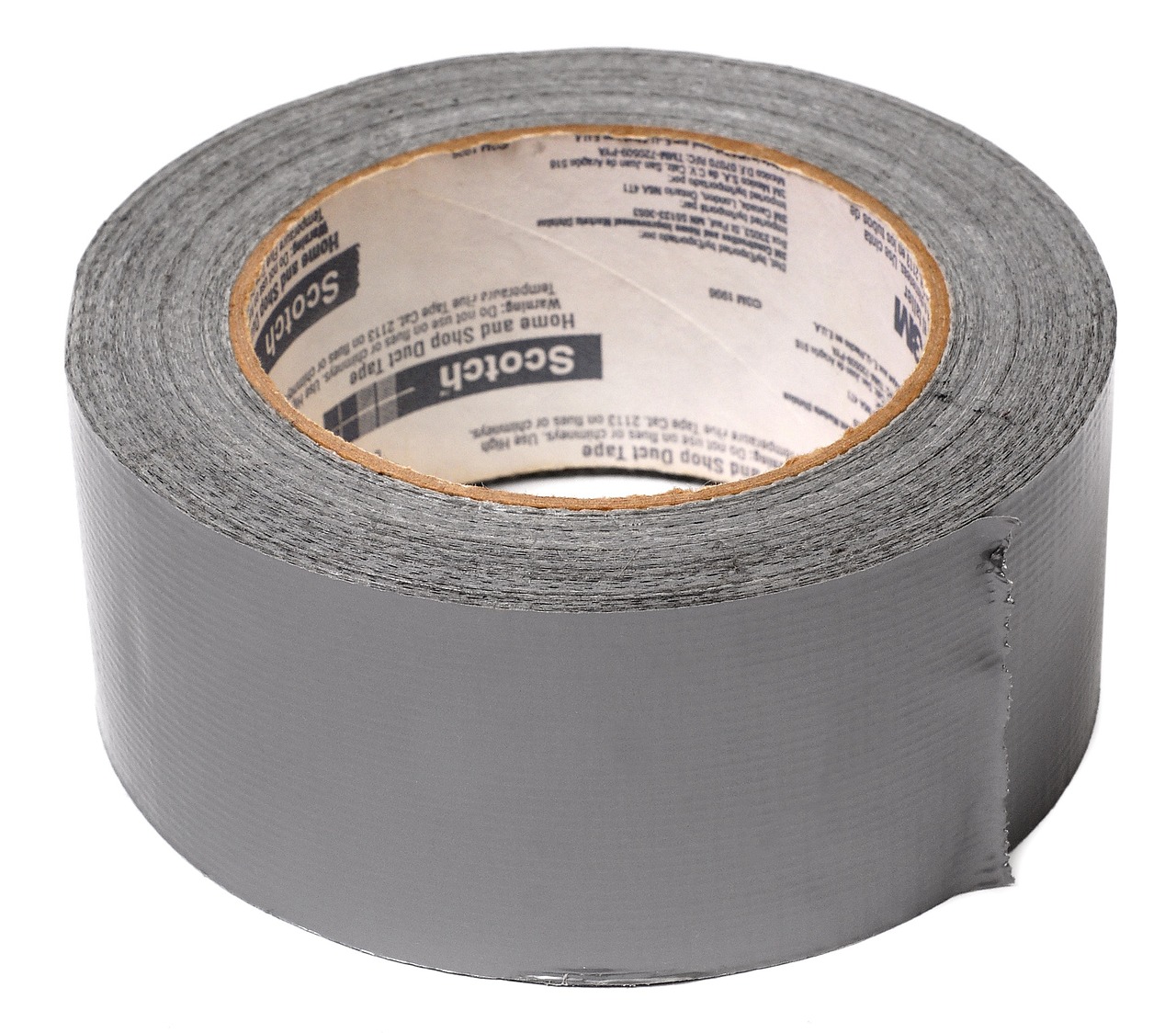 Does the duct tape make me stronger? Or, are the cracks so deep that they are irreparable? I’m not sure and, like life, time will definitely tell. I like to think that the cracks, held together with the sticky duct tape, make me stronger for I know where my weaknesses are now, don’t I? Because of the crack, I’ve been able to define why the crack exists and how to repair the crack to create a new sense of stability.



 I must end this here as this post is over-whelming for me and I must step back a bit to continue my healing. (This is progress for me, thanks to my Mom.) And, in case you were wondering, here is that blog post from February. It is those ‘gut’ feelings that are our true inspirations and our relationship with others helps us become who we were destined to be.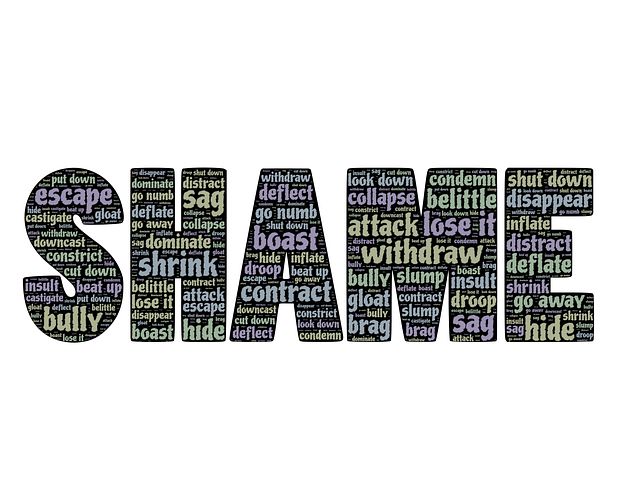
 If I have an emotion within the belief as I did in my recent struggle, that emotion is to be addressed first so that I can better understand the cue that life has given me. Emotions are neither good nor bad; they are cues to my personal beliefs about a given situation, both known and unknown. This unraveling of your emotions takes time which we may believe we don’t have. (That is also a belief that is based on your behavior, isn’t it?) We actually do have time because, Dear Reader, this is the reason we are living. It is not doing a job and earning a good salary. Nor, is our purpose to necessarily being a good parent. Those roles and purposes are trappings of our lives and where or how we grew up. We are all in our personal situations as a type of classroom where we can learn. Classrooms take all shapes and sizes, interactions and events. I believe that as long as we realize that there is a benefit in all things, we can actually begin to see the positive which helps to give a certain belief and begins the rebuilding process.
 Here are the answers that I found and believe to be helpful for me.
 I came upon Jim’s work after listening to a totally unrelated comic discuss the profound impact it made for her while relaxing at home one evening. Her discussion was so much how I was currently thinking that the message could have been FOR me. I felt inspired to find out more. In researching Jim’s work, he discusses brain science, shamanism, and all things transpersonal psychology. He recommended two books to read, one of which was
 Transpersonal psychology focuses on incorporating all elements of the human experience, including one’s spirituality. Many religions have hijacked this term for their teachings, too. Transpersonal psychologists can even adopt a religious or mainstream religious theme in its teaching which, in my opinion, short changes the idea of transformation. Like, if you don’t believe my religion, you are unable to utilize the ideas of a transpersonal psychology. What a load of bullshit.
 I created a more healthy strategy and it helped me to deal with the week. Instead of seeing the “big picture” of possibilities, I dealt with the facts of the matter and cut the problem into bite size pieces. I dealt in the now and did not assume anything so my expectations were reduced to nothing. This lack of mental expectation really allowed me to take care of business without worrying for the future…for now. I have recognized that I worry a lot about the future without realizing that I’m creating my future right now through my view in this minute. And, the next minute. Good habits become good over time and repetition. Yes, it is the old saying of wash, rinse, and repeat. Just make sure you have some good “shampoo” that feeds your head in a positive way.
 For September, I am committing to making a structure of three different areas with the following goals:
 I feel like I have one foot in both worlds: working and retired. I’m making the mental transition, too, and have a bit of myself scattered all over the place. This “scattering” may be why I’m not mentally engaged in either place. Focus, like willpower, I’m learning, is limited and each area of focus takes a bit more energy so that I’m not really able to focus on one thing at a time. I’m working out a “time blocking” scenario for working that includes my routines. For those of you interested, here is my PM routine:
 As I look back at my week just completed, I was so focused on what I didn’t do that this perspective created an overall negativity that is like a lone dark cloud on an otherwise sunny day and altering your plans because there is a chance of rain. Seems I may have tapped into something “off” in how I think here which will give me something to consider for next week.
 No cooking, so we had some takeout for dinner so my dishes were minimal. I was also extremely tired – mentally exhausted – at another tough week. As I was preparing for bed – or “executing my PM routine” – skipping steps felt unnatural to me. I began to look at those few dishes in the sink and my clean dishwasher that needed emptying with a different mindset. My mindset was not of “Ugh!” but of “How long does this really take?” and “If I stop mentally arguing with myself, I’d be done with XX by now.” (Interesting.) My habit of doing the dishes at night ‘stuck’ and I did them quickly, routinely, and went to bed.
 Well, Dear Reader, once I put my idea in storage for the month, I usually let the idea go to either root for further examination in the following month, or to totally get dumped with a new and emerging idea or event. I have given myself the ability to pivot whenever I feel the creative juices flow in a different direction. Funnily enough, however, I’ve never done the latter and just scrapped an idea for my ideas have always had some kernel or nugget of truth in the month that just passed. Isn’t that interesting? Anyway, I had planned to discuss the importance of acting on an idea and that is just what I’m doing these days and, to my surprise, it feels great!
 I’ve recently found this planner peace in my life but not in the way you may think. After years of videos, different planning styles, using “Frankenplanners” which are combinations of multiple systems, studying technology for productivity, and everything in between, I realized that nothing works if you don’t use it — which kept happening to me. I felt like a personal failure each time I failed. Then, I watched a
 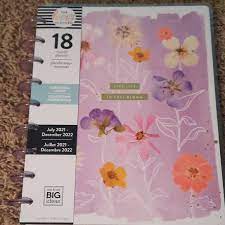 I settled on a
  And, that, right there is the key: Feeling like a success. While my planner for this month really shows how busy I was, the colors, notes, and stickers really enforced that I am busy, and that I was able to really “level up” these areas of my life through this extreme focus. My house is clean, my work is caught up, and I have found such a great new You Tube inspiration that I’m not willing to share…yet. Throughout the month on a few too many days my One Thing was “meetings” which, in the past, I never accounted for. However, when you have ten meetings in an eight-hour day, “meetings” become a work task. (I never recorded my meetings as a “task” before, always wondering why I felt like I hadn’t accomplished anything that day. When you think about the schedule, it’s a wonder I even had lunch!) I also stopped deliberately multi-tasking during these meetings by focusing on other work that needs to get done; adding stickers to my planner doesn’t require a lot of thought so my attention can be directed to the meeting and not what I’m not accomplishing by sitting in “listen only” mode. I also recognized that the idea of multi-tasking is not a healthy mindset for me. I mentally benefit from the ability to focus on my One Thing, complete my tasks, and then, if I have time, add any additional work or chores. To try and be or do so many things at once dishonors myself and the work, too, for it cannot be my best work.
 However, if you aren’t also recording the “today”, you may not act on any of those wonderful goals you have written in your planner because there was no action plan. I improperly used my planner as I had no “action plan” for today to reach those goals; I only recorded future events and goals and failed to construct the steps needed to reach (Key pro-tip, folks!) those future goals through changing my today. (
 The Wobble