
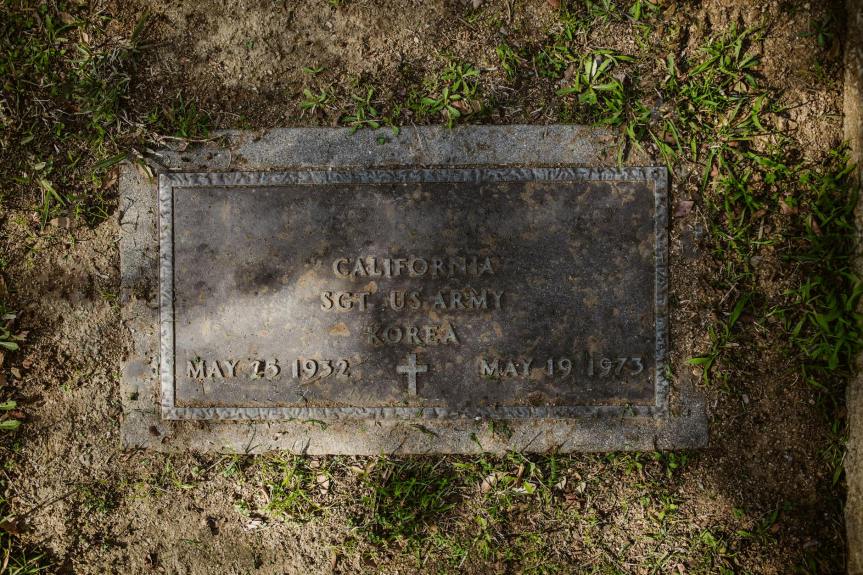
A friend recently told me that life is lived in ‘the Dash’ – or the line between your birth and death as written on one’s headstone. The Dash is the all-encompassing of living a life and not necessarily a life “well-lived”. What we do in “the Dash” really is all there is. The Dash is the realm of all possibilities, big and small. When we see life from the top down, like we are managing ‘the Dash’, the possibilities feel endless. However, when we look at life from within the Dash, do we really have the perspective we need? How much of “the Dash” is real and what is imagined by me as part of living my life?
I’ve been feeling of late that I need to get out of my own way as I navigate my Dash. After many years of working for someone else, my own creativity is now interrupting my ideas of what should be for me in retirement. What I didn’t truly understand is how my coping behaviors did not leave any mental space for any new ideas that might have helped shape a life. Many times, I see things that I’m hopeful for versus what truly is. Can a person have an imaginary Dash from reality? And, isn’t that also part of one’s Dash? Too many questions to answer – yet – I think I found my own personal answer. I love the idea of the possibility of a life that moves up and down around a centering thought of love and gratitude – and without judgment of self and others. This realization came from a recent experience and pointed to how I want to navigate my personal Dash.
Let me correct this: I don’t want to navigate my Dash. I want to LIVE my Dash. Feels different, doesn’t it? My first experience was amazing and I’m looking to bump along in my Dash from this vantage point. A vantage point that throws the idea of a random life out the window and where we institute a mindset that nothing is random and all is guided by our feelings and thoughts. Getting these (feelings and thoughts) correct is our Dash work. Here is an example:
I recently began working on jigsaw puzzles as part of my effort to be intentional with my time. Sitting with a puzzle piece, contemplating its placement on my landscape of colorful abstracts, slowed time down to a molasses-like pace. (Yeah, me!) This is key because, as a child, I struggled with sitting still and focusing on something like a puzzle. Or coloring book. The only way I would sit is if I was playing with my mother’s change because I was busy doing the addition and subtraction in my head. Until I began to play video games as an adult, I really couldn’t sit still as my brain always raced and propelled me to move. My job as an auditor was especially challenging and I became a master at distraction to hold my interest and focus. Many times, I would be found pacing or doing something totally inane to help me focus. My diagnosis last year of ADHD (Gray Ladies Unite) explained away many of the ‘crazies’ and I was finally capable of seeing my behavior as normal – for me – and be okay with the restlessness. This mental approval of myself had been what I was missing for my entire adult life; I’m not complaining for this way of self-berating behavior gave me this life I am now enjoying. I just now need to repair the toll of decades of self-judgment that was unchecked because this judgment made me successful. Part of that repair was embarking a self-discovery journey, including therapy.
As part of my retirement, I began a weekly ‘walking’ exercise in my town. Outside of our meeting area was a bookshelf containing books and puzzles for a causal exchange. I took my first puzzle earlier this year to try out my ability to focus and concentrate. The first few times were tough as I kept getting up to do something else – usually something needed cleaning. I became increasing frustrated and began to recognize that my need to get up and move was how I learned to cope with the restlessness.
Over a few months, I did quite a few puzzles, from nature scenes to country life. The ability to sit and understand the compulsion to always ‘get up’ and ‘do’ allowed me to now manage my mindset. What a shift! I began to seek out a new puzzle each week to practice sitting still and focusing. A few months ago, I was looking for a puzzle and just couldn’t decide. I turned my attention away from the shelf when a puzzle landed on my foot, opening up, and the contents (thankfully already placed in a slider storage bag) spilled out. This was near impossible because the puzzle almost had to be pushed to land in such a manner. The box is two inches thick and sturdy. To fall on my foot from three feet away, open up, and spill it contents was not normal. OK, Universe, color me intrigued. I was stunned to quiet which does take effort!
I picked up the puzzle and took it home with me like a secret treasure, a knowing. (No, it was a painting of a lighthouse on a cliff.) After completing the puzzle, I sat back and waited for lightening to strike, so sure that the epiphany would be immense. After all, the puzzle flew at me! (By the end of the story, this puzzle will have taken flight and baked cookies, too!) Of course, nothing happened. No magic realization, no immediate insight into the meaning of life. I really didn’t know what to think other than there was something to this puzzle. The next week, I found myself at the shelf where the puzzle was from last week trying to figure out what happened. In its place? A well-worn book called Awareness: Conversations with the Masters. Intrigued, I picked up the book and found it was written based on a retreat conducted by Anthony de Mello, a Jesuit priest. I set it back on the shelf thinking that I have read a lot of these types of books when it fell off the shelf and landed on my foot. “Just what is wrong with the shelf?” I wondered when I realized that this book was MY sign!! I snatched that book up and tucked it away into my things, now a precious gift.
I began reading the book that evening and enjoyed it so much that I purchased the audio to listen in the car. My place in the book I’m reading with my eyes is different than the audio book. I wondered when the two might align and if that would be an interesting point. And, yes, it was – and that is where I will leave this. This book just recognized how much of our life we create in our head versus what is truly real. De Mello believes that we just need to become “awake” or aware of what is real versus what is not real. (Believe me when we have a whole lotta junk that is not real. Just sayin’.)
The morale of my story is this: Let life unfold FOR you. The hard bits are also FOR you – to learn. The emotions are not easy but they tell a tale of how you see the world. The emotions point to something in YOU or how you are seeing or being in a situation. We cannot be made to feel an emotion by someone else. As a child, I did not understand that feelings are okay. It is a signpost of how you truly feel – like a gut reaction. If the feeling isn’t what you like or expect, examine it for what is there and place your own judgment aside. Open your mind and ask the harder question of yourself, without accusation. Take time to slow down and really be intentional. These feelings are guidance and can be changed. Think of it this way: When you love someone, you want to help them. Love your fellow human. Help them when you can. Love yourself too.
Peace.

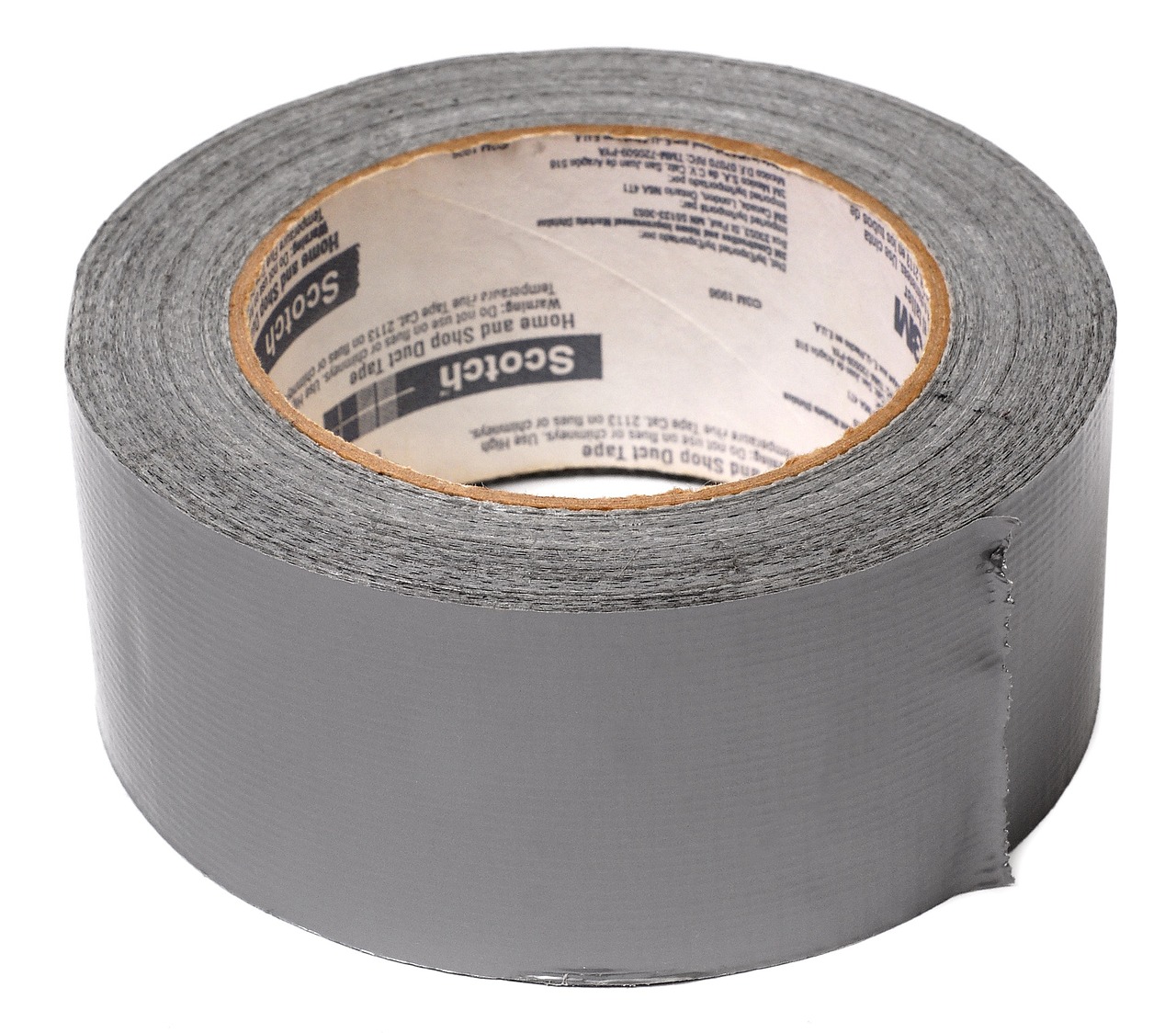 Does the duct tape make me stronger? Or, are the cracks so deep that they are irreparable? I’m not sure and, like life, time will definitely tell. I like to think that the cracks, held together with the sticky duct tape, make me stronger for I know where my weaknesses are now, don’t I? Because of the crack, I’ve been able to define why the crack exists and how to repair the crack to create a new sense of stability.
 The Wobble