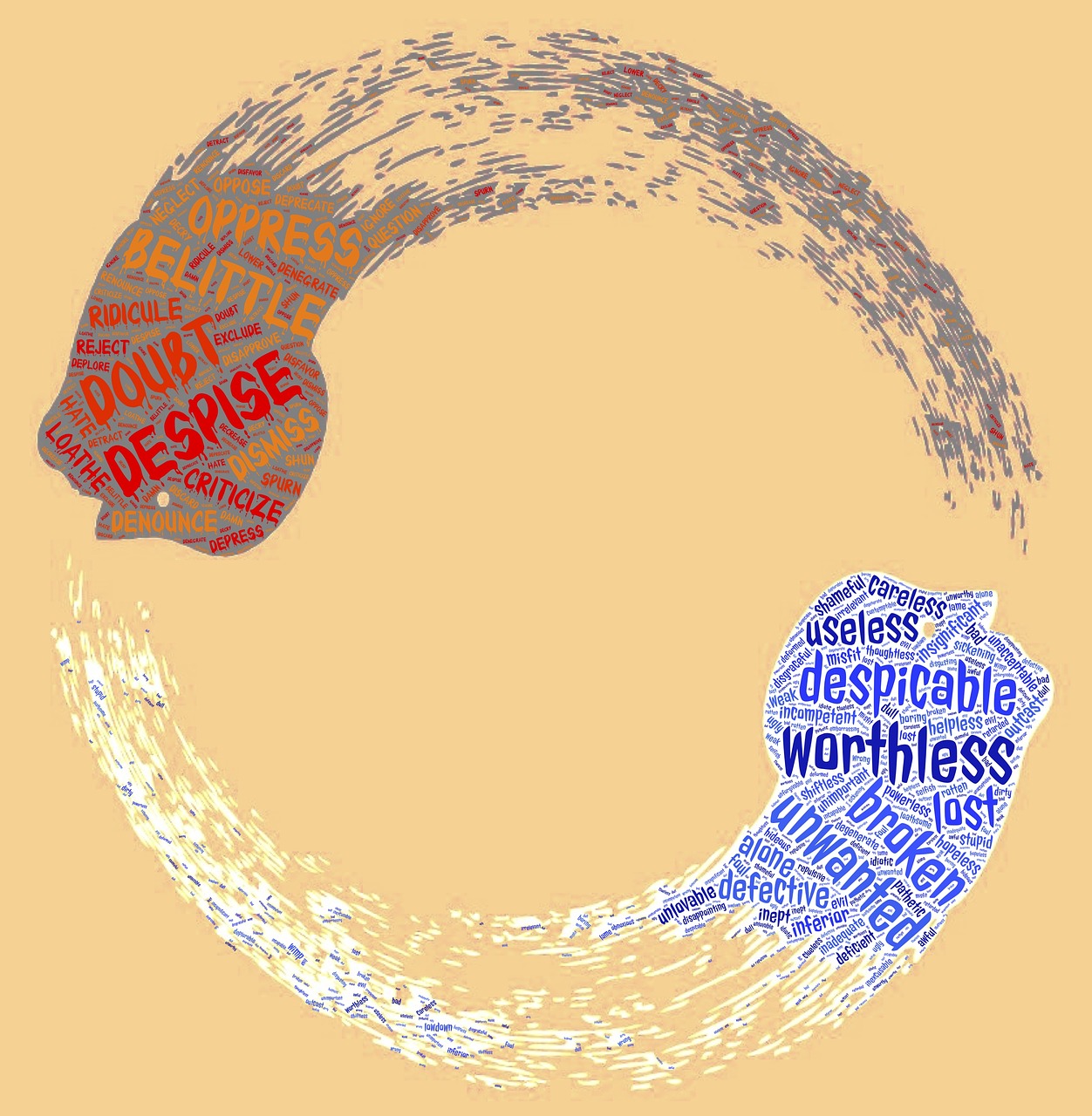
Are You Lagging When You Should Be Leading?

What would you do or who would you be if you knew the end of your life? Or, in other words, if you were guaranteed a specific result based on your desired outcomes? There are some things in life where your behavior guarantees certain outcomes. Yet, why don’t we do these behaviors when we are able to in order to achieve said desired result? It is in the daily habits that we succeed yet we don’t have that final ‘done’ feeling at the end of the day. I just hate feeling like things are undone and wondered if this happens to you, too. What I learned about my own thinking helped me to see how my lack of understanding actually was contributing to my immediate dissatisfaction. My question to solve: How do I realize my big goals that will take time to achieve? (Consistency.) How do I establish consistency? (Cue sound of crickets.) I realized that I may have been looking at my big goals in the wrong way.

Let me explain.

In my thinking, there are two types of goal timelines: lag and lead. To me, “lag” means a goal that is realized in the future based on the culmination of the past. A “lead” to me means that the change right now will have an instant result. Or, your lead behaviors result in the achievement of your lag goals. Generally, these terms are usually defined in business situations where your lag goal (e.g., revenue goals, etc.) are realized over time through the performance of a ‘lead’ goal (e.g., increasing sales, etc.). FranklinCovey has brought this into the human performance discussion as follows – and pay particular attention to the idea of ‘measures’ versus ‘goals’ which is where my distinction is a bit different:

“While a lag measure tells you if you’ve achieved the goal, a lead measure tells you if you are likely to achieve the goal…No matter what you are trying to achieve, your success will be based on two kinds of measures: Lag and Lead…Lags are measures [emphasis added] you spend time losing sleep over. They are things like revenue, profit, quality, and customer satisfaction. They are called lags because by the time you see them, the performance that drove them has already passed. You can’t do anything to fix them; they are history.

Lead measures [emphasis added] track the critical activities that drive or lead to the lag measure. They predict the success of the lag measure and are influenced directly by the team. An example of a lag measure is weight loss. Which activities or lead measures will lead to weight loss? Diet and exercise! Proper diet and exercise predict the success of weight loss, and they are activities that we can directly influence. Simple enough, but be careful: even the smartest people fall into the trap of fixating on a lag measure that they can’t directly influence. This is because lags are easier to measure and they represent the result we ultimately want. Think of a lead measure as a lever that moves your Wildly Important Goal®.”

I emphasized in the above quote that FC was discussing ‘measures’ as opposed to ‘goals’. These feel different to me so I thought to ask my old friend, Mr. Google, what he thought. According to this website of a company which helps online business improve their presence and profitability, the definition was more towards financial. However, this definition is a bit easier to understand in terms of a goal/achievement discussion/context:

  • Goal: desired end result
    • Examples: number of leads per month, dollars in sales per month, number of job applicants per job post
  • Metric: measurement
    • Examples: website visits, email subscribers, contact form inquiries

Using this conceptual framework, I interpreted my lag goal of weight loss would only be realized by lead activities or measures each day that, over time, will give me the lag result. (I believe weight loss – or loss of any kind – is a poor goal. I don’t want to lose something as a goal; I want to gain something and that, Gentle Reader, is my health and sense of self.) My first shift was in the energy and momentum of gaining something (versus losing something). However, I also found that I have been focusing on my lag goal expecting lead results. Or, I need to exercise greater patience and tolerance with myself each day to allow me the space to achieve over time, taking my lag goal a day at a time through lead activities. Instead of hanging my hat on the overall lag goal, I’m focusing on today which is all I’m guaranteed – and maybe not even the whole day! I’m trusting that I will have another opportunity to do more tomorrow. And, in that, I’ve realized that my lead activities must involve self-care to create an environment for me to be successful. I’ve begun mentally focusing on the ‘lead’ activity each day without a focus on the bigass “lag” goal because the long term focus is not helpful for me, today, and will be realized if I can be successful TODAY. Not Tuesday, but TODAY. (This is my journey and yours will be different. The idea of this is for you to create some space in your heart to not be so self-critical in failure.)

I realized that I’ve been measuring many of my habits with lag goal expectations when they need to be a finer level of goal. I began making this shift about a year ago with really small steps. Mine was routine manicures. This is a visual reminder of my lead habit realizing my long term lag goal for every time I look at my hands, I feel a sense of peace. It is a little habit I created – very simple – and extremely effective. This led me to a bigger goal: feeling better in my body as I age.

Feeling better in my body took on quite a few more specific goals: eating well, mental health, improving my patience and tolerance with myself, and the creation of a daily “anchoring” exercise habit. Before I could get to the daily exercise, I had to start really small. Right now, I am currently riding my stationary bike 3.5 miles a day in 15 minutes. This is up from my starting point of 10 minutes 1.5 miles. (Progression in my lead goals leads to progress in the lag goals.) I initially tried to begin by doing 10 minutes, no mileage restriction. Did that for a day and stopped. I felt really down on myself, going down a familiar path of negative self-talk and beratement. Rather than beat myself up, I looked at myself as a corporation and did a ‘lessons learned’ on my experience. (Unemotional!!!!) I asked myself what worked before? I answered with “Nothing, you idiot.” (The negativity was overwhelming!) I then spoke to myself as I would someone who was not me, or kinder. I asked myself what could I do that is a smaller step than actually getting on my bike? Or, where was my beginning baseline for I needed to establish a smaller habit that I could consistently perform with relative ease.

What could I do? I got dressed. That was it, folks. I got dressed. This was where I was for about two weeks as I contemplated the bike. I needed to feel the inspiration and the desire to expand. (This is KEY!) I sat in this place and just loved myself for getting dressed. One day, I thought, I can do the bike now. Because I had the getting dressed habit already nailed, I naturally returned to the bike. This created momentum and, each day, I get dressed and get on the bike.

How do I know I have momentum? Well, interestingly enough, I also did a ‘lessons learned’ on why I was successful, too. (Study your successes as they teach you just like failure is a teacher and not a final result.) I give myself one day of rest each week and I really find that the following day is extremely difficult for me to obtain the same performance as the day before my break. This shows me just how important momentum is in our habits. We must ride one wave onto the shore before finding our next wave to get us even further. Now, I expect to be a little sluggish after a day off and that is OK too.

Note this again: I actually did not begin on the bike for about two weeks until I felt the getting dressed in my bike shorts, tee shirt, and sneakers was a habit that I could consistently perform with relative ease. I’m repeating this because it is extremely important for you to begin where you are currently, and what you think you may add without too much drama. Stop thinking you should be further along because you are lying to yourself. You are where you should be because your habits created this place. It’s all OK. You are OK.

You know, we humans strive for comfort and it is through our lead daily activities that we reach our lag goals. Many times, our goals are opposite our desire for comfort so this change must be confronted in a kind and loving manner. Reaching your lag goals will create new opportunities for reflection and new travels. Be prepared for you will have a whole new world open up. For me, the exercise habit has become an ‘anchoring’ goal for my entire morning routine. This includes coffee, medicines, breakfast preparation, and my Morning Pages. (Morning Pages are an awesome way to get rid of your mental clutter – highly recommend some sort of journaling support for you as a lead supportive activity.)

Harvard Pilgrim Healthcare, a leading healthcare company, described the term “anchor habits” in this way which I found very true. (Here is a link to their article with good information.) “Anchor habits are small, core routines that are ingrained within us like getting up each day or, for some, exercising. Once you have an anchor habit, it’s also easier to continue adding to your routine and achieving more.” Creating an anchor habit takes time and is well-worth the journey. This journey helps you create a healthy sense of self-discipline which is one of the cornerstones of self-care. Love yourself enough to create the discipline you need to achieve your lag goals with daily lead activities.

Peace.

Lessons from 2021 – June *or* How a Changed Perspective Matters

Warning: this post discusses body image issues, treatment, and experiences.  If this is a triggering discussion for you, please move on from this post.  Always seek medical guidance from a professional following the best guidance from your physician. Be smart.

Last month, I discussed quite openly my own personal struggles with body dysmorphia and my weight.  In this post, I also discussed something called fat bias which is defined as “… the prejudicial assumption of personality characteristics based on an assessment of a person as being overweight or obese.” This definition also had the term fat phobia which one study defined as “… a pathological fear of fatness.” I described how my unconscious fat bias was at the center of insufficient medical treatment and resulted in my own spiral of depression and psychologically-disordered thinking; I, too, was fat-biased against myself.  shame-2088368_1280My own personal negative thinking was out of control and virtually undetectable except in bitter self-talk that was so ingrained, this talk “looped” into my own pattern of thinking…and to what I now realize is a heightened sense of shame.

What I did not touch on was how prevalent bias is how it impacted my own sense of self.  Apparently, based on this study, affiliated with Yale University’s Department of Psychology professionals, this is not an unusual situation.  The study states that, for “…although the strength of weight bias decreased as respondents’ body weight increased, a significant degree of anti-fat bias was still evident among even the most obese group of respondents, highlighting the pervasiveness of this bias.”  This level of bias is rampant in our society because people don’t want to be fat and would actually give up a year of their life or divorce their partner to avoid being overweight.  I inherently knew this, having been fat since I was born at 9+ pounds.  I endured these feelings as a young child and teenager until I adopted them about myself.  The feeling of separateness went away after that because I had adapted my own perspective to them so they assimilated into my own personal perspective of self.  What an unfortunate event to join!  To see this in writing, in a scientific study, just plain scared me into a better perspective…for myself.  This is the reason I’m sharing this thinking in these posts that, hopefully, it may also help you, Dear Reader.

In my journey to form a better opinion of myself by myself, I recently found a YouTube channel from an brave and inspiring young woman who is recovering from anorexia nervosa which, one might think, is the total opposite of being obese.  However, I found that her honest struggle discussion took on a decidedly similar tone to some of my own thinking relating to body image issues.  How interesting a correlation yet no one really discusses that both of these psychological disorders seem to be two sides of the same coin. So that we are all on the same page, I wanted to review what is meant by “body dysmorphia” or “body dysmorphic disorder.”  Body dysmorphic disorder is defined by this study as “…a distressing and impairing preoccupation with an imagined or slight defect in appearance.”  The study continues to provide greater context on this disorder by noting that “…recent research findings indicate that body dysmorphic disorder is relatively common, causes notable distress and impairment in functioning, and is associated with markedly poor quality of life.”  Oh, hallelujah.

My treatment was medical intervention on my 30th birthday.  That fact was not random for I decided that I was not going to repeat my errors thus far and I wanted a better and improved life…which included drug treatment.  This short-term treatment and diagnoses gave me the decided mental boost I needed sufficient for me to realize that I no longer needed to feel the way I did.  I did not, however, have much formal cognitive-behavioral therapy and sought this out on my own, in my own timing, and at my own pace.  That is how we arrived at this point in my life, decades later.  Now, how do I sum this all up into a simple statement?

Unconscious self-bias matters.

In doing my research for this post – mostly to help myself find a sense of balance in this important topic- I’ve found this article in the New York Times which includes information from Dr. Rebecca M. Puhl and colleagues at the University of Connecticut, Rudd Center for Food Policy and Obesity – the study is also linked below:

Stigmatization is associated with more frequent binge eating and other “maladaptive eating patterns,” Dr. Puhl reported in a comprehensive review of the subject in the American Journal of Public Health. “In a study of more than 2,400 overweight and obese women who belonged to a weight loss support organization,” she wrote, “79 percent reported coping with weight stigma on multiple occasions by eating more food, and 75 percent reported coping by refusing to diet.”

Furthermore, experiencing weight stigma can result in a poor self-image, depression and stress that in turn increase the risk of poor eating habits and difficulty losing weight and keeping it off. People can internalize weight stigma, blaming themselves for their excess weight and the social discrimination they experience.

Dr. Puhl’s study along with other studies also concluded that “…overweight and obese people who experience weight-based bias and who manage to lose weight are less able to maintain their weight loss.”  So, despite all odds, you successfully remove your excess weight and now are against the odds for maintaining said weight loss.  So, how does one get help for this disorder?  Personally, I found very little help from my doctors and therapists whose guidance was always, exercise more, restrict your food intake, and be happier.  mental-health-2019924__480Really?  What is shocking is how bad this guidance is because wouldn’t any reasonable person think that, if I could do this, I would do this? Does my doctor or therapist really think I like being obese? If you’d taken the time to actually pay attention to me, you’d realize that I’m a highly intelligent and educated woman who is struggling.  There was another answer for me and I couldn’t find a decent medical professional to actually help me.
Well, that, apparently, should not have been a surprise to me.  In an article from the American Psychological Association, January 2004, Vol 35, No. 1, the following quote under “hidden bias” really helped me to see that the lack of proper medical treatment was not my fault.  While I knew that there was an inherent bias, I had no idea how prevalent this bias really was in our society.  Check THIS data – I’ve added the bold words for emphasis:

Particularly alarming are findings that even specialists in obesity fall prey to negative associations when working with obese patients. For example, a recent study found that even health professionals–including psychologists–who specialize in obesity often used words such as “lazy,” “stupid” and “worthless” to describe obese people they come into contact with in their personal and professional lives, according to a September 2003 study published in Obesity Research (Vol. 11, No. 9) by Marlene B. Schwartz, PhD, Heather O’Neal Chambliss, PhD, Kelly Brownell, PhD, Steven N. Blair and Charles Billington, MD. The researchers used a self-report questionnaire and the Implicit Associations Test–a timed measure to test automatic biases–to assess the attitudes of clinicians and researchers who work with obese patients.

Wow.

So, let’s get down to the “brass tacks” of this issue.  People could suffer bias for their size their entire life, creating their own sense of self-bias, only to seek help from someone who also has this bias?  That’s right, folks.  Chilling, isn’t it? Given this is such a prevalent bias in our society, how likely is it that one may find a counselor without said bias? I’d argue that this is highly unlikely and to the detriment of the individual who is may be truly suffering both mentally and physically.

Another study actually measured the impact of weight bias and stigma on quality of care and outcomes for patients with obesity.  [I know this because this is the exact name of the study.]

Many healthcare providers hold strong negative attitudes and stereotypes about people with obesity. There is considerable evidence that such attitudes influence person-perceptions, judgment, interpersonal behavior and decision-making. These attitudes may impact the care they provide. Experiences of or expectations for poor treatment may cause stress and avoidance of care, mistrust of doctors and poor adherence among patients with obesity. Stigma can reduce the quality of care for patients with obesity despite the best intentions of healthcare providers to provide high-quality care. 

I’m just going to leave this right there.  I had another study to highlight about this and realized that there is such a wealth of data out there to support this that all you, Dear Reader, need to do is “Google” “fat bias” and see what you find.

pills-2333023__480So, now that you are educated in this area, why don’t you examine if you, too, have a fat bias?  If you struggle with your weight, honestly consider if a fat bias is preventing you  you from realizing your own goals. How might decades of ingrained thinking be impacting you?  Are you looking for that magic pill to fix your situation? (Don’t, there isn’t one.) Be kind with yourself and accept that we are all trying our best and that you are a product of your environment and perceptions, self including.  It is my hope that this information helps you to fight for what you need and to not let someone else’s – or your own – bias prevent you from living the life you were meant to live.  Peace.

UPDATE: From May, I indicated I was going to begin a low carbohydrate way of eating to help my own health.  I began slowly by substituting my breakfast with a more “ketogenic” style of eating.  After two weeks, I began to incorporate my lunches in a similar style.  While not fully ketogenic, I was eating a reduced amount of sugar and simple carbohydrate and saw some immediate positive results.  I noted my psoraisis is less-inflamed and its spreading seems to be lessened, my moods and focus improved.  I began my full ketogenic diet on June 1, 2020, and have kept to between 20-60 grams of “net” carbohydrates in any day.  My mental fogginess has really lessened and my depression eased.  My mood is much better and I think I’m laughing a bit more.  I’m enjoying the experience and am excited to see where this journey to renewed health is taking me. This fact is extremely important to me.


Lessons from 2021 – May *or* Getting Better and Better

My issues surrounding weight and body image began when I was about eight years of age.  I did not realize at that time that this was by design or for my own purpose.  I call it my own “life’s design” meaning that this situation creates a certain experience for me.  Unfortunately, we only understand life after we’ve lived it, and this realization has taken me about fifty years to figure out.  (I’m glad the realization finally hit me and not in another fifty years!)  My journey has been really life-affirming and I realize now that life is just getting better and better for me.  And, news flash.  It is getting better for you, too.  I’ve just changed how I measure “better” and found that to be the key to living well: Perspective.

At about eight years old, I went on my first diet.  My parents were new to this country when I was born and desperately tried to assimilate.  (In their home country, they learned first-hand about how being different could get one killed.)  As their first-born child, I had the joys of being their first for “life in the U.S. with children”.  Textbook first-born. I recall being called into the nurse’s office from my fifth grade classroom at the local elementary school, and being weighed with comments and hushed tones; it left me feeling “less than,” abnormal, or wrong. I was EIGHT YEARS OLD!  When the school told my parents that I was too heavy, they acted on this information and treated me as an adult would be treated.  Larger than most children, I always felt clumsy or top heavy – even today.  My size was concerning to my parents as something that was wrong with me, like it reflected a lack of self-monitoring so that precipitated my first diet.   This was also my first meeting with fat bias – from those adults who, frankly, should have known better.  My mother, struggling with her weight her entire life, did not want her children to suffer or to not fit in.  What was my weight? 78 pounds.  My height? A little larger than normal. What I did realize then is that I did not “fit” the mold of a child’s body which left me feeling ostracized, different or wrong.  This perpetuated my increase in weight so that I could hide or not be seen, blend.

I remember quite a bit about my childhood and being overweight.  Unfortunately, everything else is a blur.  Isn’t that interesting?  I remember the time my mother was told what a shame it was that I was so heavy, or that I had such a pretty face that it was a shame that I was……wait for it…..ok….let’s say this all together in hushed tones so no one knows…shhh…she doesn’t realize it….fat.  That sense of shame, guilt and failure has plagued me my entire adult life; it was created by external factors taking advantage of a really lost little girl.  (Today, as an adult, one would look at my life and not even realize that these feelings are still with me.) I struggled with body image issues exacerbated during my school years by boys who thought it okay to remark about my weight, or girls who were almost worse, teasing me unmercifully for being what they feared.  Here is that word again: fat.  Painfully shy, I began to come out of my shell at about sixteen only to add layers of clothing, fat, and emotions so that I became lost in my own body issues…and angry enough to lash out.  At about twenty-three, I began to turn a corner in my own self-actualization journey.  This journey was not without its own pitfalls yet, through it all, I’ve realized that I’ve come out better as a result.  I’ve really enjoyed the highs and lows of living in this time and on this planet as it taught me about myself and gave me the experiences I need to be at this point in my life.  Throughout it all, this backdrop of my early childhood experiences has set my own personal stage for my life. Instead of lamenting on what cannot be changed, I recently began to change my thinking about these experiences – and, finally, focused on what I was meant to learn by these experiences, not how I felt at the time.  Before this realization these carryover emotions had only succeeded in creating a weird mental “soup” that was not helpful to me today and, yet, was extremely helpful for it focused me on “outside the box” type of thinking about my issues. So, without the bad, I could not see the good.  I realized that I was failed by the medical establishment in the treatment of my fat.  My weight was seen as a personal failure or a lack of control when, in reality, it was an effect of the larger and emerging medical issue.

Here is a bit of my medical history.   In the late 70s and early 80s, I began to have gut issues in my teens along with cystic acne.  Treatment? A course of antibiotics for MONTHS.  No relief but major stomach problems which, fueled by my mental anxiety, took center stage.  At 16, I was told to drink antacids when I had a sour stomach.  Between this time and the late 90s, I was relatively healthy, smoking, and prone to bouts of seasonal allergies.  During this time, my weight crept up and up.  Fad dieting has been my life story where I’d lose a little weight, have a health issue, feel sorry for myself, and eat.  On my 30th birthday, I was diagnosed with depression and body dysmorphic disorder; Happy Birthday to me!!  I began a cycle of Prozac and treatment that made a significant improvement. This experience gave me a taste of what “normal” must feel like – and I wanted it!!

In the late 90s, I began to experience dizziness upon standing and felt extremely unwell.  My jaw was tight and I began to grind my teeth, creating severe jaw pain that hurt my entire head.  I snored very heavily and slept very soundly yet poorly.  My skin was odd with tags, discoloration, and just poor tone.  At this time, after a five-hour glucose tolerance test, I was diagnosed with metabolic syndrome and insulin resistance.  When I asked what pills I should take, my doctor said that they really didn’t treat this. What?  “Isn’t there a pill for everything?” I naively inquired. He looked confused as did I, mentioned something about diet, and that was it.  So, not understanding fully the diagnoses, I  went back to my old habit of self-blame and hyper-criticism, and this cycle continued for decades.  My health was up and down with stomach issues, gallbladder removal, blood pressure, and just feeling yucky all of the time.

At this point, I was just ignoring my health because, after all, if there wasn’t a pill to treat me, I’m not really sick, am I?  I was very interested in alternative medicine and bought into the hype of a pill as a cure there, too.  At the crux was this mistaken belief: If I was just a better person, I would not feel this way.  After all,  I could not actually see the effect of my long-term health was doing on my body except for my weight which had steadily increased over the decades.  That was an old problem of my own making, right? I had bought into the idea of Western medicine being the only cure available to me even though I sought alternative solutions, I still had the “pill will cure” mindset.  In a precipitous series of events beginning in 2003, I was diagnosed with a severe vitamin D deficiency and psoriasis.  The vitamin D test result goal was 30 – which was the lowest in the normal range; my score was 8.  The psoriasis appeared as a small spot on my lower leg that would not heal.  Not correlating the two together, continued as I was, adding a vitamin D supplement – my pill panacea – when I remember to take them.

Another decade passes of the same.  However, my psoriasis became extremely bad in 2012 when, during a particularly stressful period of time, my health began a further decline.  Stress took its toll.  Because my scales only appear on my elbows and calves,  my doctor did not want to use oral drugs as the patches covered about twenty percent of my body.  I used steroid creams for a while which had very limiting success.  I sought medical advice from top hospitals in New York City on whatever “this” was that was covering my lower extremities.  Then, an interesting thing happened on one of my visits.  The steroid ointment had worked for me so well that I could no longer see any lesions yet, when I stopped using the ointment, the psoriasis came back  — and angrier than ever.  These scales were taking on a life of their own!  In my next visit, I asked my doctor at the big hospital why, when I stopped using the ointment, the scaly patches would return – and be worse.  She really didn’t have an answer.  Then I asked the loaded question: Why, if this steroid cream does not resolve the matter, was I using this stuff?  I wanted a cure, not a stop-gap measure.  That was when she shrugged and pretty much told me that this was the way my psoriasis treatment would be, or there was no known cure.  I began to wonder just why would I take or apply a drug that doesn’t cure this situation but just puts a bandage on it?  After asking about a possible dietary correlation, my doctor also told me that there were some studies about diet relationship but nothing conclusive.  This is when I realized that the entire medical establishment is based on treatment of a condition, not prevention.  Prevention or self-help cannot be monetized; therefore, there is no interest in providing a patient with information for them to use or institute.  Again, this caused a struggle in me as I had no idea where to turn.  Then, I got the luckiest diagnosis ever: thyroid cancer.

Hello, thyroid cancer, for you have taught me well on my journey.  In 2016, my dentist found a lump in my throat during my annual examination.  I was found to have a parathyroid tumor that was leeching calcium from my bones.  (A decade prior, I had fallen and broken my rib during a dizzy spell.)  The parathyroid tumor required I have surgery to remove it.  It has also grown into my thyroid which required a partial removal of that organ as well.  My thyroid was found to have cysts which were biopsied and found to be benign.  During the surgery, however, the hospital tested the tumor and the portion of my thyroid that was removed.  This is standard in any parathyroid tumor removal to ensure the entire mass had been adequately removed; it was, and, with it, they uncovered my cancer.  Yes, my thyroid cancer was diagnosed by total accident even after multiple biopsies due to the cysts.  By this time, however, I had been studying food, nutrition, and diet for so long that I knew of a possible correlation between my poor diet and my health.  After all, it does not take a genius to realize that, if you power your body with bad fuel, you get bad results.  However, just what is considered “good” fuel was something I struggled with.  I’ve learned that I just need to pay attention to what my body is telling me.

In the past four years, I’ve run the gamut of research on food and disease.  Today is May the 5th, 2021, and I just now realized this morning that all of these apparently random health issues: acne, depression, cancer, psoriasis, high blood pressure, hair loss, obesity, gut issues (gallbladder, ulcer) and my brain fog all correlate right straight back to my diagnosis of metabolic syndrome from the 90s.  Now, isn’t THAT a pretty picture? I think I just accepted that I’m going to age, that my body will decline and decay, and then I get to move on to my next journey.  What’s that saying? “No one gets out alive?”  Sure, that is true.  However, we have the power to choose how we age, how we live life, and if we think we can help ourselves through small changes and a new mindset.  On this morning, while watching a doctor on YouTube, he discussed having too much insulin in the blood, or the 7 Skin Signs of INSULIN RESISTANCE (Root Cause 2021)  Not sure how this came into my view but I thought, heck, I wonder if he mentions psoriasis.  What I didn’t know is that I’ve had ALL OF THESE, and had no idea that these issues correlated to the my prior diagnosis of insulin resistance (metabolic syndrome).  In the past, most doctors would just tell me to lose weight.  What they didn’t understand is that my weight was a sign of the overall issue, not the cause.

The idea of weight as a factor needs to really be examined; I believe this stems from a medical bias against people who are overweight.  Don’t you think that, if I could, I would lose weight? Huh?  Don’t you think I want to wear cute clothes, fit into nice jeans, and feel normal?  The idea of telling me to lose weight really doubled down on my depression and body dysmorphia.  I’d leave my medical appointments feeling so bad that I just wouldn’t go back after failing time and time again.

My issue IS the insulin resistance, or hyperinsulinemia that was diagnosed twenty-five years ago.  Being chronically resistant to insulin causes all kinds of stuff that I’ve just tried to manage without much information and success. You know, though, I’ve seen this term – hyperinsulinemia – used in my patient workups and my medical charts.  I never really understood just what was being discussed and believe it related to my weight, or my weight caused the excess amount of insulin in my blood.  When I explained this to my husband, he asked why wouldn’t the large NYC hospital know about the diet correlation to my psoriasis?  Why is it that I can go for years, suffering, only to be made aware of this by a random YouTube video?  I don’t know the answer to this which is why I’m being very forward and honest in this post.  How does this happen?? The lack of dietary guidance that I received should be criminal.  Or, the fact that a pill could not be dispensed to me stunted my medical treatment for the medical establishment determined that I could not be helped.  There is no money in changing my diet…unless, of course, you have a diet plan for sale AND that plan involves reduced calories because I obviously cannot control myself seeing as I am obese.  Right.  I will put my plate to yours any day and show you how you eat more than I do.  Hands down.  What I’ve learned and finally assimilated is that my body responds differently than your body does to the same food.

Speaking of food, this is how I can (and will) fix these ailments.  Low carb, no sugar, high fat.  Or, the Ketogenic diet.  Of course, the professional dieter that I am, I’ve done Keto, Paleo, AIP….you name it.  These have all been done in the name of losing weight so my health issues go away.  This really isn’t the right way of thinking for me and may have contributed to my lack of permanent success.  For some unknown reason, understanding that I’m doing this for my own health – and not for any weight loss reason – seems to be more motivating for me.  What is curious for me, too, is the idea of intermittent fasting as a part of my plan.  I plan to let me body go through all of my stored insulin without feeding my body more carbohydrates.  Being home in the Pandemic has made me realize that I don’t really feel very hungry during certain times of the day yet I eat meals anyway because the clock says it is lunch time – and you don’t want to see my “hangry.”   I also eat because I’m bored which I’ve realized is a frequent state for me.  I like being busy and creative, and those outlets have been stunted in my life through my negative mindset.  I’m unwrapping my creative side in many ways and am so enjoying a return to myself that my heart just bursts with good feelings.

Today is now May the 7th, 2021, and I wanted to include a little update on fasting.  For the past two days, I’ve been working on fasting in the mornings when I am busiest and have noticed a slight difference in my energy – all positive.  Both of these issues are part of Dr. Ken’s discussion so I’m returning to study this a bit more and take matters back into my own hands…and mouth.  After fifty years, it is about time.  The moral of my story: Never give up for life just gets better and better. Rename “failure” to be “event” for failure adds a feeling to something random.  Be vigilant to see it through, and coach yourself as you would do others: kindly and lovingly. Peace.

Note:  If you have read this far, thank you.  I wanted to add a few scientific journals on information that I wish my doctor had discussed with me.  This is a discussion of my own personal experiences and realizations.  There is a wealth of data out there.

Nutrition and psoriasis: is there any association between the severity of the disease and adherence to the Mediterranean diet?

Patients with psoriasis are insulin resistant

Metabolic syndrome, hyperinsulinemia, and cancer

Ketogenic diet in endocrine disorders: Current perspectives