Lessons from 2021 – August *or* Executing On An Idea

I develop my “Lessons for the Month of…” post ideas from the month that just passed. Usually, after I finish a blog post, I’m mentally drained.  That is a good time to just “tune in” to my inner self and think about what I’d like to write about for the next month.  The blog post begins at that point with my writing the title, a few sentences of my idea for that month, and then I let it “stew” for a bit until I’m ready to write.  What is fascinating to me is how much the topic correlates to actual events in my life, like I had planned the event to support my blog post idea!  And, the realization hit me this morning: I’ve been executing on my ideas all month and see the accomplishment.  (BTW, as I edit this, there is a loud snoring coming from my dog who graces me with his presence today. It is a comforting sound to hear a creature so trusting that he sleeps soundly on the floor next to me.  I’m enjoying my present today. ❤ )

Here are the notes I wrote to myself last month: “Write about how important an idea is, and that one must “execute” the idea because an idea without execution is just a dream.  Make your dream a reality through planning, planner peace.”  peace-5138679__480Well, Dear Reader, once I put my idea in storage for the month, I usually let the idea go to either root for further examination in the following month, or to totally get dumped with a new and emerging idea or event.  I have given myself the ability to pivot whenever I feel the creative juices flow in a different direction. Funnily enough, however, I’ve never done the latter and just scrapped an idea for my ideas have always had some kernel or nugget of truth in the month that just passed.  Isn’t that interesting? Anyway, I had planned to discuss the importance of acting on an idea and that is just what I’m doing these days and, to my surprise, it feels great!

In my notes, I mention “planner peace” which many of you may not relate to this, or be familiar with the term.  (For me, this is a key tool to anchor me in my thinking.) For those of us who enjoy all things productivity, planner peace is like a type of Nirvana.  For those uninitiated, planner peace is defined as “…When you find the perfect system and style….w(h)ere every planner wants to be. There are many options to consider – size, functionality, style and much more.”  Planner peace is something I’ve strived for each day – trying to be better and accomplish everything in my heart’s desire, all rolled up into a paper journal or organization system. wooden-2562594__480 I’ve recently found this planner peace in my life but not in the way you may think. After years of videos, different planning styles, using “Frankenplanners” which are combinations of multiple systems, studying technology for productivity, and everything in between, I realized that nothing works if you don’t use it — which kept happening to me.  I felt like a personal failure each time I failed.  Then, I watched a Skillshare course on “Planner Peace” by this instructor who is so inspiring to me.  Rather than beating myself up over yet another failure, I began to accept that this try did not work – AND it was only a try so rather than wallow, why not  assess what worked and what failed…. and why, and gave myself a bit of tolerance to try again.  (Not my normal M.O.) In doing so, I realized that I loved writing things down but not everything, that I wanted something that was pretty and made me happy (sorry, plain paper), and that I could also add my own flair – if I wanted to. happy planner I settled on a Happy Planner  for my pretty needs, a horizontal layout which gives me just enough room for what I want to record, and stickers for little notes and to add some bling.  I can be found adding stickers to my planner during long meetings where I’m in listen only mode.  I found that if I’m busy with my hands, I can listen a bit better, too, as I’m not mentally distracted from the subject matter.  Unfortunately (or fortunately?), after this month of endless meetings, my planner is decorated all the way through October!  (And, having this all set up makes me so happy!)
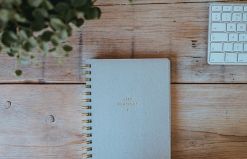
And, speaking of endless meetings, I also began to write down my One Thing each day in the different areas of my life that are – right now – extremely important and part of my focus.  They are: personal, home and work.  That is it, folks.  Three One Things done each day for me to feel like the day was a success.  finger-1294109__480And, that, right there is the key: Feeling like a success.  While my planner for this month really shows how busy I was, the colors, notes, and stickers really enforced that I am busy, and that I was able to really “level up” these areas of my life through this extreme focus.  My house is clean, my work is caught up, and I have found such a great new You Tube inspiration that I’m not willing to share…yet.  Throughout the month on a few too many days my One Thing was “meetings” which, in the past, I never accounted for.  However, when you have ten meetings in an eight-hour day, “meetings” become a work task.  (I never recorded my meetings as a “task” before, always wondering why I felt like I hadn’t accomplished anything that day.  When you think about the schedule, it’s a wonder I even had lunch!)  I also stopped deliberately multi-tasking during these meetings by focusing on other work that needs to get done; adding stickers to my planner doesn’t require a lot of thought so my attention can be directed to the meeting and not what I’m not accomplishing by sitting in “listen only” mode.  I also recognized that the idea of multi-tasking is not a healthy mindset for me.  I mentally benefit from the ability to focus on my One Thing, complete my tasks, and then, if I have time, add any additional work or chores.  To try and be or do so many things at once dishonors myself and the work, too, for it cannot be my best work.

This realization allowed me to really use my planner in a more productive way; a tool that helps me to mind the future and today.  Anything related to the past is documented and I can easily go back to view that, too, so the past is in my mental past, too.  Keeping my mind in focus for “today” has been a struggle as I tend to live my life in a future mindset. I’ve realized that I haven’t always been happiest in the present moment, living with a mindset of “In the Meantime“….like I’ll do this right now because future me will want something else when X happens.  Well, folks, X ain’t coming any time soon so why not enjoy right now, give it all you got, and let X take care of itself? I defer many times to “future living” which I plan to write a series about (How ironic!).  “Future Living” is my term for my mindset each day and how I can sometimes be so focused on tomorrow that I miss out on today.  (Do you do this?)  I, unknowingly,  compromise today for the idea that tomorrow brings something better.  In the planner world, however, we can be about the future — recording appointments, goals, birthdays…you name it! wormhole-2514312__480However, if you aren’t also recording the “today”, you may not act on any of those wonderful goals you have written in your planner because there was no action plan.  I improperly used my planner as I had no “action plan” for today to reach those goals; I only recorded future events and goals and failed to construct the steps needed to reach (Key pro-tip, folks!) those future goals through changing my today. (Enjoy this TedTalk on the gap between planning and execution.) Because of the lack of planning for “today”, I did not open my planner each day and missed being able to execute on my long term goal through a short term activity for today. So, by finding my Planner Peace, and allowing myself to fail a few times, I’ve actually been more productive!  Now, as I look back at July, I don’t dwell in what I didn’t accomplish because I can see by all of my entries, my color coding, stickers, and post its — I was damn busy!  By creating a daily plan with my One Thing identified, I can do these small incremental tasks to achieve the larger goal. Because I’ve taken the time for myself each day, I don’t worry about what I didn’t do (past) or what I have to do (future) because today is where my head is at and my action plan for today says “Begin Wobble (August) post.”  And, there it is.  Check. Peace.

(Note: As I edit this post, it is August 29th and I wrote it a few weeks ago when inspired.  Since then, I failed to properly plan each day and fell into old comfortable habits of letting my email dictate my priorities.  I’m editing this feeling a bit uninspired and lethargic.  The inspiration in my post renews my faith that, in all things, today ain’t no guarantee. Be okay in the struggle for, in it, comes a diamond of an outcome. I’ve added a new link of a TedTalk about filling the gap between having a plan and executing on said plan.)


 

Lessons from 2021 – July *or* How Clutter Impacts Our Thinking

At my office, I have the cleanest desk.  It is so clean that people remark about how organized I appear to be. (LOL) The surface of my desk has work equipment (laptop, keyboard), phone, stapler, pens, and my paper calendar.  That’s it.  Anything else is put away in a drawer or cabinet so the effect is a pretty clean desk.  I find myself really productive in my office except, of course, when interrupted by a person or task.  Since I’ve been working from home and using my home office, I’ve been unable to create this same feeling.  My home office desk is cluttered with these items plus all of my art supplies, paper, files, and just a bunch of things that have no real home space.  When sitting at my desk now, I feel a bit overwhelmed and unable to really think clearly.  The contrast between my home office and my work office – and the level of organization – came to my attention as something needing sorting.

I began to focus on the idea of minimalism, its roots, and why some people really like this style of living.  (The link is a very good explanation of a new channel I found in writing this post.  I plan to check out more of her work.  She couples minimalism and intention which, IMHO, is extremely important.)  I began to wonder what benefits I might achieve with a “less” mindset? Will this impact my intentional thinking about myself, my goals, and dreams if I don’t feel so overwhelmed by my “things” and have a “less is more” mindset?

In the beginning of the Pandemic, I began to rethink my office set up at home to be more like my work set up: streamlined and minimalist.  While my home office served me well when I used the office sporadically, working in the space full time began to create a level of discomfort that I correlated to having a messy desk.  To make my home office similar to my official office, however, is a much more daunting task because the items in my home office have no where else to live.  It’s not like I have all of my art supplies at my desk at work.  In order to make my home office more comfortable, I almost need to reset my entire house because cleaning and organizing one space creates havoc in other areas of the house. (EDIT: Let me be completely honest with you…and myself… about my Pandemic mindset which began fueling this desire to streamline my stuff.  I thought that, if I died, I did not want anyone to have to sift through my “things”.  This was something I wanted to do.  That realization made me see all of my “collections” in a very different way – more like a burden than an achievement.  I also realized that I’d prefer to spend my money on “experiences” and not “things” so getting rid of my “things” really began to weigh on me.  More on that another time.)

To help me better address this claustrophobic feeling in my office space and how to best handle the overwhelm, I began a household “review” of my space, any unused space, and how best to feel less overwhelmed by my stuff.  Now, I don’t have a lot of stuff but what I do have is really unorganized and, frankly, overwhelming.  To experiment, I began to review my china cabinet and take an unsentimental assessment of my “things.” wine-glasses-176991__480I found that I owned over 40 different wine glasses for a person who does not drink wine.  These glasses have been unused in my cabinet for the past 20 years and have been screaming (OK, not literally) at me to use them.  What I “heard” was this: “I am made for celebrations and parties, not for display!” Glassware has a usefulness so I have always felt okay with collecting it.  However, my wine goblets and pretty crystal stemware were not being used for their intended purpose.  I decided to “rehome” most of them by donating most to my local Habitat for Humanity for resale.  I really believe these glasses were almost happy to be able to grace someone else’s home/table.  Feeling better, I added two platters that were unused (I have three left), two over-sized crystal vases, and some gently-used plastic cake/cupcake carriers.  Immediately, I felt like the energy in my dining room eased a bit: I felt really good about the donation and I realized that there was a bit more air for breathing.  On a roll, I removed a wall hanging from one of my walls in our foyer adjacent to the dining room that I had purchased on a whim and never quite liked.  In its place, I put an older art piece where I liked the aesthetic of the dark frame on a light wall.  I find myself drawn to that area of the house now because the aesthetic pleases me because the air feels lighter. Wow.

question-mark-3255136__480I began to wonder why that is?  How can the excess and free space impact me so immediately? I realized through my studies that “things” all have energy and operate at different levels of vibration.  Or, the science of physics.  (I call it ‘thing energy’ as opposed to ‘people energy’.  How original, right?) Some of us are more sensitive to ‘thing energy’ than others; some people can actually feel the vibrations of someone who may have owned the object at one time.  The latter situation is called psychometry which is not my issue for I don’t feel that so keenly and individually.  It is the energy (vibration, maybe?) of the collection of a lot of objects that feels like a wave of something that hits me square in the chest, and makes it difficult to breathe.  Like, I don’t have enough space to find the air in the room.  I’ve always felt “thing energy” quite keenly and am just realizing that my desire for an echoing room is to give myself more creativity and openness.  When I go into a crowded grocery store, I feel overwhelmed by the “stuff;” the same is true in a crowded Department store or anywhere there is a large accumulation of stuff.  I quickly leave the space, feeling claustrophobic and just a sense of overwhelm.  I noticed that I feel a bit like that in my office space, too, which has lead me to really take a critical look at the lack of organization in my office and the idea of the reset was born.

In my experiment and with a mind to my planned office reset, I began to wonder if having my things organized – or put away – tempers the feeling.  Like, if I did not have a china cabinet with glass doors but a buffet with solid wood doors, would the feeling be different because I could not visually “see” all of my things? Hmmm.  I’m not sure.  However, I am going to try an experiment this week on resetting my home office to see if removing and organizing my personal clutter will help me to be more creative and have less stress sitting at my desk.  I plan to remove all of the stuff in my office: desks, computers, chairs, printers, etc. and then place these back with a little more thought as to my desired minimalist aesthetic and concentrating on storage/organization with the goal of a clean desk.  I’d also like to create an area where I do my “work” and an area where I can be “creative.”  Right now, I see these as two distinctly different areas in my room; I wonder if I can change that based on removing or rearranging my stuff.  I’ve decided to also follow this particular YouTuber’s tips; her videos and delivery inspired me to also follow these guidelines.  I’m a new subscriber to her channel and look forward to learning more.  Here are some of her tips that I plan to follow:

1.) Figure out how much time you have and how much time it will take.

I’ve taken a week off of work so that I can separate this into some very doable tasks.  My first task will be to remove everything from the surface that is not heavy furniture.  This includes mail, inboxes, books, pen holders/containers, books (there are a lot of them!), and computer bags and accessories.  In applying the four principles, however, I realized that in order for me to apply #2, below, I need to begin in my guest bedroom to ensure that I have sufficient ability to clear out my office.  (Right now, my guest bedroom closet is spilling out onto the floor.  Dynasty-Dynasty-TV-Series-014It is filled with old formal wear that no longer fits, concert t-shirts from the 80s, empty hangers, and all of my holiday decorations.  It is time to clear that close because if my green blazer ever fit again, the shoulder pads would rival Joan Collins’ best day and, frankly, I’d never wear the jacket anyway unless it was Halloween and I was revisiting 40 years of history.)  Yes, my personal clutter has gotten so bad that in order to clear out an entire room of my house, I need to clear a place to put the stuff out of the way.) So, before I can even work on the office, I plan to de-clutter my guest bedroom closet first which, having done my own closet years ago, should be relatively straight-forward.  Once my guest bedroom closet is straightened up, I plan to then begin my office de-clutter.  (Now you know why I planned a full week for this.)

As I put things back into the office, I will then consider if I want to keep the item, addressing what purpose the item serves, and ensuring everything has its own place.  If the item does not have a place, then it is not needed and will be thanked for its service, and discarded or donated.  This allows me to get the office down to the walls and carpeting, and really get a feel for the office while also honoring the vibration of my “things.”

2.) Minimize distractions.

This will be difficult for me because moving and decluttering create their own “rabbit holes” of memories.  I like Nourishing Mom‘s idea of the “to put away” box which helps to keep me focused on the task and not going into another room to then work in that room.  However, because I realized that I will need to make room in my guest bedroom to temporarily move things from the study, I’ll need to separate this into two projects because I will find myself overwhelmed with now having two rooms to declutter.  flea-market-343123__340I’m already expecting that I will need to purchase cabinets and/or organizational tools to help me better place my things.  Before I just go out willy-nilly to purchase something, I want to be really sure on where it is, what it is, and how I will use it.  (See #4.)
3) Its going to take more than one pass.

I totally agree with the idea that both my guest bedroom closet and my office will need a few passes of critical assessment because after a while of making the hard decisions to relieve one of clutter, I can and do become a bit more emotional.  In the cleaning of my personal closet, it has taken me quite a few passes and, unfortunately, I did not pay attention to tip #4 below and have created a new mess for myself in my closet.  My closet organization is not as bad as before but can get there if I don’t soon intervene.

4) Avoid recreational shopping.

I realize now that I shopped out of boredom or wanting a new experience of buying a thing.  What I was looking for was a panacea of sorts, a relief from my mental burden where I stifled my creativity.  This is a lesson from the Pandemic that I’ve learned and wish to correct.  I used to enjoy shopping and would purchase anything I wanted because I could – even if I really couldn’t.  This created a poor habit of addressing my own mental discomfort through the purchase of a new dress or lipstick instead of addressing the real source of my unrest.  My shopping over the past 18 months has become very specific because a weekly excursion to the mall just wasn’t part of anyone’s plan.  The allowed me to see just how I’ve “coped” throughout my life, and be able to feel better by addressing the real issue.

That’s the plan for my office reset or starting over.  In researching the “how to” of my project, I found Joshua Becker’s channel quite helpful, too, and found that I already do many of his tips in this video.  This made me feel a bit better about my starting point and helped me to see that I can continue to improve.  I’m very curious to see that, if after I’ve completed my project, if I’ll feel different about sitting in the space, or if I’ll need to move my office into my foyer! I’m intrigued because of the idea that we are all energy fields that can be manipulated, including objects that would appear to be solid.  Every object in our world vibrates at different rates which creates their form.  There are millions of possibilities depending on the object, placement, temperature…the combinations are endless and miraculous, aren’t they?  When you think about the world at large, with all of the people, places, and things, the world is vibrating all around us.  How can you not feel overwhelmed at times?  Wishing you peace this July 4th.

[EDIT: And, as if the world is blessing this post, one of my favorite O.G. YouTubers, Renee Amberg, just posted this video.  I love Renee’s videos as they show her transitions and struggles which make me feel less alone in my own journey.  She discusses all things very honestly, openly and does not sugar-coat her experiences.  Definitely worth the watch just for the inspiration alone.]

Keto Update: For those of you keeping up with all things Keto, I’m still doing well.  Seeing some improvement on my psoriasis and my weight is stable.  It is going up and down since my carbohydrate restriction isn’t as low as I’d like it to be.  I’m under 100 carbs a day – usually around 50.  This works for my “right now” time as I continue to adjust.  I’m learning that there are some foods, while lower in carbohydrates, are not good for me to have in the house.  Dr. Atkin’s bars are something other worldly delicious and I’m not to be trusted with them. Yet.  In all things, there is progress.


Lessons from 2021 – June *or* How a Changed Perspective Matters

Warning: this post discusses body image issues, treatment, and experiences.  If this is a triggering discussion for you, please move on from this post.  Always seek medical guidance from a professional following the best guidance from your physician. Be smart.

Last month, I discussed quite openly my own personal struggles with body dysmorphia and my weight.  In this post, I also discussed something called fat bias which is defined as “… the prejudicial assumption of personality characteristics based on an assessment of a person as being overweight or obese.” This definition also had the term fat phobia which one study defined as “… a pathological fear of fatness.” I described how my unconscious fat bias was at the center of insufficient medical treatment and resulted in my own spiral of depression and psychologically-disordered thinking; I, too, was fat-biased against myself.  shame-2088368_1280My own personal negative thinking was out of control and virtually undetectable except in bitter self-talk that was so ingrained, this talk “looped” into my own pattern of thinking…and to what I now realize is a heightened sense of shame.

What I did not touch on was how prevalent bias is how it impacted my own sense of self.  Apparently, based on this study, affiliated with Yale University’s Department of Psychology professionals, this is not an unusual situation.  The study states that, for “…although the strength of weight bias decreased as respondents’ body weight increased, a significant degree of anti-fat bias was still evident among even the most obese group of respondents, highlighting the pervasiveness of this bias.”  This level of bias is rampant in our society because people don’t want to be fat and would actually give up a year of their life or divorce their partner to avoid being overweight.  I inherently knew this, having been fat since I was born at 9+ pounds.  I endured these feelings as a young child and teenager until I adopted them about myself.  The feeling of separateness went away after that because I had adapted my own perspective to them so they assimilated into my own personal perspective of self.  What an unfortunate event to join!  To see this in writing, in a scientific study, just plain scared me into a better perspective…for myself.  This is the reason I’m sharing this thinking in these posts that, hopefully, it may also help you, Dear Reader.

In my journey to form a better opinion of myself by myself, I recently found a YouTube channel from an brave and inspiring young woman who is recovering from anorexia nervosa which, one might think, is the total opposite of being obese.  However, I found that her honest struggle discussion took on a decidedly similar tone to some of my own thinking relating to body image issues.  How interesting a correlation yet no one really discusses that both of these psychological disorders seem to be two sides of the same coin. So that we are all on the same page, I wanted to review what is meant by “body dysmorphia” or “body dysmorphic disorder.”  Body dysmorphic disorder is defined by this study as “…a distressing and impairing preoccupation with an imagined or slight defect in appearance.”  The study continues to provide greater context on this disorder by noting that “…recent research findings indicate that body dysmorphic disorder is relatively common, causes notable distress and impairment in functioning, and is associated with markedly poor quality of life.”  Oh, hallelujah.

My treatment was medical intervention on my 30th birthday.  That fact was not random for I decided that I was not going to repeat my errors thus far and I wanted a better and improved life…which included drug treatment.  This short-term treatment and diagnoses gave me the decided mental boost I needed sufficient for me to realize that I no longer needed to feel the way I did.  I did not, however, have much formal cognitive-behavioral therapy and sought this out on my own, in my own timing, and at my own pace.  That is how we arrived at this point in my life, decades later.  Now, how do I sum this all up into a simple statement?

Unconscious self-bias matters.

In doing my research for this post – mostly to help myself find a sense of balance in this important topic- I’ve found this article in the New York Times which includes information from Dr. Rebecca M. Puhl and colleagues at the University of Connecticut, Rudd Center for Food Policy and Obesity – the study is also linked below:

Stigmatization is associated with more frequent binge eating and other “maladaptive eating patterns,” Dr. Puhl reported in a comprehensive review of the subject in the American Journal of Public Health. “In a study of more than 2,400 overweight and obese women who belonged to a weight loss support organization,” she wrote, “79 percent reported coping with weight stigma on multiple occasions by eating more food, and 75 percent reported coping by refusing to diet.”

Furthermore, experiencing weight stigma can result in a poor self-image, depression and stress that in turn increase the risk of poor eating habits and difficulty losing weight and keeping it off. People can internalize weight stigma, blaming themselves for their excess weight and the social discrimination they experience.

Dr. Puhl’s study along with other studies also concluded that “…overweight and obese people who experience weight-based bias and who manage to lose weight are less able to maintain their weight loss.”  So, despite all odds, you successfully remove your excess weight and now are against the odds for maintaining said weight loss.  So, how does one get help for this disorder?  Personally, I found very little help from my doctors and therapists whose guidance was always, exercise more, restrict your food intake, and be happier.  mental-health-2019924__480Really?  What is shocking is how bad this guidance is because wouldn’t any reasonable person think that, if I could do this, I would do this? Does my doctor or therapist really think I like being obese? If you’d taken the time to actually pay attention to me, you’d realize that I’m a highly intelligent and educated woman who is struggling.  There was another answer for me and I couldn’t find a decent medical professional to actually help me.

Well, that, apparently, should not have been a surprise to me.  In an article from the American Psychological Association, January 2004, Vol 35, No. 1, the following quote under “hidden bias” really helped me to see that the lack of proper medical treatment was not my fault.  While I knew that there was an inherent bias, I had no idea how prevalent this bias really was in our society.  Check THIS data – I’ve added the bold words for emphasis:

Particularly alarming are findings that even specialists in obesity fall prey to negative associations when working with obese patients. For example, a recent study found that even health professionals–including psychologists–who specialize in obesity often used words such as “lazy,” “stupid” and “worthless” to describe obese people they come into contact with in their personal and professional lives, according to a September 2003 study published in Obesity Research (Vol. 11, No. 9) by Marlene B. Schwartz, PhD, Heather O’Neal Chambliss, PhD, Kelly Brownell, PhD, Steven N. Blair and Charles Billington, MD. The researchers used a self-report questionnaire and the Implicit Associations Test–a timed measure to test automatic biases–to assess the attitudes of clinicians and researchers who work with obese patients.

Wow.

So, let’s get down to the “brass tacks” of this issue.  People could suffer bias for their size their entire life, creating their own sense of self-bias, only to seek help from someone who also has this bias?  That’s right, folks.  Chilling, isn’t it? Given this is such a prevalent bias in our society, how likely is it that one may find a counselor without said bias? I’d argue that this is highly unlikely and to the detriment of the individual who is may be truly suffering both mentally and physically.

Another study actually measured the impact of weight bias and stigma on quality of care and outcomes for patients with obesity.  [I know this because this is the exact name of the study.]

Many healthcare providers hold strong negative attitudes and stereotypes about people with obesity. There is considerable evidence that such attitudes influence person-perceptions, judgment, interpersonal behavior and decision-making. These attitudes may impact the care they provide. Experiences of or expectations for poor treatment may cause stress and avoidance of care, mistrust of doctors and poor adherence among patients with obesity. Stigma can reduce the quality of care for patients with obesity despite the best intentions of healthcare providers to provide high-quality care. 

I’m just going to leave this right there.  I had another study to highlight about this and realized that there is such a wealth of data out there to support this that all you, Dear Reader, need to do is “Google” “fat bias” and see what you find.

pills-2333023__480So, now that you are educated in this area, why don’t you examine if you, too, have a fat bias?  If you struggle with your weight, honestly consider if a fat bias is preventing you  you from realizing your own goals. How might decades of ingrained thinking be impacting you?  Are you looking for that magic pill to fix your situation? (Don’t, there isn’t one.) Be kind with yourself and accept that we are all trying our best and that you are a product of your environment and perceptions, self including.  It is my hope that this information helps you to fight for what you need and to not let someone else’s – or your own – bias prevent you from living the life you were meant to live.  Peace.
UPDATE: From May, I indicated I was going to begin a low carbohydrate way of eating to help my own health.  I began slowly by substituting my breakfast with a more “ketogenic” style of eating.  After two weeks, I began to incorporate my lunches in a similar style.  While not fully ketogenic, I was eating a reduced amount of sugar and simple carbohydrate and saw some immediate positive results.  I noted my psoraisis is less-inflamed and its spreading seems to be lessened, my moods and focus improved.  I began my full ketogenic diet on June 1, 2020, and have kept to between 20-60 grams of “net” carbohydrates in any day.  My mental fogginess has really lessened and my depression eased.  My mood is much better and I think I’m laughing a bit more.  I’m enjoying the experience and am excited to see where this journey to renewed health is taking me. This fact is extremely important to me.


Lessons from 2021 – May *or* Getting Better and Better

My issues surrounding weight and body image began when I was about eight years of age.  I did not realize at that time that this was by design or for my own purpose.  I call it my own “life’s design” meaning that this situation creates a certain experience for me.  Unfortunately, we only understand life after we’ve lived it, and this realization has taken me about fifty years to figure out.  (I’m glad the realization finally hit me and not in another fifty years!)  My journey has been really life-affirming and I realize now that life is just getting better and better for me.  And, news flash.  It is getting better for you, too.  I’ve just changed how I measure “better” and found that to be the key to living well: Perspective.

At about eight years old, I went on my first diet.  My parents were new to this country when I was born and desperately tried to assimilate.  (In their home country, they learned first-hand about how being different could get one killed.)  As their first-born child, I had the joys of being their first for “life in the U.S. with children”.  Textbook first-born. I recall being called into the nurse’s office from my fifth grade classroom at the local elementary school, and being weighed with comments and hushed tones; it left me feeling “less than,” abnormal, or wrong. I was EIGHT YEARS OLD!  When the school told my parents that I was too heavy, they acted on this information and treated me as an adult would be treated.  Larger than most children, I always felt clumsy or top heavy – even today.  My size was concerning to my parents as something that was wrong with me, like it reflected a lack of self-monitoring so that precipitated my first diet.   This was also my first meeting with fat bias – from those adults who, frankly, should have known better.  My mother, struggling with her weight her entire life, did not want her children to suffer or to not fit in.  What was my weight? 78 pounds.  My height? A little larger than normal. What I did realize then is that I did not “fit” the mold of a child’s body which left me feeling ostracized, different or wrong.  This perpetuated my increase in weight so that I could hide or not be seen, blend.

I remember quite a bit about my childhood and being overweight.  Unfortunately, everything else is a blur.  Isn’t that interesting?  I remember the time my mother was told what a shame it was that I was so heavy, or that I had such a pretty face that it was a shame that I was……wait for it…..ok….let’s say this all together in hushed tones so no one knows…shhh…she doesn’t realize it….fat.  That sense of shame, guilt and failure has plagued me my entire adult life; it was created by external factors taking advantage of a really lost little girl.  (Today, as an adult, one would look at my life and not even realize that these feelings are still with me.) I struggled with body image issues exacerbated during my school years by boys who thought it okay to remark about my weight, or girls who were almost worse, teasing me unmercifully for being what they feared.  Here is that word again: fat.  Painfully shy, I began to come out of my shell at about sixteen only to add layers of clothing, fat, and emotions so that I became lost in my own body issues…and angry enough to lash out.  At about twenty-three, I began to turn a corner in my own self-actualization journey.  This journey was not without its own pitfalls yet, through it all, I’ve realized that I’ve come out better as a result.  I’ve really enjoyed the highs and lows of living in this time and on this planet as it taught me about myself and gave me the experiences I need to be at this point in my life.  Throughout it all, this backdrop of my early childhood experiences has set my own personal stage for my life. Instead of lamenting on what cannot be changed, I recently began to change my thinking about these experiences – and, finally, focused on what I was meant to learn by these experiences, not how I felt at the time.  Before this realization these carryover emotions had only succeeded in creating a weird mental “soup” that was not helpful to me today and, yet, was extremely helpful for it focused me on “outside the box” type of thinking about my issues. So, without the bad, I could not see the good.  I realized that I was failed by the medical establishment in the treatment of my fat.  My weight was seen as a personal failure or a lack of control when, in reality, it was an effect of the larger and emerging medical issue.

Here is a bit of my medical history.   In the late 70s and early 80s, I began to have gut issues in my teens along with cystic acne.  Treatment? A course of antibiotics for MONTHS.  No relief but major stomach problems which, fueled by my mental anxiety, took center stage.  At 16, I was told to drink antacids when I had a sour stomach.  Between this time and the late 90s, I was relatively healthy, smoking, and prone to bouts of seasonal allergies.  During this time, my weight crept up and up.  Fad dieting has been my life story where I’d lose a little weight, have a health issue, feel sorry for myself, and eat.  On my 30th birthday, I was diagnosed with depression and body dysmorphic disorder; Happy Birthday to me!!  I began a cycle of Prozac and treatment that made a significant improvement. This experience gave me a taste of what “normal” must feel like – and I wanted it!!

In the late 90s, I began to experience dizziness upon standing and felt extremely unwell.  My jaw was tight and I began to grind my teeth, creating severe jaw pain that hurt my entire head.  I snored very heavily and slept very soundly yet poorly.  My skin was odd with tags, discoloration, and just poor tone.  At this time, after a five-hour glucose tolerance test, I was diagnosed with metabolic syndrome and insulin resistance.  When I asked what pills I should take, my doctor said that they really didn’t treat this. What?  “Isn’t there a pill for everything?” I naively inquired. He looked confused as did I, mentioned something about diet, and that was it.  So, not understanding fully the diagnoses, I  went back to my old habit of self-blame and hyper-criticism, and this cycle continued for decades.  My health was up and down with stomach issues, gallbladder removal, blood pressure, and just feeling yucky all of the time.

At this point, I was just ignoring my health because, after all, if there wasn’t a pill to treat me, I’m not really sick, am I?  I was very interested in alternative medicine and bought into the hype of a pill as a cure there, too.  At the crux was this mistaken belief: If I was just a better person, I would not feel this way.  After all,  I could not actually see the effect of my long-term health was doing on my body except for my weight which had steadily increased over the decades.  That was an old problem of my own making, right? I had bought into the idea of Western medicine being the only cure available to me even though I sought alternative solutions, I still had the “pill will cure” mindset.  In a precipitous series of events beginning in 2003, I was diagnosed with a severe vitamin D deficiency and psoriasis.  The vitamin D test result goal was 30 – which was the lowest in the normal range; my score was 8.  The psoriasis appeared as a small spot on my lower leg that would not heal.  Not correlating the two together, continued as I was, adding a vitamin D supplement – my pill panacea – when I remember to take them.

Another decade passes of the same.  However, my psoriasis became extremely bad in 2012 when, during a particularly stressful period of time, my health began a further decline.  Stress took its toll.  Because my scales only appear on my elbows and calves,  my doctor did not want to use oral drugs as the patches covered about twenty percent of my body.  I used steroid creams for a while which had very limiting success.  I sought medical advice from top hospitals in New York City on whatever “this” was that was covering my lower extremities.  Then, an interesting thing happened on one of my visits.  The steroid ointment had worked for me so well that I could no longer see any lesions yet, when I stopped using the ointment, the psoriasis came back  — and angrier than ever.  These scales were taking on a life of their own!  In my next visit, I asked my doctor at the big hospital why, when I stopped using the ointment, the scaly patches would return – and be worse.  She really didn’t have an answer.  Then I asked the loaded question: Why, if this steroid cream does not resolve the matter, was I using this stuff?  I wanted a cure, not a stop-gap measure.  That was when she shrugged and pretty much told me that this was the way my psoriasis treatment would be, or there was no known cure.  I began to wonder just why would I take or apply a drug that doesn’t cure this situation but just puts a bandage on it?  After asking about a possible dietary correlation, my doctor also told me that there were some studies about diet relationship but nothing conclusive.  This is when I realized that the entire medical establishment is based on treatment of a condition, not prevention.  Prevention or self-help cannot be monetized; therefore, there is no interest in providing a patient with information for them to use or institute.  Again, this caused a struggle in me as I had no idea where to turn.  Then, I got the luckiest diagnosis ever: thyroid cancer.

Hello, thyroid cancer, for you have taught me well on my journey.  In 2016, my dentist found a lump in my throat during my annual examination.  I was found to have a parathyroid tumor that was leeching calcium from my bones.  (A decade prior, I had fallen and broken my rib during a dizzy spell.)  The parathyroid tumor required I have surgery to remove it.  It has also grown into my thyroid which required a partial removal of that organ as well.  My thyroid was found to have cysts which were biopsied and found to be benign.  During the surgery, however, the hospital tested the tumor and the portion of my thyroid that was removed.  This is standard in any parathyroid tumor removal to ensure the entire mass had been adequately removed; it was, and, with it, they uncovered my cancer.  Yes, my thyroid cancer was diagnosed by total accident even after multiple biopsies due to the cysts.  By this time, however, I had been studying food, nutrition, and diet for so long that I knew of a possible correlation between my poor diet and my health.  After all, it does not take a genius to realize that, if you power your body with bad fuel, you get bad results.  However, just what is considered “good” fuel was something I struggled with.  I’ve learned that I just need to pay attention to what my body is telling me.

In the past four years, I’ve run the gamut of research on food and disease.  Today is May the 5th, 2021, and I just now realized this morning that all of these apparently random health issues: acne, depression, cancer, psoriasis, high blood pressure, hair loss, obesity, gut issues (gallbladder, ulcer) and my brain fog all correlate right straight back to my diagnosis of metabolic syndrome from the 90s.  Now, isn’t THAT a pretty picture? I think I just accepted that I’m going to age, that my body will decline and decay, and then I get to move on to my next journey.  What’s that saying? “No one gets out alive?”  Sure, that is true.  However, we have the power to choose how we age, how we live life, and if we think we can help ourselves through small changes and a new mindset.  On this morning, while watching a doctor on YouTube, he discussed having too much insulin in the blood, or the 7 Skin Signs of INSULIN RESISTANCE (Root Cause 2021)  Not sure how this came into my view but I thought, heck, I wonder if he mentions psoriasis.  What I didn’t know is that I’ve had ALL OF THESE, and had no idea that these issues correlated to the my prior diagnosis of insulin resistance (metabolic syndrome).  In the past, most doctors would just tell me to lose weight.  What they didn’t understand is that my weight was a sign of the overall issue, not the cause.

The idea of weight as a factor needs to really be examined; I believe this stems from a medical bias against people who are overweight.  Don’t you think that, if I could, I would lose weight? Huh?  Don’t you think I want to wear cute clothes, fit into nice jeans, and feel normal?  The idea of telling me to lose weight really doubled down on my depression and body dysmorphia.  I’d leave my medical appointments feeling so bad that I just wouldn’t go back after failing time and time again.

My issue IS the insulin resistance, or hyperinsulinemia that was diagnosed twenty-five years ago.  Being chronically resistant to insulin causes all kinds of stuff that I’ve just tried to manage without much information and success. You know, though, I’ve seen this term – hyperinsulinemia – used in my patient workups and my medical charts.  I never really understood just what was being discussed and believe it related to my weight, or my weight caused the excess amount of insulin in my blood.  When I explained this to my husband, he asked why wouldn’t the large NYC hospital know about the diet correlation to my psoriasis?  Why is it that I can go for years, suffering, only to be made aware of this by a random YouTube video?  I don’t know the answer to this which is why I’m being very forward and honest in this post.  How does this happen?? The lack of dietary guidance that I received should be criminal.  Or, the fact that a pill could not be dispensed to me stunted my medical treatment for the medical establishment determined that I could not be helped.  There is no money in changing my diet…unless, of course, you have a diet plan for sale AND that plan involves reduced calories because I obviously cannot control myself seeing as I am obese.  Right.  I will put my plate to yours any day and show you how you eat more than I do.  Hands down.  What I’ve learned and finally assimilated is that my body responds differently than your body does to the same food.

Speaking of food, this is how I can (and will) fix these ailments.  Low carb, no sugar, high fat.  Or, the Ketogenic diet.  Of course, the professional dieter that I am, I’ve done Keto, Paleo, AIP….you name it.  These have all been done in the name of losing weight so my health issues go away.  This really isn’t the right way of thinking for me and may have contributed to my lack of permanent success.  For some unknown reason, understanding that I’m doing this for my own health – and not for any weight loss reason – seems to be more motivating for me.  What is curious for me, too, is the idea of intermittent fasting as a part of my plan.  I plan to let me body go through all of my stored insulin without feeding my body more carbohydrates.  Being home in the Pandemic has made me realize that I don’t really feel very hungry during certain times of the day yet I eat meals anyway because the clock says it is lunch time – and you don’t want to see my “hangry.”   I also eat because I’m bored which I’ve realized is a frequent state for me.  I like being busy and creative, and those outlets have been stunted in my life through my negative mindset.  I’m unwrapping my creative side in many ways and am so enjoying a return to myself that my heart just bursts with good feelings.

Today is now May the 7th, 2021, and I wanted to include a little update on fasting.  For the past two days, I’ve been working on fasting in the mornings when I am busiest and have noticed a slight difference in my energy – all positive.  Both of these issues are part of Dr. Ken’s discussion so I’m returning to study this a bit more and take matters back into my own hands…and mouth.  After fifty years, it is about time.  The moral of my story: Never give up for life just gets better and better. Rename “failure” to be “event” for failure adds a feeling to something random.  Be vigilant to see it through, and coach yourself as you would do others: kindly and lovingly. Peace.

Note:  If you have read this far, thank you.  I wanted to add a few scientific journals on information that I wish my doctor had discussed with me.  This is a discussion of my own personal experiences and realizations.  There is a wealth of data out there.

Nutrition and psoriasis: is there any association between the severity of the disease and adherence to the Mediterranean diet?

Patients with psoriasis are insulin resistant

Metabolic syndrome, hyperinsulinemia, and cancer

Ketogenic diet in endocrine disorders: Current perspectives


Lessons from 2021 – April *or* The Alchemy of Living

Disclaimer right up front: I’m a fan of Anita Moorjani’s work, and being up front of my “conscious” bias is important to me…so that you have all of the contextual information needed to assess my own viewpoint.  It’s called walking in someone else’s shoes or – in this case – wobbling in someone else’s skates. If you want more information about Moorjani’s work, please click here.  Moorjani’s compelling TedTalk can be found here.  Her books can be found in your local bookstore or through an on-line retailer.

I used to love skating as a young girl.  We had a lot of hills in my neighborhood that would give me a bit of a challenge, and many tree droppings that could trip me up.  I used to love skating until I fell down.  Then, I hated skating.  While tending to my various mental and physical injuries, the pain of the fall and assorted humiliation would fade from my conscious yet a part of the experience remained in my subconscious.  Once the event was put into my subconscious, I would spot my skates in my closet, remember how much I loved skating, and would “saddle up” once again, willing to make the effort for the payoff was worth the risk.

Wash, rinse, repeat.rinse-1459650__480  The cycle continued until I no longer enjoyed falling down as part of my skating effort, or I was unwilling to risk my physical and mental injuries caused by an accidental fall.  Note I said I was unwilling to take the risk.  Was this a conscious decision on my part?  Nope.  Just woke up one day and said, yep, I’m done with falling down.  I began to see my falling down as extremely tiresome and, well, painful, and alchemized the desire to not fall down to result in my desire to stop roller skating.  The scars of falling down, however, have lived in me for many decades.  I have a fear of falling and – up until recently – a fear of humiliation or disappointing my parents. Skating, you ask? Yep. This fear doesn’t necessarily stem from skating but from how I handled the falls and resulting mental anxiety from the idea of falling. This became a personal filter for me, along with many other filters from living life.

In Moorjani’s new book called Sensitive is the New Strong: The Power of Empaths in an Increasingly Harsh World, she mentions the idea of filters in how we view our lives.  “Although we can’t control what happened to us in childhood, as adults we still seem to carry that baggage with us, often without realizing it.”  Moorjani continues: “We still view the world through that same old lens that no longer applies! We may thing we’re seeing the truth, but actually we’re viewing the world through our own filters.”  (Page 124)  I believe that these filters cause us to operate at a certain frequency or vibration – or an energy.  The idea of energy has intrigued me for my entire life.  (For years, I’ve pondered the question of what makes my heart continue to beat.)  Those types of introspection were common for me.  I also used to wonder how and why people see things so differently when we all see the same event.  Isn’t that fascinating? Take being a witness to a crime.  In obtaining the witness’ recollection of the crime or event, each witness will respond very differently, even down to the description of the individual.  How does THAT happen?  It really boils downs to what we pay attention to and how mentally attuned we are to the situation.  If you know that you are in the middle of some event where you may need to recollection the activities of said event, you pay attention.  Just like in school, when you know if have a test and haven’t studied, you may pay more attention.  It is attention management that is really key in both of these situations, and, frankly, in how we live our lives.

Filters – as Moorjani calls them – are what I have referred to in my past writings as “lenses” with which we focus on what is important to us.  (Moorjani used the term “lense,” too!) I believe that these filters impact our ability to pay attention, too.    Moorjani states that “We’ve been conditioned to believe that our perception of external reality is the real world, and that our internal conditions are merely responding to what’s happening on the outside; whereas in actuality, it’s the other way around.”  EXACTLY!! Then, if we have an filter that is unknown and, therefore, unexplored, and we operate within a construct of that filter, our viewpoint will be different.  This is considered a type of unconscious bias towards one’s self.  The idea of unconscious bias is very topical in conversations surrounding race and prejudice.  (If you don’t understand what I mean by the term unconscious bias, please click the link.  This link has a very good explanation.)

meditation-1837347__480Our filters create an unconscious response that continues to perpetuate the filter, or we are creating our own stories.  All the time.  I don’t even listen when I’m in the middle of creating my own filtered story because I was operating in a world where my filter was my reality.  In trying to always multi-task, I’m giving those filters a lot of room for expansion because I never set my attention on something long enough to even identify my personal filters.  (Yuck!) Remember, too, that everyone has their own filters.  This is why listening with an open heart (no judgment) is essential in communication.  We cannot know what filters anyone else has yet we are at the benefit – or mercy – of their response.

Now, Dear Reader, you may wonder where the idea of alchemy comes into play in this discussion.  Many times, we’ve heard the term “alchemy” and believe it applies to the Victorian era.  space-4286823__480In fact, the number one definition on the Merriam-Webster online dictionary defines the term “alchemy” as “…a medieval chemical science and speculative philosophy aiming to achieve the transmutation of the base metals into gold, the discovery of a universal cure for disease, and the discovery of a means of indefinitely prolonging life.”  Pretty impressive if done, no?  Like, can I take my brass napkin rings and transmute them into a gold necklace?  (Wouldn’t THAT be something?)  It is the second and third definitions to which I refer in my use of “alchemy.” Alchemy is “…a power or process that changes or transforms something in a mysterious or impressive way” or “an inexplicable or mysterious transmuting.”  Transmuting is exactly what you think it is: to change or alter in form, appearance, or nature and especially to a higher form.  Or, in other words, it is taking something base and creating greatness.  That, Dear Reader, I believe is our life’s purpose: Taking something mundane or minor and creating greatness.  Greatness, however, is a judgment and may not have the same definition for each of us as individuals.  I like to term this as my own “personal alchemy” or how I made myself better than my base metal construction of yesterday.

If life is energy,  and we’ve created the daily distractions out of a sense of confusion, how can we fix this?  That doesn’t mean we quit our jobs and go on an adventure.  Many times, our jobs bring those adventures to us, for our benefit, while we are working in the factory line, or in the office with cubicles, or outdoors.  There are many ways to have an adventure.  Right now, I have a tick bite on my leg that I’m watching and trying to decide if I need medical attention.  I envision that it will give me an adventure, just like my cancer or other life events.  Not all alchemy needs to be negative; the positive is also a learning experience.  How do you alchemize your positive experiences? I believe it is my passion or greater intuition that creates the opportunity for alchemizing myself into gold.  Piggy Bank, Gold, Money, Finance, Banking, CurrencyWe are all gold just as we are but may not believe that because we’ve actually alchemized our living experiences through the brain’s filtration system and came out with the wrong answer.  The idea of disappointing my parents is a filter that is realized by my skating but also comes through in very different ways, too.  This single filter is huge and has impacted – or alchemized – my life experiences.

What is your filter, and how does it impact the alchemy of living? Learning this, Dear Reader, will teach you about your own personal energy, and how to live in a vibrational world with a greater sense of happiness.  Peace.

Lessons from 2021 – February *or* the Power of Awe

When you saw the featured image for this post, the photo of Niagara Falls, did that give you any pause to wonder at the beauty and awesomeness of nature? Did you stop and think about the photo and how cold it may be? Or, what might the thaw be like in a few months?  Or, did you just move over the photo of such majesty to my writing for this month?  If you moved right over, take a moment to look back at the photo for a few moments – 30 seconds tops – and wonder about the large scale of the photo and just how cold the surrounding weather may feel on your skin and face.  Close your eyes if this helps.  See if you can feel the freezing spray on your face and hands.  How cold is it? Does your coat and hat give you adequate warmth? How does that feel? I’ll wait here for you.

Done? Welcome back, Dear Reader. Welcome to the end of February.  This month is loosely titled “The Power of Awe” and how being in a state of wonder makes our lives a bit easier to live.  Didn’t the Falls leave you in a state of wonder? Like, how small I am in the world? It is this feeling of awe, of wonder, that we begin to pass over in our adulting.  We think we’ve seen it all, know all, and, well, are experts in this thing we all call life.  And, I’ve learned how just a bit if wonder creates that feeling of childlike playfulness that we lose by degrees through living.  The power of wonder or “awe” cannot be diminished.  Read on, Dear Reader, and I hope you get a little bit of inspiration in your “awe”.

During this month, I read a new book by Dr. Ethan Kross called Chatter: The Voice in Our Head and How to Harness It.  chatter book picFor those of you unfamiliar with Dr. Kross’ work as I was, linked here is an interview by Anderson Cooper on his show Full Circle with Anderson Cooper. full circleThis is an easy-to-watch, 30-minute primer for you to see if this book may resonate with you as much as the message resonated with myself.  Kross is a professor of psychology and management at the University of Michigan and director of the Emotion and Self Control Laboratory with the University.  Or, no slouch. The book is chock-full of referenced information and studies so this is not just one person’s opinion.

For me, this information also correlates to companion to another book of a similiar nature called The Untethered Soul by Michael Singer.  untethered soul book coverBoth are excellent reads and touch on very similar subject: the voice inside us.  Each tackles the idea of mental chatter, and the source, dangers, and necessity but from different perspectives.  This chatter creates the emotions or feelings that then drive our behavior.  How we think about something (or, the chatter) really determines how we feel and, accordingly, how we respond.  I’ve done quite a lot of blogging on my realization that I even had this voice – and the negativity it espoused. An area that Dr. Kross discusses is about the power of nature and awe in such a unique – yet, not unique – kind of way.  This is something that has provided me comfort throughout my life yet I never realized why.  How did you feel looking at the photo?  Did that sense of wonder give you a bit of a release from your own personal chatter?  The comfort of nature and feeling my own smallness has helped me in the past but I was never aware of why.  I just knew it worked.  With the knowledge I know have from Kross’ book, I can move forward to use the power of nature and awe more deliberately in my life.  I’ve learned this month that deliberate intention helps to frame the situation so that we can achieve the maximum amount of benefit from the experience in whatever way we choose.

To harness this type of thinking, one must be conscious of our perceptions and, most importantly, be open to correct our misperceptions.  Many times, our perceptions can come from outside influences or factors.  However, these external features must process through our discerning brains and, violá, misperception is created.  (I think my name could be Miss Perception, but I digress.) Both of these books discuss our inner voices, the feelings that drive our behaviors and beliefs.  Many of us don’t even realize this voice is separate from yourself; the voice is how you make sense of your world, and it is designed to keep you safe.  It formulates our perceptions, both internal and external.  The voice, however, if left untended, can take over the how you think of something, too, through a pattern of behavior that we’ve found helps us cope with “whatever” – stress, anxiety, fear.  Times of extreme ‘whatever’ heighten some of these perceptions or beliefs and create all kinds of challenges that, as humans, we love to overcome.

During these days of the Pandemic, we see this in our daily news.  People are trying to cope through making sense of their situations.  As a result, we can be more susceptible to false narratives  because they are convenient and we really want answers, to understand.  These narratives make some sort of sense to us or come from a source that is known and, usually, reliable.  But, are they real?  Many times, when we question our beliefs, we are faced with the facts of the situation and the realization that our thinking was wrong.  Yet, we continue to defend this thinking because we don’t want to be or cannot accept that we were wrong.  Facing our wrong assumptions takes guts and vulnerability.  In the middle of a Pandemic, my guts and vulnerability are on high alert so our sense of self protection is highlighted.  Many of us get a lot of our sense of self from being right so, when faced with “wrong”, the response may be out of the norm: explosive, violent.

Like water, we humans like to find the easiest route to or through things.  This voice comes out in how people perceive you and you them.  The voice impacts your assessment of the present situation and the resulting conclusion or judgement about the matter.  You can tell a lot about someone by how they respond and, most importantly, you can tell what it is they believe about you, themselves, and the situation.  concrete genieIn a video game I finished called Concrete Genie, the main character (Ash) is chased and bullied by other kids who are struggling with their own demons.  Ash is painting his world more beautiful and removing the shadows of leftover emotions in the town.  When my character is captured and held by these children, he is unwaveringly calm and not fearful.  These bullies ask why he is not scared, he responded that he realized their anger towards him was not about him but about them.  You know, it always is that way, even with our own anger.  Many times, we mistake this negative thought about one’s self as an external “trigger” and the misunderstandings escalate; this trigger is actually internal and under our own control.  Couple this with our inability actually listen with an open mind, these misunderstandings grow and grow, based on a false or misunderstood premise.  We then argue over something that is so far and away from the true issue that we forget the real matter and just are trying to be right. (Speaking from experience.)
See how sneaky the ego gets into the middle of this?  As get older, we get much better at this way of thinking, too, and it becomes comfortable.  As humans, we want to have some understanding of our surroundings  This may be why older people could be more narrow-minded in their thinking: Their mind just stopped listening yet kept judging.  When we stop listening, we lose the ability to view the extremes of a situation.  Stopping listening = stopping thinking.  Once you are in this pattern, how can you stop yourself as that voice keeps egging you on?  Continue reading, Dear Reader.

I’ve noticed this pattern with myself where I can stop listening as I’m in my head, thinking about things, tossing over, ruminating.  At times of extreme stressful thinking, I tend to go outside in nature and find comfort in having my thoughts filtered through my surroundings.  Being in nature has always helped me to slow my thinking down, becoming more at ease.  I struggle with rushing to judgement before actually paying attention to the details, like trying make sense out of something that just cannot be understood.  It is these times where our faith is tested; our faith in our beliefs and, basically, ourselves.  chair-1286220_1280When my first husband became comatose about three weeks after we were married, I sat for days outside, with my own thoughts, in my Adirondack chair, noticing how the spring came in, watching my backyard begin the ritual of a seasonal change. Being in nature gave me the peace of mind I needed to begin each day and understanding that the world had its own plans and that my little life plans were really unimportant in the larger view of life.  This feeling, at its truest, positive sense, was a feeling of awe.  Once I settled into the idea that the life I had planned with him was not to be, my greiving became more about missing the person and not the life we were supposed to have – obviously, the life we had planned was not to be.  I was crying over the loss of the expectation of life being a certain way.  In my daily trips to the hospital, I would open my sunroof in my car to feel the air outside and the sunlight and comfort of being warmly cuddled.  This gave me strength to sit by my spouse and ensure he was being being cared for.  It was during one of these trips that I felt the extreme release of just giving up as I sat in my car, struggling with my emotions. It felt like a turning point of allowing me to stop mourning something that was never to be.  In this, I felt a sense of awe, of smallness.  I had figured out something about myself and that my role was to help my spouse exit his life as it was done – and was not going to include me anymore; my life was meant to continue but without him. The awe I felt at this realization was extremely humbling and allowed me to move on, both in my mental space and my heart space.humble-732566_1280

I’ve had this feeling of awe throughout my life but at the strangest times.  Many times, I just disregarded the power of awe through a mechanical understanding of the science behind the “awesomeness” I’m witnessing in the moment.  Have you ever had the powerful awe of a beautiful sunset where you just feel so small and inconsequential?  (This is the oppposite of how your ego believes things to be.)  You can just behold the sight of those rainbow hues, or you can just rationalize that this is a result of light and weather and is nothing to really be excited about.  My mother used to tell us that Santa Claus was baking cookies and the beautiful orange, red and purple hues that would jet across the evening sky was the heat and love from his oven.  I used to think that Santa had a really big oven, too, given all the kids he visited.  I also used to wonder why he needed to bake his own cookies when we left them for him already. winter sunset I figured he was baking for the elves since they did not taste the treats that Santa obviously devoured when visiting our house!  To this day, even on the other side of the country which is where I now live, sunsets like this create a sense of awe in me with the fondest of memories, too.

I think this type of thinking has a correlation in mainstream religous teachings, too.  Forgive my lack of bible education but I do recall the story of Adam and Eve who, after eating from the tree of knowledge, began to see the Garden of Eden differently – or with greater knowledge.  It was this knowledge that removed the wonder, the awe, of living an Earthly life.  Just because, as adults, we now have greater knowledge should not change how you look at life or you, too, will begin to forget how small we all are in the world.  Why not view life with the childlike wonder of a small boy receiving a much desired toy for his birthday, or the “Tooth Fairy” dropping by a few coins or trinkets in exchange for the loss of a baby tooth?  In its simplicity, the belief creates a sense of awe just like the frozen waters of Niagara Falls.  When you have a sense of wonder, you see things differently and are less apt to put your old, tired judgments into your thinking.

I’m reminded about other times where I’ve felt a sense of awe and had no idea – and my health actually improved.  In my late teens and early twenties, I did some traveling throughout Europe with a dear friend.  Each trip was usually 4-6 weeks, and I’d come home about 20 pounds lighter.  Not for lack of eating – oh, no – for I ate the local cuisine, tried all of the local beers (Hello, Germany!)oktoberfest-4566791_1280, flakefound that I loved English chocolate treats, and would enjoy it all.  I was so excited to find something new and different each day, too! We traveled to a new site – a cathedral-1450816_1280cathedral like Salisbury Cathedral shown here, or stately manor or palace, or museum, or even just the shops in town – and took it all in with a sense of awe.  When I would come home, my mother would wonder if I ran out of money since I had lost weight and must have stopped eating at some point during my trip.  Very interesting that I would lose weight while really enjoying life.  Yet, in my day to day, I struggle with weight and body image issues.  (Not sure what to make of this but I find the link with awe very fascinating and something I will be exploring for myself.)

I still live in nature as it has provided me with a sense of comfort, of being in the world.  The awe is all around me, like the wonder of huge mountain ranges that have stood throughout generations and generations.  The dense trees that have stood hundreds of years, raising families of trees through their natural process.  A few years back, I took a 5K walk through the woods at Mohonk Preserve with a person who was much more physically fit than myself.  I know it is 5K because, when I got home, in my utter exhaustion, I trail-mapped our route.  During our hours-long hike, I struggled with the heat and hills, making it up to a prominent vista where we could sit and enjoy views of the Hudson Valley from high atop a mountain.  (I contemplated the embarassment of giving up and needing to be airlifted from the tower, too. )  Want to know what I remember when I think of this event? The view, my company and the wonder of how beautiful nature is; the soreness of my body for three days later are of diminished memory now. The awe? Still with me – and makes we want to go again.

I’ve realized that a sense of awe is extremely powerful, and something we just take for granted.  Because I know the science does not mean that I can’t still be amazed and delighted at thinking that all of these trees came from something so basic that it (life) exists despite all of our efforts to tame nature.  Because we know how something may have formed into existence should not remove the awe we have in its appreciation.  As we get older, however, the sense of awe gets diminished with the daily trials of life.  This doesn’t mean you need to go outside all of the time to get this sense of awe.  Dr. Kross so eloquently states that “…the feeling of awe, however, is by no means restricted to nature and the great outdoors.  mona-lisa-67506__480Some people experience it when they see Bruce Springsteen in concert, read an Emily Dickinson poem, or take in the Mona Lisa at the Louvre. Others may have awe-drenched experiences when they see something extraordinary in person, like a high-stakes sports event or a legendary object like the U.S.. Constitution, or witness something intimately monumental, like an infant taking its first steps.  Evolutionary psychologists theorize that we developed this emotion because it helps unite us with others by reducing our self-interest, which provides us with a survival advantage because groups fare better against threats and can achieve loftier goals by working together.” Fascinating work, Dr. Kross, with tons of practical application.

As I was writing about my lessons learned from January and how perception and beliefs shape our thoughts, I was simultaneously thinking about how much better February was going to be, and I immediately felt a sense of relief.  “Perception, Bitch!” is my new mantra for February ala Jesse Pinkman-style.  The reason I thought it would be better is because my horoscope told me so.  No fact, just pure belief changed my mindset while blogging which really stopped me in my tracks.  Just how much of my perception is decided through a dirty lens that I have left untended? During these months going out in nature is hard and my natural coping mechanism is inhibited by mounds of snow and ice, and with extreme temperatures.  I have found something new for my awe: myself.  You see, I think I’m pretty awesome; it has taken me half a century to realize this.  Not in an unhealthy, better than you way. No, for, Dear Reader, I think you are pretty awesome, too!  If you are joining me on this rock we call Earth, moving at such speeds we cannot even fathom, give yourself a pat on your back as being really awesome! What you make out of life is truly what you get.  You can take the minute you spent talking to a nice lady in a grocery store, spending a little extra time to help her reach a high shelf, and learn so much about yourself in the process in that you create your own “awe.”  (I did!) Life is a series of these moments; no judgment, just moments. It is how you perceive these moments that gives you anxiety or grace.  You get the choice.  Choose wisely.  Peace.


Lessons from 2021 – January

capitol-281123__480This is a new series I will be starting as a reflection of the month that just passed.  I do so much living in my head with all of my best and worst memories keeping me company.  Instead of just keeping them all company myself, you, Dear Reader, will be pleased to hear that I would prefer to leave the past back in my rear view mirror.  Like many of you, we can do so much living in our memories that these experiences color our perspective of today.  Today cannot be compared to anything: past or future.  Sort of like, living in the present without the noose of the past, looking forward to what will be. (I highly recommend it.)


We made it through the first month of 2021 and many of us are already writing the year off and wishing for 2022 already.  During the first week of January – January 6th precisely – an attempted “coup d’état”  or a “coup” for short was had on the U.S. Capitol building in Washington, D.C.  For those of you who don’t believe that the definition applies, check the dictionary at the link to the word. I’ll wait until you come back. 

<Cue Jeopardy music.>

This “coup” was beyond a shadow of a doubt instigated by the sitting “president” of our country.  I quote the title because I’ve never seen less presidential behavior and we’ve gone through the gamut of behaviors.  The lesson, however, has been a deep one for me on how to handle adversity or disagreements – and what NOT to do.  Many times, this lesson of what not to do is actually more important than following someone’s example.  This realization gives one a viewpoint of the choice we all have during these moments of extreme emotion; a bit of a “step back” to really “see” the situation without emotions or without a “dog in the race” so to speak.  I think that  “stepping back” is my mantra for 2021.  The examination of life, today, versus what life was like at any past time is a comparison.  There are no emotions in the comparison if one just observes as if from the heavens, or “above it all.” (I like that saying because it just is a different perspective.  If you think that the term “above it all” is triggering, that may be something you can examine to help you.

christmas-4645449__480

If we accept that what is in our “present” moment is truly all we can expect of ourselves, and that all is okay, how does that make you feel?  Better? Worse?  There is no right or wrong answer with feelings for they are just little tidbit indicators to us on our perspective.  It is the higher expectations that cannot be fulfilled that can create a feeling of defeat…or help me to adjust my expectations to something that feels better.  If you feel a sense of frustration, that is a cue to stop and examine why.  Frustration is our own internal barometer of our expectations.  Many of us feel frustrated as a response to something unknown or uncomfortable.  Our frustration, however, can be based on the expecation of our own personal performance…or a perception of a lack of performance.  We can see this in almost every aspect of life and we’ve never really been taught how to handle frustration in a constructive manner. Work, play…it is always there.  

Take my goal setting, circa 2020.  Last year, I began my normal “Cultivate What Matters” exercise.  I’ve found this tool extremely helpful in the past two years.  However, for 2020, everything just fell apart by March and my life was and continues to be barely recognizable to what was in February 2020.  My lack of control for anything really pressed me so much so that my “Cultivate What Matters” effort became very basic: Survival.  In March, I had planned to visit my family in Florida and, now, it has been almost two years since I’ve seen my mother and sister.  (The thought brings me to tears as I write this.) I have also been unable to see any of my husband’s family as they are over two hours away and the journey would require that we stop for a bathroom break which may be unavailable.  Then, we’d only be able to look at each other and the feeling of wanting a hug or touch would be overwhelming.  All of my relationships, friendships, and any plans I may have had were flushed down the toilet by the beginning of April 2020.

Boy, was I frustrated which resulted in a spiral of depression.  I realized about September – yes, I ruminated that long – that I can dwell on what I cannot change, become miserable and a crying blob, or I can focus on what is: The choice is mine.  Either is OK and each just gives me different living experiences.  Not good, not bad; these are valuations or judgments.  The experience is just different.  Last year, I chose the totally scrap my CWM and figure the BIG PICTURE of just how to survive.  Setting goals like finding an exercise class or art class were out if the gyms are shuttered and art classes cancelled.  Rather than crying over the spilled milk, I cleaned up the spill and poured another glass. Done.  What I’ve learned from the experience has helped me to grow in new ways – ways that I would have never been able to access pre-Pandemic.  I’ve been able to peel back the “onion” of my life with each layer resulting in my returning to memories for comfort.  In that rumination, I’ve been able to correct some judgments and to learn from the experiences as an adult.

During this process, I recognized that I had absolutely and unequivocably no control over anything outside of my response or reaction to life and living.   How I viewed the situation – or my perspective of the situation – would create the feeling of that situation for perspectiveme in my world, today.  My past experiences created judgments in me that I applied to the current day so, in effect, my life in the present was based on the judgments of my past.  If my judgments were “off” as, I imagine, is quite common with children having more “adult” experiences, how would these judgments impact my perspective for today’s world?  Dear Reader, it is simply this: I found I was using my prior experience to judge today and I was creating limitations for myself on what I thought was the limit – and not the true limit – for there are no limits except those that we assert on ourselves.

For a survival situation, the ability to make a quick and correct decision may be the difference between life or death.  Deciding on a can of vegetables in the grocery store tomatoes-1611589__480clearly is not “life or death” unless one is in The Last of Us, Part II, of course were a can of peas is a Godsend.   (Oh, such a great game, too! Don’t get me started. ) I’m seeing more clearly and I use my own self perception a bit differently.  Yes, I said “Use my own self” because I’ve realized that there is a lot more to me than this carbon based lifeform I currently occupy.  Resourceful ways. Exciting ways.  It is how we think of things that determines our perception.  Period.

Let me give you a real life example and you tell me which mental construct “feels” better to you.

Toby - with his favorite toys
Photo taken by Author

This is my dog, Toby.  He was adopted from a rescue shelter about eleven years ago.  He is 12-1/2 and is in good health.  There were a few points, though, where he almost died due to a genetic disposition to make bladder stones.  This happens in some Dalmatians, and Toby is one of these dogs.  We were twice given a choice: Surgery or die.  This was very traumatic for us as he is our baby and, like all animal parents, you feel like this little animal, who trusts you and depends on you, is relying on your decision-making skills.  His eating habits are very odd because of complications from these surgeries which resulted in poorly managed stomach acid during the his first surgery that scarred his esophagus making eating solid foods very difficult.  His esophagus narrowed so he is now on a mushy or liquid diet which takes some preparation.  This will probably be for the rest of his life.  It took us years to realize this because he cannot tell us what is happening!  Poor thing.  He is doing better and has a very strict diet that involves liquidizing or grinding his meals.  Given my work schedule and commute, my husband had the chore of feeding Toby twice a day and to give him his medicines to help manage the stomach acid.  With my working full-time at home now, I have taken over feeding him breakfast and his early morning medications, which is probably one of the highlights of my day.  Why?

It wasn’t always like this.  Due to the preparation, feeding Toby felt like a burden.  As I was preparing his breakfast one morning and felt that feeling of negativity – the burden – wash into me, I asked myself a question:  Is feeding Toby really a burden? Or, are you just used to feeling that way when you have something that is difficult to do?  That also got me thinking about the different energies and how a burden feels as opposed to a privilege.  Does my negative energy drift into the food I was preparing for my loyal and trusting canine? Oh, the thought of that really made me stop and realize that I get the opportunity to care for this little creature whose big brown eyes look at me in patient anticipation.  How could I ever think my sweet boy was a burden for me? I began to see my feeding him as the privilege it is – many people would have not been able to care for him.  He (and us) were so lucky to have him in our lives.  We have not had a proper vacation in many years as our boy cannot be boarded with such serious medical issues.  And, do you know something, both my husband and I believe ourselves blessed to care for him.

street-sign-141361__480Perspective – in our news and our lives – is so important to maintain.  When something doesn’t feel right to you, it helps to distance yourself and examine the situation without emotion, without judgment, and just be within the feeling.  I’m currently working through the idea of resistance and how the resistance to the feeling actually magnifies the situation.  I’ve come to also realize that how someone else “feels” is not really my business but their own.  If feelings are to help shape perspective, who am I to deny you, Dear Reader, the ability to shape your own world just how you’d like it to be…for you.


What an incredible January!  Peace.


Happy New Year

It is already January 3, 2021, and time is just flying by.  Right.  Having the New Year fall on a Friday made this seem like an extra long weekend.  I love that feeling, that I don’t have to go to my desk to work but can just do anything I desire.  That feeling of having the world at your feet is a fearful one, don’t you think?  Like, we have all of the possibilities at our finger tips so why don’t we just extend the reach a bit more?  Are we afraid that our hands will be cut off, or….are we afraid that we’ll reach that last bit that tortured us only to find that the work was not worth the effort?

I think the latter thought is more common.  Sadly, we fail to see the journey for the wonderful ups and downs of experience of the end was not our expectation.  I see this on Chopped which is a cooking competition on the Food Network channel.  As a person who has a love/hate relationship with cooking, I really enjoy watching the show because of the obscure ingredients and comments on flavors.  During the Pandemic, I’ve been doing a really bang up job of cooking all of our meals.  Not a self-boast, just reiterating a comment.  I’ve been doing my cooking in a toaster oven because our oven broke before the Pandemic and we could not decide what to buy without remodeling our entire kitchen.  (Believe you me, the kitchen does need a facelift.) So, I’ve been using the stove top for that type of cooking…and a toaster oven for baking.  We are on the second one, having about used up the prior toaster oven.  I’m using a Breville now – hands down, the best toaster oven we could find.  The cooking in a toaster oven for ten months now wasn’t anything I even thought of…until I really looked back and saw the accomplishment.  The end – or the cooked product – was not the joy but that I could make some things so delicious through my Breville was amazing to me.  The journey, then, WAS the experience, not the perfectly cooked Christmas roast.  (OMG! It was amazing with a new herbal rub, too!)  With Chopped, I enjoy watching those who did not move on to the next round.  (Notice how I didn’t say lost here?  That is key.) The reactions are so varied that they say a lot about the person.  One man discussed how this just wasn’t his time to win but he enjoyed cooking for the top chefs and how meeting new people and, especially, these captains of his industry, was so exciting.  His enjoyment of the time spent in the Chopped Kitchen was not minimalized by the result of coming in second runner up.  Contrast this to a more recent episode where the chef eliminated in the first round discussed how lousy he was.  Hey, Buddy, YOU WERE ON CHOPPED!  You met some really great – possible – connections to build a future!  Did you fail to see that your losing was just a random result?  So, you determine how well you did by some peoples’ opinions and that is all she wrote?

We are all winning and losing each day.  It is the grace of how we handle the victory and defeat which then determines the next adventure.  Even in winning the competition, there must be humility and grace.  There is a respect we must have for those brave enough to enter the competion, show up, and do their best.  This is true in life, too.  If this subject interests you, YouTube has a whole world of discussion in this area of self-help.  One of my favorites is Eckhart Tolle, and you’ll find an interesting discussion from him HERE.  Many times, we may just see the railing and believe that is all there is.  Don’t be afraid to ask for a box to stand on so that you can see the view.  Enjoy and make it a good day, without expectations of how things should be.

Where Do Thoughts Come From?

Have you, gentle reader, ever wondered where thoughts come from?  I never have until a recent series of singular albeit related events.  These events appeared randomly over a series of years and in very different situations.  As they happened, there was no known or expected correlation between the events.  In my attempts to work through current pandemic and quarantine effects – and my response to them – I realized that my responses to these events led to my next challenge or opportunity/event.  My dawning realization that all of my life events are somewhat tied to my thinking made me wonder just where thoughts originate and if their source made a difference in how I responded to my thinking.  I pondered how a lack of intention and misperception could impact my thinking and the next event.   

I’ve been very interested in the origination of thinking or thoughts these past few months and, truthfully, I’ve been very interested in people’s “whys” as an effort to find my own sense of purpose.  My thinking (pun intended) these days wonders whether thoughts originate from the brain or if thoughts are interpreted by the brain (totally external) or a combination of these two activities?  This leads me to the thought that if there is a combination, is one more predominant than the other?  And, how does our perception of the internal and external “us” impact our interpretation of a thought?  Does one’s preference for introversion or extroversion impact thinking?  I plan to explore some of these thoughts (I’m on a roll, gentle reader, with my puns) and hope that you may also benefit for I think I’m called to share this information on my experience so you may stop and consider your own experience and what it may have taught you.  Life is about teaching us all and our shared experiences will benefit from being told for it is the connectedness that allows humanity to thrive and, IMHO, survive.  

Be well, and Happy July 4th.