Navigating Your Dash: Finding Meaning in Every Moment

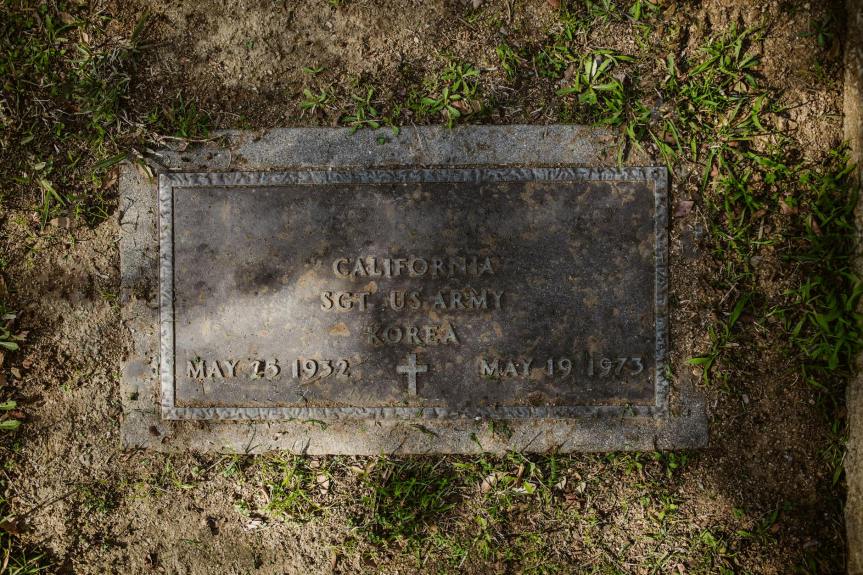
A friend recently told me that life is lived in ‘the Dash’ – or the line between your birth and death as written on one’s headstone. The Dash is the all-encompassing of living a life and not necessarily a life “well-lived”. What we do in “the Dash” really is all there is. The Dash is the realm of all possibilities, big and small. When we see life from the top down, like we are managing ‘the Dash’, the possibilities feel endless. However, when we look at life from within the Dash, do we really have the perspective we need? How much of “the Dash” is real and what is imagined by me as part of living my life?

I’ve been feeling of late that I need to get out of my own way as I navigate my Dash. After many years of working for someone else, my own creativity is now interrupting my ideas of what should be for me in retirement. What I didn’t truly understand is how my coping behaviors did not leave any mental space for any new ideas that might have helped shape a life. Many times, I see things that I’m hopeful for versus what truly is. Can a person have an imaginary Dash from reality? And, isn’t that also part of one’s Dash? Too many questions to answer – yet – I think I found my own personal answer. I love the idea of the possibility of a life that moves up and down around a centering thought of love and gratitude – and without judgment of self and others. This realization came from a recent experience and pointed to how I want to navigate my personal Dash.

Let me correct this: I don’t want to navigate my Dash. I want to LIVE my Dash. Feels different, doesn’t it? My first experience was amazing and I’m looking to bump along in my Dash from this vantage point. A vantage point that throws the idea of a random life out the window and where we institute a mindset that nothing is random and all is guided by our feelings and thoughts. Getting these (feelings and thoughts) correct is our Dash work. Here is an example:

I recently began working on jigsaw puzzles as part of my effort to be intentional with my time. Sitting with a puzzle piece, contemplating its placement on my landscape of colorful abstracts, slowed time down to a molasses-like pace. (Yeah, me!) This is key because, as a child, I struggled with sitting still and focusing on something like a puzzle. Or coloring book. The only way I would sit is if I was playing with my mother’s change because I was busy doing the addition and subtraction in my head. Until I began to play video games as an adult, I really couldn’t sit still as my brain always raced and propelled me to move. My job as an auditor was especially challenging and I became a master at distraction to hold my interest and focus. Many times, I would be found pacing or doing something totally inane to help me focus. My diagnosis last year of ADHD (Gray Ladies Unite) explained away many of the ‘crazies’ and I was finally capable of seeing my behavior as normal – for me – and be okay with the restlessness. This mental approval of myself had been what I was missing for my entire adult life; I’m not complaining for this way of self-berating behavior gave me this life I am now enjoying. I just now need to repair the toll of decades of self-judgment that was unchecked because this judgment made me successful. Part of that repair was embarking a self-discovery journey, including therapy.

As part of my retirement, I began a weekly ‘walking’ exercise in my town. Outside of our meeting area was a bookshelf containing books and puzzles for a causal exchange. I took my first puzzle earlier this year to try out my ability to focus and concentrate. The first few times were tough as I kept getting up to do something else – usually something needed cleaning. I became increasing frustrated and began to recognize that my need to get up and move was how I learned to cope with the restlessness.

Over a few months, I did quite a few puzzles, from nature scenes to country life. The ability to sit and understand the compulsion to always ‘get up’ and ‘do’ allowed me to now manage my mindset. What a shift! I began to seek out a new puzzle each week to practice sitting still and focusing. A few months ago, I was looking for a puzzle and just couldn’t decide. I turned my attention away from the shelf when a puzzle landed on my foot, opening up, and the contents (thankfully already placed in a slider storage bag) spilled out. This was near impossible because the puzzle almost had to be pushed to land in such a manner. The box is two inches thick and sturdy. To fall on my foot from three feet away, open up, and spill it contents was not normal. OK, Universe, color me intrigued. I was stunned to quiet which does take effort!

I picked up the puzzle and took it home with me like a secret treasure, a knowing. (No, it was a painting of a lighthouse on a cliff.) After completing the puzzle, I sat back and waited for lightening to strike, so sure that the epiphany would be immense. After all, the puzzle flew at me! (By the end of the story, this puzzle will have taken flight and baked cookies, too!) Of course, nothing happened. No magic realization, no immediate insight into the meaning of life. I really didn’t know what to think other than there was something to this puzzle. The next week, I found myself at the shelf where the puzzle was from last week trying to figure out what happened. In its place? A well-worn book called Awareness: Conversations with the Masters. Intrigued, I picked up the book and found it was written based on a retreat conducted by Anthony de Mello, a Jesuit priest. I set it back on the shelf thinking that I have read a lot of these types of books when it fell off the shelf and landed on my foot. “Just what is wrong with the shelf?” I wondered when I realized that this book was MY sign!! I snatched that book up and tucked it away into my things, now a precious gift.

I began reading the book that evening and enjoyed it so much that I purchased the audio to listen in the car. My place in the book I’m reading with my eyes is different than the audio book. I wondered when the two might align and if that would be an interesting point. And, yes, it was – and that is where I will leave this. This book just recognized how much of our life we create in our head versus what is truly real. De Mello believes that we just need to become “awake” or aware of what is real versus what is not real. (Believe me when we have a whole lotta junk that is not real. Just sayin’.)

The morale of my story is this: Let life unfold FOR you. The hard bits are also FOR you – to learn. The emotions are not easy but they tell a tale of how you see the world. The emotions point to something in YOU or how you are seeing or being in a situation. We cannot be made to feel an emotion by someone else. As a child, I did not understand that feelings are okay. It is a signpost of how you truly feel – like a gut reaction. If the feeling isn’t what you like or expect, examine it for what is there and place your own judgment aside. Open your mind and ask the harder question of yourself, without accusation. Take time to slow down and really be intentional. These feelings are guidance and can be changed. Think of it this way: When you love someone, you want to help them. Love your fellow human. Help them when you can. Love yourself too.

Peace.

Are You Lagging When You Should Be Leading?

What would you do or who would you be if you knew the end of your life? Or, in other words, if you were guaranteed a specific result based on your desired outcomes? There are some things in life where your behavior guarantees certain outcomes. Yet, why don’t we do these behaviors when we are able to in order to achieve said desired result? It is in the daily habits that we succeed yet we don’t have that final ‘done’ feeling at the end of the day. I just hate feeling like things are undone and wondered if this happens to you, too. What I learned about my own thinking helped me to see how my lack of understanding actually was contributing to my immediate dissatisfaction. My question to solve: How do I realize my big goals that will take time to achieve? (Consistency.) How do I establish consistency? (Cue sound of crickets.) I realized that I may have been looking at my big goals in the wrong way.

Let me explain.

In my thinking, there are two types of goal timelines: lag and lead. To me, “lag” means a goal that is realized in the future based on the culmination of the past. A “lead” to me means that the change right now will have an instant result. Or, your lead behaviors result in the achievement of your lag goals. Generally, these terms are usually defined in business situations where your lag goal (e.g., revenue goals, etc.) are realized over time through the performance of a ‘lead’ goal (e.g., increasing sales, etc.). FranklinCovey has brought this into the human performance discussion as follows – and pay particular attention to the idea of ‘measures’ versus ‘goals’ which is where my distinction is a bit different:

“While a lag measure tells you if you’ve achieved the goal, a lead measure tells you if you are likely to achieve the goal…No matter what you are trying to achieve, your success will be based on two kinds of measures: Lag and Lead…Lags are measures [emphasis added] you spend time losing sleep over. They are things like revenue, profit, quality, and customer satisfaction. They are called lags because by the time you see them, the performance that drove them has already passed. You can’t do anything to fix them; they are history.

Lead measures [emphasis added] track the critical activities that drive or lead to the lag measure. They predict the success of the lag measure and are influenced directly by the team. An example of a lag measure is weight loss. Which activities or lead measures will lead to weight loss? Diet and exercise! Proper diet and exercise predict the success of weight loss, and they are activities that we can directly influence. Simple enough, but be careful: even the smartest people fall into the trap of fixating on a lag measure that they can’t directly influence. This is because lags are easier to measure and they represent the result we ultimately want. Think of a lead measure as a lever that moves your Wildly Important Goal®.”

I emphasized in the above quote that FC was discussing ‘measures’ as opposed to ‘goals’. These feel different to me so I thought to ask my old friend, Mr. Google, what he thought. According to this website of a company which helps online business improve their presence and profitability, the definition was more towards financial. However, this definition is a bit easier to understand in terms of a goal/achievement discussion/context:

  • Goal: desired end result
    • Examples: number of leads per month, dollars in sales per month, number of job applicants per job post
  • Metric: measurement
    • Examples: website visits, email subscribers, contact form inquiries

Using this conceptual framework, I interpreted my lag goal of weight loss would only be realized by lead activities or measures each day that, over time, will give me the lag result. (I believe weight loss – or loss of any kind – is a poor goal. I don’t want to lose something as a goal; I want to gain something and that, Gentle Reader, is my health and sense of self.) My first shift was in the energy and momentum of gaining something (versus losing something). However, I also found that I have been focusing on my lag goal expecting lead results. Or, I need to exercise greater patience and tolerance with myself each day to allow me the space to achieve over time, taking my lag goal a day at a time through lead activities. Instead of hanging my hat on the overall lag goal, I’m focusing on today which is all I’m guaranteed – and maybe not even the whole day! I’m trusting that I will have another opportunity to do more tomorrow. And, in that, I’ve realized that my lead activities must involve self-care to create an environment for me to be successful. I’ve begun mentally focusing on the ‘lead’ activity each day without a focus on the bigass “lag” goal because the long term focus is not helpful for me, today, and will be realized if I can be successful TODAY. Not Tuesday, but TODAY. (This is my journey and yours will be different. The idea of this is for you to create some space in your heart to not be so self-critical in failure.)

I realized that I’ve been measuring many of my habits with lag goal expectations when they need to be a finer level of goal. I began making this shift about a year ago with really small steps. Mine was routine manicures. This is a visual reminder of my lead habit realizing my long term lag goal for every time I look at my hands, I feel a sense of peace. It is a little habit I created – very simple – and extremely effective. This led me to a bigger goal: feeling better in my body as I age.

Feeling better in my body took on quite a few more specific goals: eating well, mental health, improving my patience and tolerance with myself, and the creation of a daily “anchoring” exercise habit. Before I could get to the daily exercise, I had to start really small. Right now, I am currently riding my stationary bike 3.5 miles a day in 15 minutes. This is up from my starting point of 10 minutes 1.5 miles. (Progression in my lead goals leads to progress in the lag goals.) I initially tried to begin by doing 10 minutes, no mileage restriction. Did that for a day and stopped. I felt really down on myself, going down a familiar path of negative self-talk and beratement. Rather than beat myself up, I looked at myself as a corporation and did a ‘lessons learned’ on my experience. (Unemotional!!!!) I asked myself what worked before? I answered with “Nothing, you idiot.” (The negativity was overwhelming!) I then spoke to myself as I would someone who was not me, or kinder. I asked myself what could I do that is a smaller step than actually getting on my bike? Or, where was my beginning baseline for I needed to establish a smaller habit that I could consistently perform with relative ease.

What could I do? I got dressed. That was it, folks. I got dressed. This was where I was for about two weeks as I contemplated the bike. I needed to feel the inspiration and the desire to expand. (This is KEY!) I sat in this place and just loved myself for getting dressed. One day, I thought, I can do the bike now. Because I had the getting dressed habit already nailed, I naturally returned to the bike. This created momentum and, each day, I get dressed and get on the bike.

How do I know I have momentum? Well, interestingly enough, I also did a ‘lessons learned’ on why I was successful, too. (Study your successes as they teach you just like failure is a teacher and not a final result.) I give myself one day of rest each week and I really find that the following day is extremely difficult for me to obtain the same performance as the day before my break. This shows me just how important momentum is in our habits. We must ride one wave onto the shore before finding our next wave to get us even further. Now, I expect to be a little sluggish after a day off and that is OK too.

Note this again: I actually did not begin on the bike for about two weeks until I felt the getting dressed in my bike shorts, tee shirt, and sneakers was a habit that I could consistently perform with relative ease. I’m repeating this because it is extremely important for you to begin where you are currently, and what you think you may add without too much drama. Stop thinking you should be further along because you are lying to yourself. You are where you should be because your habits created this place. It’s all OK. You are OK.

You know, we humans strive for comfort and it is through our lead daily activities that we reach our lag goals. Many times, our goals are opposite our desire for comfort so this change must be confronted in a kind and loving manner. Reaching your lag goals will create new opportunities for reflection and new travels. Be prepared for you will have a whole new world open up. For me, the exercise habit has become an ‘anchoring’ goal for my entire morning routine. This includes coffee, medicines, breakfast preparation, and my Morning Pages. (Morning Pages are an awesome way to get rid of your mental clutter – highly recommend some sort of journaling support for you as a lead supportive activity.)

Harvard Pilgrim Healthcare, a leading healthcare company, described the term “anchor habits” in this way which I found very true. (Here is a link to their article with good information.) “Anchor habits are small, core routines that are ingrained within us like getting up each day or, for some, exercising. Once you have an anchor habit, it’s also easier to continue adding to your routine and achieving more.” Creating an anchor habit takes time and is well-worth the journey. This journey helps you create a healthy sense of self-discipline which is one of the cornerstones of self-care. Love yourself enough to create the discipline you need to achieve your lag goals with daily lead activities.

Peace.

Recovery Blvd, Milemarker 1: Psoriasis Rd.

Hello, and Happy Spring!

This journey to healing is what I plan to begin posting in an effort to see if others have had a similar journey. I’ve constructed a few ‘pillars’ in my journey to improving my health that I will reference as decision points or “milemarkers” where I made a turn on Recovery Blvd – six to be exact: Psoriasis Road, Gut Service Road & the Gut Health Highway, Depression/Anxiety Lane, Thyroid Street, Joints Turnpike, Highway to Obesity, and Longevity Drive. (The actual healing journey that I am taking is separately documented using a daily journal and will be published at some point.)

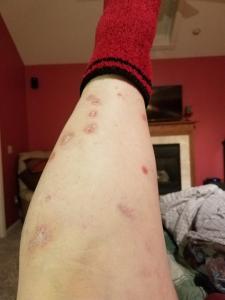
Now, when you hear the term “psoriasis”, what comes to mind for you? Used to be that, for me, psoriasis is what people got in their hair. Dandruff. Purchase the appropriate hair shampoo and you are cured. When my psoriasis appeared as a little spot the size of an ingrown hair on my left leg, my inclination was to slap some cream on my really dry skin, quit whining, and move on with life. As you can see, the little red dot on my leg has turned into quite the situation.

My first ‘milemarker’ in my journey is healing my psoriasis. This process is the most confusing and is driving my trip to Longevity Drive. The realization that that this part of my journey is to be a major cornerstone for my own longevity and bright future rests well with me for it is my main obtacle to overcome. I’d like to also help others with similar situations with is why I’m taking my time to really sort this out. I have found that my focus needs to be on improving my health and not just ‘losing weight’. This is the first photo I took of my legs (red sock). I sent the photo to my mom to have her see what I kept referring to as my dry legs. This was after over 10 years of trying to get rid of the lesions. It is a very slow moving disease with me.

Yes, my psoriasis began – or so I thought – with the appearance of a small and barely noticeable lesion that would not heal. Determined I had skin cancer, I made the first of what would be rounds of dermatology appointments. However, later in my journey, I began to realize the my psoriasis was the result of something much more, and began much earlier than the presentation of a small dot on my leg. This journey was fraught with misinformation or just ill-informed medical professionals who are to geared to a drug prescription pad solution. Here are a few ‘shocks’ I discovered along the way which really shaped my treatment plan…or lack thereof.

Left Leg circa 2017

Shock #1 – Medical Treatment of an Autoimmune Disorder. When my psoriasis lesion presented in 2003, I was told to just watch it. I’ve since come to realize that this advice was very bad. Because the lesion was too small to be treated and, with my history of cancer, no one would prescribe really strong drugs for such a small issue. (Good, because I didn’t want them anyway.) I also had a severe Vitamin D deficiency; where normal was 40, I had 10. This factor was overlooked by my dermatologist.

While the guidance of ‘do nothing’ was bad, this doctor could have prescribed strong drugs to kill my immue system when, in fact, my immune system was working as expected. My doctor just didn’t view psoriasis that way. I hope that the past 20 years have helped to educate him.

What I didn’t know is that I would hear this phrase for the next 20 years: Too small, not severe enough, etc. When did this little skin issue become “severe enough” to be treated? Surely, there was some cause, wasn’t there? More little spots began to appear looking like a little scrapes or knicks. Again, too small to be given oral medication (Again, Thank You!), and too much to be totally ignored. Yet, I did just that with one exception: I began to document my journey in pictures. This is the same leg, about a month later, right after a flare up. A few things to notice here. While the lesions look about the same, the redness surrounding them indicate a flaring of the wound. During a flare, everything becomes inflamed. Swollen legs and feet. My joints would ache. Towards the end of whatever would exacerbate the lesions, I would observe that the red areas now became part of the whole. Like the spread of ooze, my psoriasis crept into the healthy skin. This photo is at the end of a flare when my legs became normal again and I could see the psoriasis become larger as a result of the flare. Also, I noted the difference in leg size. This was when I realized that there may be a correlation of swelling to flare ups. My legs would swell for about two days and, then, become really thin. I could not correlate to any cause but knew there was something else, something more insidious that was part of my daily life.

I also noted that the lesions became larger within the inflammation itself. While swollen legs, feet and hands had afflicted me pretty much my entire life, I had always discounted this as just part of being me. Instead of deciding that I just skulk off into the corner, I began to become more proactive about whether or not everybody suffered as I did with swollen legs and feet. (I learned they didn’t.) Then, I began to question the treatment plan and considered this question: What if the treatment plan that has been proposed was inappropriate? (It was, for it did not search the cause but offered BandAid solutions.) During this time, I began to test certain things and looked for a dietary correlation. Changing my perspective a bit, I wondered if there was another ’cause’ for my brand of psoriasis and is there any role of bodily inflammation in a skin disorder? Inflammation is my name; disease is my game. More on that in another post. The journey was very long, windy, and extremely helpful…which lead me to shock #2.

Shock #2. Psoriasis has an internal causation. My own research showed me that psoriasis is not a skin disorder. While it presents on the skin, the ’cause’ is internal and psoriasis is labled as an ‘autoimmune’ disorder. And, do you think the medical doctor EVER told me this? No. I had to research this myself. Why would I not have been sent to an autoimmune specialist? Well, because psoriasis is labeled by the medical establishment as a skin condition because that is all people see.

We need to look past the presentation and, like obesity, challenge that these disorders are reflections of personal behavior because, frankly, they aren’t. That viewpoint, then, impacts one’s treatment options when your medical doctor believes that you are the cause of your own disease. Our medical establishment treats results because that is monetized and can be clearly justified. So, in a cut, we treat the result by using stitches and bandages. However, if the person endured their cut during an argument or violent fight, treating the injury does not solve the problem, does it? While this is an extreme example, it clearly highlights that disease may be a result of something else and not necessarily just my body going bad. Bodies don’t go bad, they are mistreated and have an unexpected result from the mistreatment.

Shock #3 – There is no treatment that will “fix” my psoriasis. Let’s fast forward now so that all of the boring past, trials and tribulations, can serve as my ‘road to recovery’. This is my psoriasis on June 19, 2021. I really believe the worsening of my symptoms was exacerbated by the Pandemic and being confined to the house. This, too, is the subject of a series of prior posts so I won’t go into this right here in any detail. Just know that I gained a siginficant amount of weight and leaned into anything and everything I ate from my childhood. This is also where I learned that I used food to soothe my anxiety and depression. The back of my leg is equally as inflamed with these sores. I’m showing only my left leg in comparison just to save and limit the yuckiness of my legs. My right leg is a bit better but shows the same progression. (The original lesion from 2003 was on my left leg so I call it ‘my older sores’.) Each spreading was denoted by small red spots or blotches that just became larger and larger. Today, this has spread to my elbows, hands, face, and nose. All of this spreading is after light treatment, oral therapies (yes, one doctor presribed one where I got extremely ill), topical therapies, and various different diet options. Nothing helped.

Shock #4 – The medical establishment does not provide prevention tips; they treat the disease. This may not always be the best course of action. This was not a new idea to me but I always just wondered more like a “What if” scenario. What if this skin disorder wasn’t caused by my body deciding it was breaking? Throughout my entire psoriasis experience, I would wonder about this and actually asked a few times about dietary correlations or other environmental causes. The answer of your body is just broken made more sense to my doctors when, in fact, I later discovered that my psoriasis IS the reflection of some underlying cause. This, I learned, by researching medical journals and SCIENCE. Yes, SCIENCE. Then, I took a step back and really looked at medical treatment and if I even received adequate treatment. Up until that point, the thought would just pass in and out, like a fleeting image. And, just recently, life gave me my answer.

This is one of those moments where you are just stunned into the truth of the matter. Sort of a ‘stunned to silence’ situation. I have a few of them in my life and this most recent experience was definitely one of them. It was this experience that solidified my hypothesis that is Shock #4. My GP/doctor is monitoring me for high blood pressure. In my most recent appointment in 2023, I was congratulated for losing 30 pounds. My weight, however, was incorrectly recorded for I had only lost 6 pounds. These 6 pounds, however, were and still are a monumental achievement for I lost them not through restriction but through conscious choice. Looking confused, my doctor read my recorded weight taken just 10 minutes prior – and I had to correct her because the last two numbers were transposed. A slight error? Well, in this same visit, I was asked if I wanted a dermatological referral – a full 20 years after my initial psoriasis diagnosis AND after I discussed in depth with this doctor during prior visits. Horrified and stunned, I just clammed up and that was that. This event was also when I realized that I needed to, once again, be my own counsel for the medical establishment was ill-equipped and unprepared to handle more complex situations of multiple symptoms that do not appear related. I needed a medical establishment that supported proactive healing and not always a pharmaceutical “solution”. And, after this recent visit, I don’t believe such exists…in this country anyway.

I began to consider my non-pharmaceutical options and once again began my research but with a new focus. You see, one of my GPs about 10 years ago muttered something about ‘vascular’ and told me to continue to see the dermatologist but we may want a vascular referral. (She has since left that practice.) I really had no idea what she meant. The only ‘vascular’ doctor I was aware of were surgeons and I certainly was not going to waste a surgeon’s time without a formal referral.

The idea, however, of an internal vascular cause for my psoriasis stayed with me. My research considered this and I began to search for a vascular possibility as the cause of my skin condition and I found a more formal term for my swelling: inflammation. By this point, I had noted and correlated the severe swelling in my legs and feet that I had always had to my psoriasis flares. In fact, I was so concerned that I was screened for psoriatic arthritis as a result of joint pain. (Negative for psoriatic arthritis, positive for osteoarthritis. Again, I have since learned that this is textbook progression of our aging process.) In bringing inflammation up to my doctor, however, the idea was quickly dismissed and the steroid route was once again discussed. This was when I realized that my psoriasis would continue despite my use of steroid and vitamin creams; I just knew that there had to be some other ‘source’ or the ‘original site’ of whatever was resulting in my psoriasis. I began to conduct my own research on vascular issues and skin disorders. Then, and this is very random, I began to wonder if the ‘particles’ or whatever my body was interpreting as a skin or autoimmune disorder was ‘pooling’ in my lower extremities due to poor circulation. Could that be a thing? I witnessed my mother-in-law and my own mother dealing with water coming through the skin on their legs. In both cases, my mother-in-law and mother would have been helped with exercise. Could psoriasis be like this but not with water but with ‘body junk’ or the results of some environmental cause that was slowly killing me? Then, I began to ponder that, in this case, what was the one thing I could do to help myself?

And that single question, my friends, was when I stumbled on the beauty and adventure of my lifetime.

My road to healing began with an exercise bike and a manicure.

More to come. Be gentle and go in peace.

Lessons from 2021 – August *or* Executing On An Idea

I develop my “Lessons for the Month of…” post ideas from the month that just passed. Usually, after I finish a blog post, I’m mentally drained.  That is a good time to just “tune in” to my inner self and think about what I’d like to write about for the next month.  The blog post begins at that point with my writing the title, a few sentences of my idea for that month, and then I let it “stew” for a bit until I’m ready to write.  What is fascinating to me is how much the topic correlates to actual events in my life, like I had planned the event to support my blog post idea!  And, the realization hit me this morning: I’ve been executing on my ideas all month and see the accomplishment.  (BTW, as I edit this, there is a loud snoring coming from my dog who graces me with his presence today. It is a comforting sound to hear a creature so trusting that he sleeps soundly on the floor next to me.  I’m enjoying my present today. ❤ )

Here are the notes I wrote to myself last month: “Write about how important an idea is, and that one must “execute” the idea because an idea without execution is just a dream.  Make your dream a reality through planning, planner peace.”  peace-5138679__480Well, Dear Reader, once I put my idea in storage for the month, I usually let the idea go to either root for further examination in the following month, or to totally get dumped with a new and emerging idea or event.  I have given myself the ability to pivot whenever I feel the creative juices flow in a different direction. Funnily enough, however, I’ve never done the latter and just scrapped an idea for my ideas have always had some kernel or nugget of truth in the month that just passed.  Isn’t that interesting? Anyway, I had planned to discuss the importance of acting on an idea and that is just what I’m doing these days and, to my surprise, it feels great!

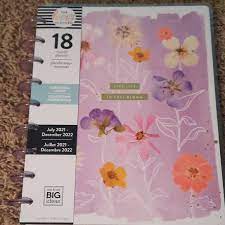
In my notes, I mention “planner peace” which many of you may not relate to this, or be familiar with the term.  (For me, this is a key tool to anchor me in my thinking.) For those of us who enjoy all things productivity, planner peace is like a type of Nirvana.  For those uninitiated, planner peace is defined as “…When you find the perfect system and style….w(h)ere every planner wants to be. There are many options to consider – size, functionality, style and much more.”  Planner peace is something I’ve strived for each day – trying to be better and accomplish everything in my heart’s desire, all rolled up into a paper journal or organization system. wooden-2562594__480 I’ve recently found this planner peace in my life but not in the way you may think. After years of videos, different planning styles, using “Frankenplanners” which are combinations of multiple systems, studying technology for productivity, and everything in between, I realized that nothing works if you don’t use it — which kept happening to me.  I felt like a personal failure each time I failed.  Then, I watched a Skillshare course on “Planner Peace” by this instructor who is so inspiring to me.  Rather than beating myself up over yet another failure, I began to accept that this try did not work – AND it was only a try so rather than wallow, why not  assess what worked and what failed…. and why, and gave myself a bit of tolerance to try again.  (Not my normal M.O.) In doing so, I realized that I loved writing things down but not everything, that I wanted something that was pretty and made me happy (sorry, plain paper), and that I could also add my own flair – if I wanted to. happy planner I settled on a Happy Planner  for my pretty needs, a horizontal layout which gives me just enough room for what I want to record, and stickers for little notes and to add some bling.  I can be found adding stickers to my planner during long meetings where I’m in listen only mode.  I found that if I’m busy with my hands, I can listen a bit better, too, as I’m not mentally distracted from the subject matter.  Unfortunately (or fortunately?), after this month of endless meetings, my planner is decorated all the way through October!  (And, having this all set up makes me so happy!)

And, speaking of endless meetings, I also began to write down my One Thing each day in the different areas of my life that are – right now – extremely important and part of my focus.  They are: personal, home and work.  That is it, folks.  Three One Things done each day for me to feel like the day was a success.  finger-1294109__480And, that, right there is the key: Feeling like a success.  While my planner for this month really shows how busy I was, the colors, notes, and stickers really enforced that I am busy, and that I was able to really “level up” these areas of my life through this extreme focus.  My house is clean, my work is caught up, and I have found such a great new You Tube inspiration that I’m not willing to share…yet.  Throughout the month on a few too many days my One Thing was “meetings” which, in the past, I never accounted for.  However, when you have ten meetings in an eight-hour day, “meetings” become a work task.  (I never recorded my meetings as a “task” before, always wondering why I felt like I hadn’t accomplished anything that day.  When you think about the schedule, it’s a wonder I even had lunch!)  I also stopped deliberately multi-tasking during these meetings by focusing on other work that needs to get done; adding stickers to my planner doesn’t require a lot of thought so my attention can be directed to the meeting and not what I’m not accomplishing by sitting in “listen only” mode.  I also recognized that the idea of multi-tasking is not a healthy mindset for me.  I mentally benefit from the ability to focus on my One Thing, complete my tasks, and then, if I have time, add any additional work or chores.  To try and be or do so many things at once dishonors myself and the work, too, for it cannot be my best work.

This realization allowed me to really use my planner in a more productive way; a tool that helps me to mind the future and today.  Anything related to the past is documented and I can easily go back to view that, too, so the past is in my mental past, too.  Keeping my mind in focus for “today” has been a struggle as I tend to live my life in a future mindset. I’ve realized that I haven’t always been happiest in the present moment, living with a mindset of “In the Meantime“….like I’ll do this right now because future me will want something else when X happens.  Well, folks, X ain’t coming any time soon so why not enjoy right now, give it all you got, and let X take care of itself? I defer many times to “future living” which I plan to write a series about (How ironic!).  “Future Living” is my term for my mindset each day and how I can sometimes be so focused on tomorrow that I miss out on today.  (Do you do this?)  I, unknowingly,  compromise today for the idea that tomorrow brings something better.  In the planner world, however, we can be about the future — recording appointments, goals, birthdays…you name it! wormhole-2514312__480However, if you aren’t also recording the “today”, you may not act on any of those wonderful goals you have written in your planner because there was no action plan.  I improperly used my planner as I had no “action plan” for today to reach those goals; I only recorded future events and goals and failed to construct the steps needed to reach (Key pro-tip, folks!) those future goals through changing my today. (Enjoy this TedTalk on the gap between planning and execution.) Because of the lack of planning for “today”, I did not open my planner each day and missed being able to execute on my long term goal through a short term activity for today. So, by finding my Planner Peace, and allowing myself to fail a few times, I’ve actually been more productive!  Now, as I look back at July, I don’t dwell in what I didn’t accomplish because I can see by all of my entries, my color coding, stickers, and post its — I was damn busy!  By creating a daily plan with my One Thing identified, I can do these small incremental tasks to achieve the larger goal. Because I’ve taken the time for myself each day, I don’t worry about what I didn’t do (past) or what I have to do (future) because today is where my head is at and my action plan for today says “Begin Wobble (August) post.”  And, there it is.  Check. Peace.

(Note: As I edit this post, it is August 29th and I wrote it a few weeks ago when inspired.  Since then, I failed to properly plan each day and fell into old comfortable habits of letting my email dictate my priorities.  I’m editing this feeling a bit uninspired and lethargic.  The inspiration in my post renews my faith that, in all things, today ain’t no guarantee. Be okay in the struggle for, in it, comes a diamond of an outcome. I’ve added a new link of a TedTalk about filling the gap between having a plan and executing on said plan.)


Lessons from 2021 – June *or* How a Changed Perspective Matters

Warning: this post discusses body image issues, treatment, and experiences.  If this is a triggering discussion for you, please move on from this post.  Always seek medical guidance from a professional following the best guidance from your physician. Be smart.

Last month, I discussed quite openly my own personal struggles with body dysmorphia and my weight.  In this post, I also discussed something called fat bias which is defined as “… the prejudicial assumption of personality characteristics based on an assessment of a person as being overweight or obese.” This definition also had the term fat phobia which one study defined as “… a pathological fear of fatness.” I described how my unconscious fat bias was at the center of insufficient medical treatment and resulted in my own spiral of depression and psychologically-disordered thinking; I, too, was fat-biased against myself.  shame-2088368_1280My own personal negative thinking was out of control and virtually undetectable except in bitter self-talk that was so ingrained, this talk “looped” into my own pattern of thinking…and to what I now realize is a heightened sense of shame.

What I did not touch on was how prevalent bias is how it impacted my own sense of self.  Apparently, based on this study, affiliated with Yale University’s Department of Psychology professionals, this is not an unusual situation.  The study states that, for “…although the strength of weight bias decreased as respondents’ body weight increased, a significant degree of anti-fat bias was still evident among even the most obese group of respondents, highlighting the pervasiveness of this bias.”  This level of bias is rampant in our society because people don’t want to be fat and would actually give up a year of their life or divorce their partner to avoid being overweight.  I inherently knew this, having been fat since I was born at 9+ pounds.  I endured these feelings as a young child and teenager until I adopted them about myself.  The feeling of separateness went away after that because I had adapted my own perspective to them so they assimilated into my own personal perspective of self.  What an unfortunate event to join!  To see this in writing, in a scientific study, just plain scared me into a better perspective…for myself.  This is the reason I’m sharing this thinking in these posts that, hopefully, it may also help you, Dear Reader.

In my journey to form a better opinion of myself by myself, I recently found a YouTube channel from an brave and inspiring young woman who is recovering from anorexia nervosa which, one might think, is the total opposite of being obese.  However, I found that her honest struggle discussion took on a decidedly similar tone to some of my own thinking relating to body image issues.  How interesting a correlation yet no one really discusses that both of these psychological disorders seem to be two sides of the same coin. So that we are all on the same page, I wanted to review what is meant by “body dysmorphia” or “body dysmorphic disorder.”  Body dysmorphic disorder is defined by this study as “…a distressing and impairing preoccupation with an imagined or slight defect in appearance.”  The study continues to provide greater context on this disorder by noting that “…recent research findings indicate that body dysmorphic disorder is relatively common, causes notable distress and impairment in functioning, and is associated with markedly poor quality of life.”  Oh, hallelujah.

My treatment was medical intervention on my 30th birthday.  That fact was not random for I decided that I was not going to repeat my errors thus far and I wanted a better and improved life…which included drug treatment.  This short-term treatment and diagnoses gave me the decided mental boost I needed sufficient for me to realize that I no longer needed to feel the way I did.  I did not, however, have much formal cognitive-behavioral therapy and sought this out on my own, in my own timing, and at my own pace.  That is how we arrived at this point in my life, decades later.  Now, how do I sum this all up into a simple statement?

Unconscious self-bias matters.

In doing my research for this post – mostly to help myself find a sense of balance in this important topic- I’ve found this article in the New York Times which includes information from Dr. Rebecca M. Puhl and colleagues at the University of Connecticut, Rudd Center for Food Policy and Obesity – the study is also linked below:

Stigmatization is associated with more frequent binge eating and other “maladaptive eating patterns,” Dr. Puhl reported in a comprehensive review of the subject in the American Journal of Public Health. “In a study of more than 2,400 overweight and obese women who belonged to a weight loss support organization,” she wrote, “79 percent reported coping with weight stigma on multiple occasions by eating more food, and 75 percent reported coping by refusing to diet.”

Furthermore, experiencing weight stigma can result in a poor self-image, depression and stress that in turn increase the risk of poor eating habits and difficulty losing weight and keeping it off. People can internalize weight stigma, blaming themselves for their excess weight and the social discrimination they experience.

Dr. Puhl’s study along with other studies also concluded that “…overweight and obese people who experience weight-based bias and who manage to lose weight are less able to maintain their weight loss.”  So, despite all odds, you successfully remove your excess weight and now are against the odds for maintaining said weight loss.  So, how does one get help for this disorder?  Personally, I found very little help from my doctors and therapists whose guidance was always, exercise more, restrict your food intake, and be happier.  mental-health-2019924__480Really?  What is shocking is how bad this guidance is because wouldn’t any reasonable person think that, if I could do this, I would do this? Does my doctor or therapist really think I like being obese? If you’d taken the time to actually pay attention to me, you’d realize that I’m a highly intelligent and educated woman who is struggling.  There was another answer for me and I couldn’t find a decent medical professional to actually help me.

Well, that, apparently, should not have been a surprise to me.  In an article from the American Psychological Association, January 2004, Vol 35, No. 1, the following quote under “hidden bias” really helped me to see that the lack of proper medical treatment was not my fault.  While I knew that there was an inherent bias, I had no idea how prevalent this bias really was in our society.  Check THIS data – I’ve added the bold words for emphasis:

Particularly alarming are findings that even specialists in obesity fall prey to negative associations when working with obese patients. For example, a recent study found that even health professionals–including psychologists–who specialize in obesity often used words such as “lazy,” “stupid” and “worthless” to describe obese people they come into contact with in their personal and professional lives, according to a September 2003 study published in Obesity Research (Vol. 11, No. 9) by Marlene B. Schwartz, PhD, Heather O’Neal Chambliss, PhD, Kelly Brownell, PhD, Steven N. Blair and Charles Billington, MD. The researchers used a self-report questionnaire and the Implicit Associations Test–a timed measure to test automatic biases–to assess the attitudes of clinicians and researchers who work with obese patients.

Wow.

So, let’s get down to the “brass tacks” of this issue.  People could suffer bias for their size their entire life, creating their own sense of self-bias, only to seek help from someone who also has this bias?  That’s right, folks.  Chilling, isn’t it? Given this is such a prevalent bias in our society, how likely is it that one may find a counselor without said bias? I’d argue that this is highly unlikely and to the detriment of the individual who is may be truly suffering both mentally and physically.

Another study actually measured the impact of weight bias and stigma on quality of care and outcomes for patients with obesity.  [I know this because this is the exact name of the study.]

Many healthcare providers hold strong negative attitudes and stereotypes about people with obesity. There is considerable evidence that such attitudes influence person-perceptions, judgment, interpersonal behavior and decision-making. These attitudes may impact the care they provide. Experiences of or expectations for poor treatment may cause stress and avoidance of care, mistrust of doctors and poor adherence among patients with obesity. Stigma can reduce the quality of care for patients with obesity despite the best intentions of healthcare providers to provide high-quality care. 

I’m just going to leave this right there.  I had another study to highlight about this and realized that there is such a wealth of data out there to support this that all you, Dear Reader, need to do is “Google” “fat bias” and see what you find.

pills-2333023__480So, now that you are educated in this area, why don’t you examine if you, too, have a fat bias?  If you struggle with your weight, honestly consider if a fat bias is preventing you  you from realizing your own goals. How might decades of ingrained thinking be impacting you?  Are you looking for that magic pill to fix your situation? (Don’t, there isn’t one.) Be kind with yourself and accept that we are all trying our best and that you are a product of your environment and perceptions, self including.  It is my hope that this information helps you to fight for what you need and to not let someone else’s – or your own – bias prevent you from living the life you were meant to live.  Peace.

UPDATE: From May, I indicated I was going to begin a low carbohydrate way of eating to help my own health.  I began slowly by substituting my breakfast with a more “ketogenic” style of eating.  After two weeks, I began to incorporate my lunches in a similar style.  While not fully ketogenic, I was eating a reduced amount of sugar and simple carbohydrate and saw some immediate positive results.  I noted my psoraisis is less-inflamed and its spreading seems to be lessened, my moods and focus improved.  I began my full ketogenic diet on June 1, 2020, and have kept to between 20-60 grams of “net” carbohydrates in any day.  My mental fogginess has really lessened and my depression eased.  My mood is much better and I think I’m laughing a bit more.  I’m enjoying the experience and am excited to see where this journey to renewed health is taking me. This fact is extremely important to me.


Lessons from 2021 – May *or* Getting Better and Better

My issues surrounding weight and body image began when I was about eight years of age.  I did not realize at that time that this was by design or for my own purpose.  I call it my own “life’s design” meaning that this situation creates a certain experience for me.  Unfortunately, we only understand life after we’ve lived it, and this realization has taken me about fifty years to figure out.  (I’m glad the realization finally hit me and not in another fifty years!)  My journey has been really life-affirming and I realize now that life is just getting better and better for me.  And, news flash.  It is getting better for you, too.  I’ve just changed how I measure “better” and found that to be the key to living well: Perspective.

At about eight years old, I went on my first diet.  My parents were new to this country when I was born and desperately tried to assimilate.  (In their home country, they learned first-hand about how being different could get one killed.)  As their first-born child, I had the joys of being their first for “life in the U.S. with children”.  Textbook first-born. I recall being called into the nurse’s office from my fifth grade classroom at the local elementary school, and being weighed with comments and hushed tones; it left me feeling “less than,” abnormal, or wrong. I was EIGHT YEARS OLD!  When the school told my parents that I was too heavy, they acted on this information and treated me as an adult would be treated.  Larger than most children, I always felt clumsy or top heavy – even today.  My size was concerning to my parents as something that was wrong with me, like it reflected a lack of self-monitoring so that precipitated my first diet.   This was also my first meeting with fat bias – from those adults who, frankly, should have known better.  My mother, struggling with her weight her entire life, did not want her children to suffer or to not fit in.  What was my weight? 78 pounds.  My height? A little larger than normal. What I did realize then is that I did not “fit” the mold of a child’s body which left me feeling ostracized, different or wrong.  This perpetuated my increase in weight so that I could hide or not be seen, blend.

I remember quite a bit about my childhood and being overweight.  Unfortunately, everything else is a blur.  Isn’t that interesting?  I remember the time my mother was told what a shame it was that I was so heavy, or that I had such a pretty face that it was a shame that I was……wait for it…..ok….let’s say this all together in hushed tones so no one knows…shhh…she doesn’t realize it….fat.  That sense of shame, guilt and failure has plagued me my entire adult life; it was created by external factors taking advantage of a really lost little girl.  (Today, as an adult, one would look at my life and not even realize that these feelings are still with me.) I struggled with body image issues exacerbated during my school years by boys who thought it okay to remark about my weight, or girls who were almost worse, teasing me unmercifully for being what they feared.  Here is that word again: fat.  Painfully shy, I began to come out of my shell at about sixteen only to add layers of clothing, fat, and emotions so that I became lost in my own body issues…and angry enough to lash out.  At about twenty-three, I began to turn a corner in my own self-actualization journey.  This journey was not without its own pitfalls yet, through it all, I’ve realized that I’ve come out better as a result.  I’ve really enjoyed the highs and lows of living in this time and on this planet as it taught me about myself and gave me the experiences I need to be at this point in my life.  Throughout it all, this backdrop of my early childhood experiences has set my own personal stage for my life. Instead of lamenting on what cannot be changed, I recently began to change my thinking about these experiences – and, finally, focused on what I was meant to learn by these experiences, not how I felt at the time.  Before this realization these carryover emotions had only succeeded in creating a weird mental “soup” that was not helpful to me today and, yet, was extremely helpful for it focused me on “outside the box” type of thinking about my issues. So, without the bad, I could not see the good.  I realized that I was failed by the medical establishment in the treatment of my fat.  My weight was seen as a personal failure or a lack of control when, in reality, it was an effect of the larger and emerging medical issue.

Here is a bit of my medical history.   In the late 70s and early 80s, I began to have gut issues in my teens along with cystic acne.  Treatment? A course of antibiotics for MONTHS.  No relief but major stomach problems which, fueled by my mental anxiety, took center stage.  At 16, I was told to drink antacids when I had a sour stomach.  Between this time and the late 90s, I was relatively healthy, smoking, and prone to bouts of seasonal allergies.  During this time, my weight crept up and up.  Fad dieting has been my life story where I’d lose a little weight, have a health issue, feel sorry for myself, and eat.  On my 30th birthday, I was diagnosed with depression and body dysmorphic disorder; Happy Birthday to me!!  I began a cycle of Prozac and treatment that made a significant improvement. This experience gave me a taste of what “normal” must feel like – and I wanted it!!

In the late 90s, I began to experience dizziness upon standing and felt extremely unwell.  My jaw was tight and I began to grind my teeth, creating severe jaw pain that hurt my entire head.  I snored very heavily and slept very soundly yet poorly.  My skin was odd with tags, discoloration, and just poor tone.  At this time, after a five-hour glucose tolerance test, I was diagnosed with metabolic syndrome and insulin resistance.  When I asked what pills I should take, my doctor said that they really didn’t treat this. What?  “Isn’t there a pill for everything?” I naively inquired. He looked confused as did I, mentioned something about diet, and that was it.  So, not understanding fully the diagnoses, I  went back to my old habit of self-blame and hyper-criticism, and this cycle continued for decades.  My health was up and down with stomach issues, gallbladder removal, blood pressure, and just feeling yucky all of the time.

At this point, I was just ignoring my health because, after all, if there wasn’t a pill to treat me, I’m not really sick, am I?  I was very interested in alternative medicine and bought into the hype of a pill as a cure there, too.  At the crux was this mistaken belief: If I was just a better person, I would not feel this way.  After all,  I could not actually see the effect of my long-term health was doing on my body except for my weight which had steadily increased over the decades.  That was an old problem of my own making, right? I had bought into the idea of Western medicine being the only cure available to me even though I sought alternative solutions, I still had the “pill will cure” mindset.  In a precipitous series of events beginning in 2003, I was diagnosed with a severe vitamin D deficiency and psoriasis.  The vitamin D test result goal was 30 – which was the lowest in the normal range; my score was 8.  The psoriasis appeared as a small spot on my lower leg that would not heal.  Not correlating the two together, continued as I was, adding a vitamin D supplement – my pill panacea – when I remember to take them.

Another decade passes of the same.  However, my psoriasis became extremely bad in 2012 when, during a particularly stressful period of time, my health began a further decline.  Stress took its toll.  Because my scales only appear on my elbows and calves,  my doctor did not want to use oral drugs as the patches covered about twenty percent of my body.  I used steroid creams for a while which had very limiting success.  I sought medical advice from top hospitals in New York City on whatever “this” was that was covering my lower extremities.  Then, an interesting thing happened on one of my visits.  The steroid ointment had worked for me so well that I could no longer see any lesions yet, when I stopped using the ointment, the psoriasis came back  — and angrier than ever.  These scales were taking on a life of their own!  In my next visit, I asked my doctor at the big hospital why, when I stopped using the ointment, the scaly patches would return – and be worse.  She really didn’t have an answer.  Then I asked the loaded question: Why, if this steroid cream does not resolve the matter, was I using this stuff?  I wanted a cure, not a stop-gap measure.  That was when she shrugged and pretty much told me that this was the way my psoriasis treatment would be, or there was no known cure.  I began to wonder just why would I take or apply a drug that doesn’t cure this situation but just puts a bandage on it?  After asking about a possible dietary correlation, my doctor also told me that there were some studies about diet relationship but nothing conclusive.  This is when I realized that the entire medical establishment is based on treatment of a condition, not prevention.  Prevention or self-help cannot be monetized; therefore, there is no interest in providing a patient with information for them to use or institute.  Again, this caused a struggle in me as I had no idea where to turn.  Then, I got the luckiest diagnosis ever: thyroid cancer.

Hello, thyroid cancer, for you have taught me well on my journey.  In 2016, my dentist found a lump in my throat during my annual examination.  I was found to have a parathyroid tumor that was leeching calcium from my bones.  (A decade prior, I had fallen and broken my rib during a dizzy spell.)  The parathyroid tumor required I have surgery to remove it.  It has also grown into my thyroid which required a partial removal of that organ as well.  My thyroid was found to have cysts which were biopsied and found to be benign.  During the surgery, however, the hospital tested the tumor and the portion of my thyroid that was removed.  This is standard in any parathyroid tumor removal to ensure the entire mass had been adequately removed; it was, and, with it, they uncovered my cancer.  Yes, my thyroid cancer was diagnosed by total accident even after multiple biopsies due to the cysts.  By this time, however, I had been studying food, nutrition, and diet for so long that I knew of a possible correlation between my poor diet and my health.  After all, it does not take a genius to realize that, if you power your body with bad fuel, you get bad results.  However, just what is considered “good” fuel was something I struggled with.  I’ve learned that I just need to pay attention to what my body is telling me.

In the past four years, I’ve run the gamut of research on food and disease.  Today is May the 5th, 2021, and I just now realized this morning that all of these apparently random health issues: acne, depression, cancer, psoriasis, high blood pressure, hair loss, obesity, gut issues (gallbladder, ulcer) and my brain fog all correlate right straight back to my diagnosis of metabolic syndrome from the 90s.  Now, isn’t THAT a pretty picture? I think I just accepted that I’m going to age, that my body will decline and decay, and then I get to move on to my next journey.  What’s that saying? “No one gets out alive?”  Sure, that is true.  However, we have the power to choose how we age, how we live life, and if we think we can help ourselves through small changes and a new mindset.  On this morning, while watching a doctor on YouTube, he discussed having too much insulin in the blood, or the 7 Skin Signs of INSULIN RESISTANCE (Root Cause 2021)  Not sure how this came into my view but I thought, heck, I wonder if he mentions psoriasis.  What I didn’t know is that I’ve had ALL OF THESE, and had no idea that these issues correlated to the my prior diagnosis of insulin resistance (metabolic syndrome).  In the past, most doctors would just tell me to lose weight.  What they didn’t understand is that my weight was a sign of the overall issue, not the cause.

The idea of weight as a factor needs to really be examined; I believe this stems from a medical bias against people who are overweight.  Don’t you think that, if I could, I would lose weight? Huh?  Don’t you think I want to wear cute clothes, fit into nice jeans, and feel normal?  The idea of telling me to lose weight really doubled down on my depression and body dysmorphia.  I’d leave my medical appointments feeling so bad that I just wouldn’t go back after failing time and time again.

My issue IS the insulin resistance, or hyperinsulinemia that was diagnosed twenty-five years ago.  Being chronically resistant to insulin causes all kinds of stuff that I’ve just tried to manage without much information and success. You know, though, I’ve seen this term – hyperinsulinemia – used in my patient workups and my medical charts.  I never really understood just what was being discussed and believe it related to my weight, or my weight caused the excess amount of insulin in my blood.  When I explained this to my husband, he asked why wouldn’t the large NYC hospital know about the diet correlation to my psoriasis?  Why is it that I can go for years, suffering, only to be made aware of this by a random YouTube video?  I don’t know the answer to this which is why I’m being very forward and honest in this post.  How does this happen?? The lack of dietary guidance that I received should be criminal.  Or, the fact that a pill could not be dispensed to me stunted my medical treatment for the medical establishment determined that I could not be helped.  There is no money in changing my diet…unless, of course, you have a diet plan for sale AND that plan involves reduced calories because I obviously cannot control myself seeing as I am obese.  Right.  I will put my plate to yours any day and show you how you eat more than I do.  Hands down.  What I’ve learned and finally assimilated is that my body responds differently than your body does to the same food.

Speaking of food, this is how I can (and will) fix these ailments.  Low carb, no sugar, high fat.  Or, the Ketogenic diet.  Of course, the professional dieter that I am, I’ve done Keto, Paleo, AIP….you name it.  These have all been done in the name of losing weight so my health issues go away.  This really isn’t the right way of thinking for me and may have contributed to my lack of permanent success.  For some unknown reason, understanding that I’m doing this for my own health – and not for any weight loss reason – seems to be more motivating for me.  What is curious for me, too, is the idea of intermittent fasting as a part of my plan.  I plan to let me body go through all of my stored insulin without feeding my body more carbohydrates.  Being home in the Pandemic has made me realize that I don’t really feel very hungry during certain times of the day yet I eat meals anyway because the clock says it is lunch time – and you don’t want to see my “hangry.”   I also eat because I’m bored which I’ve realized is a frequent state for me.  I like being busy and creative, and those outlets have been stunted in my life through my negative mindset.  I’m unwrapping my creative side in many ways and am so enjoying a return to myself that my heart just bursts with good feelings.

Today is now May the 7th, 2021, and I wanted to include a little update on fasting.  For the past two days, I’ve been working on fasting in the mornings when I am busiest and have noticed a slight difference in my energy – all positive.  Both of these issues are part of Dr. Ken’s discussion so I’m returning to study this a bit more and take matters back into my own hands…and mouth.  After fifty years, it is about time.  The moral of my story: Never give up for life just gets better and better. Rename “failure” to be “event” for failure adds a feeling to something random.  Be vigilant to see it through, and coach yourself as you would do others: kindly and lovingly. Peace.

Note:  If you have read this far, thank you.  I wanted to add a few scientific journals on information that I wish my doctor had discussed with me.  This is a discussion of my own personal experiences and realizations.  There is a wealth of data out there.

Nutrition and psoriasis: is there any association between the severity of the disease and adherence to the Mediterranean diet?

Patients with psoriasis are insulin resistant

Metabolic syndrome, hyperinsulinemia, and cancer

Ketogenic diet in endocrine disorders: Current perspectives


Lessons from 2021 – April *or* The Alchemy of Living

Disclaimer right up front: I’m a fan of Anita Moorjani’s work, and being up front of my “conscious” bias is important to me…so that you have all of the contextual information needed to assess my own viewpoint.  It’s called walking in someone else’s shoes or – in this case – wobbling in someone else’s skates. If you want more information about Moorjani’s work, please click here.  Moorjani’s compelling TedTalk can be found here.  Her books can be found in your local bookstore or through an on-line retailer.

I used to love skating as a young girl.  We had a lot of hills in my neighborhood that would give me a bit of a challenge, and many tree droppings that could trip me up.  I used to love skating until I fell down.  Then, I hated skating.  While tending to my various mental and physical injuries, the pain of the fall and assorted humiliation would fade from my conscious yet a part of the experience remained in my subconscious.  Once the event was put into my subconscious, I would spot my skates in my closet, remember how much I loved skating, and would “saddle up” once again, willing to make the effort for the payoff was worth the risk.

Wash, rinse, repeat.rinse-1459650__480  The cycle continued until I no longer enjoyed falling down as part of my skating effort, or I was unwilling to risk my physical and mental injuries caused by an accidental fall.  Note I said I was unwilling to take the risk.  Was this a conscious decision on my part?  Nope.  Just woke up one day and said, yep, I’m done with falling down.  I began to see my falling down as extremely tiresome and, well, painful, and alchemized the desire to not fall down to result in my desire to stop roller skating.  The scars of falling down, however, have lived in me for many decades.  I have a fear of falling and – up until recently – a fear of humiliation or disappointing my parents. Skating, you ask? Yep. This fear doesn’t necessarily stem from skating but from how I handled the falls and resulting mental anxiety from the idea of falling. This became a personal filter for me, along with many other filters from living life.

In Moorjani’s new book called Sensitive is the New Strong: The Power of Empaths in an Increasingly Harsh World, she mentions the idea of filters in how we view our lives.  “Although we can’t control what happened to us in childhood, as adults we still seem to carry that baggage with us, often without realizing it.”  Moorjani continues: “We still view the world through that same old lens that no longer applies! We may thing we’re seeing the truth, but actually we’re viewing the world through our own filters.”  (Page 124)  I believe that these filters cause us to operate at a certain frequency or vibration – or an energy.  The idea of energy has intrigued me for my entire life.  (For years, I’ve pondered the question of what makes my heart continue to beat.)  Those types of introspection were common for me.  I also used to wonder how and why people see things so differently when we all see the same event.  Isn’t that fascinating? Take being a witness to a crime.  In obtaining the witness’ recollection of the crime or event, each witness will respond very differently, even down to the description of the individual.  How does THAT happen?  It really boils downs to what we pay attention to and how mentally attuned we are to the situation.  If you know that you are in the middle of some event where you may need to recollection the activities of said event, you pay attention.  Just like in school, when you know if have a test and haven’t studied, you may pay more attention.  It is attention management that is really key in both of these situations, and, frankly, in how we live our lives.
Filters – as Moorjani calls them – are what I have referred to in my past writings as “lenses” with which we focus on what is important to us.  (Moorjani used the term “lense,” too!) I believe that these filters impact our ability to pay attention, too.    Moorjani states that “We’ve been conditioned to believe that our perception of external reality is the real world, and that our internal conditions are merely responding to what’s happening on the outside; whereas in actuality, it’s the other way around.”  EXACTLY!! Then, if we have an filter that is unknown and, therefore, unexplored, and we operate within a construct of that filter, our viewpoint will be different.  This is considered a type of unconscious bias towards one’s self.  The idea of unconscious bias is very topical in conversations surrounding race and prejudice.  (If you don’t understand what I mean by the term unconscious bias, please click the link.  This link has a very good explanation.)

meditation-1837347__480Our filters create an unconscious response that continues to perpetuate the filter, or we are creating our own stories.  All the time.  I don’t even listen when I’m in the middle of creating my own filtered story because I was operating in a world where my filter was my reality.  In trying to always multi-task, I’m giving those filters a lot of room for expansion because I never set my attention on something long enough to even identify my personal filters.  (Yuck!) Remember, too, that everyone has their own filters.  This is why listening with an open heart (no judgment) is essential in communication.  We cannot know what filters anyone else has yet we are at the benefit – or mercy – of their response.

Now, Dear Reader, you may wonder where the idea of alchemy comes into play in this discussion.  Many times, we’ve heard the term “alchemy” and believe it applies to the Victorian era.  space-4286823__480In fact, the number one definition on the Merriam-Webster online dictionary defines the term “alchemy” as “…a medieval chemical science and speculative philosophy aiming to achieve the transmutation of the base metals into gold, the discovery of a universal cure for disease, and the discovery of a means of indefinitely prolonging life.”  Pretty impressive if done, no?  Like, can I take my brass napkin rings and transmute them into a gold necklace?  (Wouldn’t THAT be something?)  It is the second and third definitions to which I refer in my use of “alchemy.” Alchemy is “…a power or process that changes or transforms something in a mysterious or impressive way” or “an inexplicable or mysterious transmuting.”  Transmuting is exactly what you think it is: to change or alter in form, appearance, or nature and especially to a higher form.  Or, in other words, it is taking something base and creating greatness.  That, Dear Reader, I believe is our life’s purpose: Taking something mundane or minor and creating greatness.  Greatness, however, is a judgment and may not have the same definition for each of us as individuals.  I like to term this as my own “personal alchemy” or how I made myself better than my base metal construction of yesterday.

If life is energy,  and we’ve created the daily distractions out of a sense of confusion, how can we fix this?  That doesn’t mean we quit our jobs and go on an adventure.  Many times, our jobs bring those adventures to us, for our benefit, while we are working in the factory line, or in the office with cubicles, or outdoors.  There are many ways to have an adventure.  Right now, I have a tick bite on my leg that I’m watching and trying to decide if I need medical attention.  I envision that it will give me an adventure, just like my cancer or other life events.  Not all alchemy needs to be negative; the positive is also a learning experience.  How do you alchemize your positive experiences? I believe it is my passion or greater intuition that creates the opportunity for alchemizing myself into gold.  Piggy Bank, Gold, Money, Finance, Banking, CurrencyWe are all gold just as we are but may not believe that because we’ve actually alchemized our living experiences through the brain’s filtration system and came out with the wrong answer.  The idea of disappointing my parents is a filter that is realized by my skating but also comes through in very different ways, too.  This single filter is huge and has impacted – or alchemized – my life experiences.

What is your filter, and how does it impact the alchemy of living? Learning this, Dear Reader, will teach you about your own personal energy, and how to live in a vibrational world with a greater sense of happiness.  Peace.

Lessons from 2021 – February *or* the Power of Awe

When you saw the featured image for this post, the photo of Niagara Falls, did that give you any pause to wonder at the beauty and awesomeness of nature? Did you stop and think about the photo and how cold it may be? Or, what might the thaw be like in a few months?  Or, did you just move over the photo of such majesty to my writing for this month?  If you moved right over, take a moment to look back at the photo for a few moments – 30 seconds tops – and wonder about the large scale of the photo and just how cold the surrounding weather may feel on your skin and face.  Close your eyes if this helps.  See if you can feel the freezing spray on your face and hands.  How cold is it? Does your coat and hat give you adequate warmth? How does that feel? I’ll wait here for you.

Done? Welcome back, Dear Reader. Welcome to the end of February.  This month is loosely titled “The Power of Awe” and how being in a state of wonder makes our lives a bit easier to live.  Didn’t the Falls leave you in a state of wonder? Like, how small I am in the world? It is this feeling of awe, of wonder, that we begin to pass over in our adulting.  We think we’ve seen it all, know all, and, well, are experts in this thing we all call life.  And, I’ve learned how just a bit if wonder creates that feeling of childlike playfulness that we lose by degrees through living.  The power of wonder or “awe” cannot be diminished.  Read on, Dear Reader, and I hope you get a little bit of inspiration in your “awe”.

During this month, I read a new book by Dr. Ethan Kross called Chatter: The Voice in Our Head and How to Harness It.  chatter book picFor those of you unfamiliar with Dr. Kross’ work as I was, linked here is an interview by Anderson Cooper on his show Full Circle with Anderson Cooper. full circleThis is an easy-to-watch, 30-minute primer for you to see if this book may resonate with you as much as the message resonated with myself.  Kross is a professor of psychology and management at the University of Michigan and director of the Emotion and Self Control Laboratory with the University.  Or, no slouch. The book is chock-full of referenced information and studies so this is not just one person’s opinion.

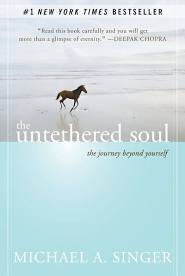
For me, this information also correlates to companion to another book of a similiar nature called The Untethered Soul by Michael Singer.  untethered soul book coverBoth are excellent reads and touch on very similar subject: the voice inside us.  Each tackles the idea of mental chatter, and the source, dangers, and necessity but from different perspectives.  This chatter creates the emotions or feelings that then drive our behavior.  How we think about something (or, the chatter) really determines how we feel and, accordingly, how we respond.  I’ve done quite a lot of blogging on my realization that I even had this voice – and the negativity it espoused. An area that Dr. Kross discusses is about the power of nature and awe in such a unique – yet, not unique – kind of way.  This is something that has provided me comfort throughout my life yet I never realized why.  How did you feel looking at the photo?  Did that sense of wonder give you a bit of a release from your own personal chatter?  The comfort of nature and feeling my own smallness has helped me in the past but I was never aware of why.  I just knew it worked.  With the knowledge I know have from Kross’ book, I can move forward to use the power of nature and awe more deliberately in my life.  I’ve learned this month that deliberate intention helps to frame the situation so that we can achieve the maximum amount of benefit from the experience in whatever way we choose.

To harness this type of thinking, one must be conscious of our perceptions and, most importantly, be open to correct our misperceptions.  Many times, our perceptions can come from outside influences or factors.  However, these external features must process through our discerning brains and, violá, misperception is created.  (I think my name could be Miss Perception, but I digress.) Both of these books discuss our inner voices, the feelings that drive our behaviors and beliefs.  Many of us don’t even realize this voice is separate from yourself; the voice is how you make sense of your world, and it is designed to keep you safe.  It formulates our perceptions, both internal and external.  The voice, however, if left untended, can take over the how you think of something, too, through a pattern of behavior that we’ve found helps us cope with “whatever” – stress, anxiety, fear.  Times of extreme ‘whatever’ heighten some of these perceptions or beliefs and create all kinds of challenges that, as humans, we love to overcome.

During these days of the Pandemic, we see this in our daily news.  People are trying to cope through making sense of their situations.  As a result, we can be more susceptible to false narratives  because they are convenient and we really want answers, to understand.  These narratives make some sort of sense to us or come from a source that is known and, usually, reliable.  But, are they real?  Many times, when we question our beliefs, we are faced with the facts of the situation and the realization that our thinking was wrong.  Yet, we continue to defend this thinking because we don’t want to be or cannot accept that we were wrong.  Facing our wrong assumptions takes guts and vulnerability.  In the middle of a Pandemic, my guts and vulnerability are on high alert so our sense of self protection is highlighted.  Many of us get a lot of our sense of self from being right so, when faced with “wrong”, the response may be out of the norm: explosive, violent.

Like water, we humans like to find the easiest route to or through things.  This voice comes out in how people perceive you and you them.  The voice impacts your assessment of the present situation and the resulting conclusion or judgement about the matter.  You can tell a lot about someone by how they respond and, most importantly, you can tell what it is they believe about you, themselves, and the situation.  concrete genieIn a video game I finished called Concrete Genie, the main character (Ash) is chased and bullied by other kids who are struggling with their own demons.  Ash is painting his world more beautiful and removing the shadows of leftover emotions in the town.  When my character is captured and held by these children, he is unwaveringly calm and not fearful.  These bullies ask why he is not scared, he responded that he realized their anger towards him was not about him but about them.  You know, it always is that way, even with our own anger.  Many times, we mistake this negative thought about one’s self as an external “trigger” and the misunderstandings escalate; this trigger is actually internal and under our own control.  Couple this with our inability actually listen with an open mind, these misunderstandings grow and grow, based on a false or misunderstood premise.  We then argue over something that is so far and away from the true issue that we forget the real matter and just are trying to be right. (Speaking from experience.)

See how sneaky the ego gets into the middle of this?  As get older, we get much better at this way of thinking, too, and it becomes comfortable.  As humans, we want to have some understanding of our surroundings  This may be why older people could be more narrow-minded in their thinking: Their mind just stopped listening yet kept judging.  When we stop listening, we lose the ability to view the extremes of a situation.  Stopping listening = stopping thinking.  Once you are in this pattern, how can you stop yourself as that voice keeps egging you on?  Continue reading, Dear Reader.

I’ve noticed this pattern with myself where I can stop listening as I’m in my head, thinking about things, tossing over, ruminating.  At times of extreme stressful thinking, I tend to go outside in nature and find comfort in having my thoughts filtered through my surroundings.  Being in nature has always helped me to slow my thinking down, becoming more at ease.  I struggle with rushing to judgement before actually paying attention to the details, like trying make sense out of something that just cannot be understood.  It is these times where our faith is tested; our faith in our beliefs and, basically, ourselves.  chair-1286220_1280When my first husband became comatose about three weeks after we were married, I sat for days outside, with my own thoughts, in my Adirondack chair, noticing how the spring came in, watching my backyard begin the ritual of a seasonal change. Being in nature gave me the peace of mind I needed to begin each day and understanding that the world had its own plans and that my little life plans were really unimportant in the larger view of life.  This feeling, at its truest, positive sense, was a feeling of awe.  Once I settled into the idea that the life I had planned with him was not to be, my greiving became more about missing the person and not the life we were supposed to have – obviously, the life we had planned was not to be.  I was crying over the loss of the expectation of life being a certain way.  In my daily trips to the hospital, I would open my sunroof in my car to feel the air outside and the sunlight and comfort of being warmly cuddled.  This gave me strength to sit by my spouse and ensure he was being being cared for.  It was during one of these trips that I felt the extreme release of just giving up as I sat in my car, struggling with my emotions. It felt like a turning point of allowing me to stop mourning something that was never to be.  In this, I felt a sense of awe, of smallness.  I had figured out something about myself and that my role was to help my spouse exit his life as it was done – and was not going to include me anymore; my life was meant to continue but without him. The awe I felt at this realization was extremely humbling and allowed me to move on, both in my mental space and my heart space.humble-732566_1280
I’ve had this feeling of awe throughout my life but at the strangest times.  Many times, I just disregarded the power of awe through a mechanical understanding of the science behind the “awesomeness” I’m witnessing in the moment.  Have you ever had the powerful awe of a beautiful sunset where you just feel so small and inconsequential?  (This is the oppposite of how your ego believes things to be.)  You can just behold the sight of those rainbow hues, or you can just rationalize that this is a result of light and weather and is nothing to really be excited about.  My mother used to tell us that Santa Claus was baking cookies and the beautiful orange, red and purple hues that would jet across the evening sky was the heat and love from his oven.  I used to think that Santa had a really big oven, too, given all the kids he visited.  I also used to wonder why he needed to bake his own cookies when we left them for him already. winter sunset I figured he was baking for the elves since they did not taste the treats that Santa obviously devoured when visiting our house!  To this day, even on the other side of the country which is where I now live, sunsets like this create a sense of awe in me with the fondest of memories, too.

I think this type of thinking has a correlation in mainstream religous teachings, too.  Forgive my lack of bible education but I do recall the story of Adam and Eve who, after eating from the tree of knowledge, began to see the Garden of Eden differently – or with greater knowledge.  It was this knowledge that removed the wonder, the awe, of living an Earthly life.  Just because, as adults, we now have greater knowledge should not change how you look at life or you, too, will begin to forget how small we all are in the world.  Why not view life with the childlike wonder of a small boy receiving a much desired toy for his birthday, or the “Tooth Fairy” dropping by a few coins or trinkets in exchange for the loss of a baby tooth?  In its simplicity, the belief creates a sense of awe just like the frozen waters of Niagara Falls.  When you have a sense of wonder, you see things differently and are less apt to put your old, tired judgments into your thinking.

I’m reminded about other times where I’ve felt a sense of awe and had no idea – and my health actually improved.  In my late teens and early twenties, I did some traveling throughout Europe with a dear friend.  Each trip was usually 4-6 weeks, and I’d come home about 20 pounds lighter.  Not for lack of eating – oh, no – for I ate the local cuisine, tried all of the local beers (Hello, Germany!)oktoberfest-4566791_1280, flakefound that I loved English chocolate treats, and would enjoy it all.  I was so excited to find something new and different each day, too! We traveled to a new site – a cathedral-1450816_1280cathedral like Salisbury Cathedral shown here, or stately manor or palace, or museum, or even just the shops in town – and took it all in with a sense of awe.  When I would come home, my mother would wonder if I ran out of money since I had lost weight and must have stopped eating at some point during my trip.  Very interesting that I would lose weight while really enjoying life.  Yet, in my day to day, I struggle with weight and body image issues.  (Not sure what to make of this but I find the link with awe very fascinating and something I will be exploring for myself.)

I still live in nature as it has provided me with a sense of comfort, of being in the world.  The awe is all around me, like the wonder of huge mountain ranges that have stood throughout generations and generations.  The dense trees that have stood hundreds of years, raising families of trees through their natural process.  A few years back, I took a 5K walk through the woods at Mohonk Preserve with a person who was much more physically fit than myself.  I know it is 5K because, when I got home, in my utter exhaustion, I trail-mapped our route.  During our hours-long hike, I struggled with the heat and hills, making it up to a prominent vista where we could sit and enjoy views of the Hudson Valley from high atop a mountain.  (I contemplated the embarassment of giving up and needing to be airlifted from the tower, too. )  Want to know what I remember when I think of this event? The view, my company and the wonder of how beautiful nature is; the soreness of my body for three days later are of diminished memory now. The awe? Still with me – and makes we want to go again.

I’ve realized that a sense of awe is extremely powerful, and something we just take for granted.  Because I know the science does not mean that I can’t still be amazed and delighted at thinking that all of these trees came from something so basic that it (life) exists despite all of our efforts to tame nature.  Because we know how something may have formed into existence should not remove the awe we have in its appreciation.  As we get older, however, the sense of awe gets diminished with the daily trials of life.  This doesn’t mean you need to go outside all of the time to get this sense of awe.  Dr. Kross so eloquently states that “…the feeling of awe, however, is by no means restricted to nature and the great outdoors.  mona-lisa-67506__480Some people experience it when they see Bruce Springsteen in concert, read an Emily Dickinson poem, or take in the Mona Lisa at the Louvre. Others may have awe-drenched experiences when they see something extraordinary in person, like a high-stakes sports event or a legendary object like the U.S.. Constitution, or witness something intimately monumental, like an infant taking its first steps.  Evolutionary psychologists theorize that we developed this emotion because it helps unite us with others by reducing our self-interest, which provides us with a survival advantage because groups fare better against threats and can achieve loftier goals by working together.” Fascinating work, Dr. Kross, with tons of practical application.

As I was writing about my lessons learned from January and how perception and beliefs shape our thoughts, I was simultaneously thinking about how much better February was going to be, and I immediately felt a sense of relief.  “Perception, Bitch!” is my new mantra for February ala Jesse Pinkman-style.  The reason I thought it would be better is because my horoscope told me so.  No fact, just pure belief changed my mindset while blogging which really stopped me in my tracks.  Just how much of my perception is decided through a dirty lens that I have left untended? During these months going out in nature is hard and my natural coping mechanism is inhibited by mounds of snow and ice, and with extreme temperatures.  I have found something new for my awe: myself.  You see, I think I’m pretty awesome; it has taken me half a century to realize this.  Not in an unhealthy, better than you way. No, for, Dear Reader, I think you are pretty awesome, too!  If you are joining me on this rock we call Earth, moving at such speeds we cannot even fathom, give yourself a pat on your back as being really awesome! What you make out of life is truly what you get.  You can take the minute you spent talking to a nice lady in a grocery store, spending a little extra time to help her reach a high shelf, and learn so much about yourself in the process in that you create your own “awe.”  (I did!) Life is a series of these moments; no judgment, just moments. It is how you perceive these moments that gives you anxiety or grace.  You get the choice.  Choose wisely.  Peace.


Jedi Mindset for 2021…and Beyond

Caution: If you are planning to watch “The Mandalorian” don’t read any further unless you want to hear of a major plot spoiler.  You’ve been warned.

During the Pandemic, I’ve been able to complete a lot more studying of different subjects.  Many of these subjects involve some aspect of the human condition or mental accuity.  I’m in the middle of listening to The Untethered Soul by Michael Singer as a book recommendation from a work colleague who shares an interest in all things leadership and human potential.  [This is a book I’ll need to buy for my library as highlighting an audiobook doesn’t work too well for me. 🙂 ] I highly recommend this book for additional reading for anyone interested in a better understanding of the composition of the universe and their higher power – or “the Force.”

I’ve long been a believer of “the Force” but not as described by the Star Wars books where it can be directly manipulated to such a degree….I wish.  (Can you imagine the fun you’d have?) No, this “Force” is our mindset or perspective.  It is the feeling we have within ourselves when we don’t know the feeling.  The Untethered Soul discusses this in great detail.  Singer has also written a book called The Surrender Experiment which will be the next book in my collection.  A very good interview with Singer and Tami Simon of SoundsTrue can be found on YouTube which discusses both of his books.  In fact, Singer has shared his information very freely and there are many interviews of note that provide very different aspects of what Singer means by an untethered soul and surrendering.  I believe that it is our life’s journey to work within The Force, to live our life as we intend; it is what happens that creates new opportunities for learning more about “The Force.”  For example, if you believe that there is no coincidence in life, then the daily activities that encompass what we consider as “life happenings” would have no meaning.  Like finding out that we avoided a car accident by taking a left turn at a light earlier than you normally do.  Coincidence? Perhaps.  Maybe not.  Think about these life coincidences this way:  What if these life happenings are happening FOR us, not TO us?  Did you notice that the feeling with each thought is different?  Sit with this for a while and really think on this: How would you respond if you believed that life is happening FOR you for a greater purpose?  Wouldn’t some of these happenings, then, have a different context? I like the correlation of how “for us” and “the Force” sound so much alike.  Hmmm.

floral-309762_1280As I began to contemplate the “for me” aspect to my life, I began to journal and this helped me to get my thoughts out of my head and on to paper.  Since I am a visual person, I’ve learned that writing things down when I’m bothered or when I have an important decision to make really helps clarify my thinking.  I guess “seeing is believing” holds true in this aspect of mentagility, too.  I’ve realized that everything in my life has happened for me to learn and respond to…there is no emotion that would need to be included here although I have certainly spiced my life with all kinds of emotions – good, bad, and everything in between.  We all have done this, haven’t we?  It is how we are taught to live our lives – or it is the lack of teaching at a young age that is now requiring correction as an adult.  I cannot imagine what my life would look like now had I learned this at age 16 when first presented with these aspects of myself.  I was unready for such knowledge as this greater understanding only comes after years of experience for the knowledge to really sink in.  About two years ago, I heard the other voice that Singer describes and was startled at the realization of the voice in my head…and what it was saying that kept me so small. I wrote an entire blog post of the experience, too, without knowing just what happened and have an understanding of what this event meant to me and my future.


Cue to The Mandalorian.  I love all things Star Wars, Marvel, DC, anything fantastical with powers. Maybe it was my desire to overcome a bullying childhood?  I’m not sure but one area I’ve always loved is how Luke Skywalker used the Force to fight the evil Empire.  Now that the Empire is sort of in the back seat for the Republic (Is evil really ever gone from the world?), my husband and I began watching The Mandalorian a few weeks ago…and already finished the two seasons in about a week.  This is a record viewing for us as we normally take our time between watching television and video gaming, playing all types of immersive games.  So to watch two seasons in a week had us set aside our normal gaming time.  All of the enemies in The Last of Us, Part II get a reprieve. (BTW, finished that game just yesterday.  What a thrill of both shock, horror, and of overcoming odds!)

Our tale opens with the Mandalorian character struggling between the new world order and the ways of his people from the planet, Mandalore.  The main character is Din Djarin who plays most of the series with his armor and helmet protection as is custom for Mandalorians.  He finds a creature that is childlike and is considered a bounty for some of the Empire evil-doers.  Djarin – as The Mandalorian – fights to return the creature to his own people and it is Djarin’s struggle for his version of “right and wrong” that we view in each episode.  In the final scene of the second season, with all of the characters in the Control Room of the Empire’s ship with Moff Gideon‘s Death Troopers pounding the door in – and making this a good effort, too – a lonely X-Wing fighter comes and lands in the ship.  The characters in the Control Room see this “help” as insufficient because there is only one ship and dozens of these Death Troopers (which were really scary). The X-Wing’s entry actually brought a stop to the attempts to break in the door as these Death Troopers turned their full attention to the new arrival.  Just who is coming to help? These evil killing machines all turned to attention and awaited the arrival of the single occupant aboard the ship.

starwars-2020629_1280

Our rescuer has the posture of a Jedi, cloaked in black, and is really handling the light saber like an expert.  Still and confident, the Jedi strides through this ship making quick work of an entire platoon of Death Troopers without even the appearance of a struggle.  (I’m conversely cheering and crying about now, hoping that my “friends” in the Control Room are saved through some miracle.) The lone occupant, wielding a light saber, expertly deals with these soldiers who just drop at the slash of a saber or the sudden crushing movement of large containers.  (Prior to this, we witnessed the Mandalorian and all of his comrades fighting a losing battle against the Death Troopers so this was such a relief!)  After handling the squad, the Jedi waits at the door for the Control Room occupants to release the lock.  In the meantime, Moff Gideon, played by the unbelievably talented Giancarlo Esposito, realizes just who may be at the door for his eyes widen and he becomes visibly shaken.  Gideon, who covertly moved his robes to hide a dropped weapon from the previous battle, takes this hidden gun out to quickly try and commit suicide.  Gideon would rather kill himself that realize his fate at what awaits in the dark Jedi robes.  Watching Gideon’s face as he sees the Jedi striding towards them, and seeing the realization of just who is approaching, is such a beautiful piece of acting that I’m going to link this here.  Giancarlo Esposito is one of my favorite actors.  Who can forget his masterful work in “Breaking Bad”?  Esposito truly plays complex and dark characters as if he was truly evil.  He isn’t and I digress but, if I ever meet Mr. Esposito in person, I will still be very, very cautious. (Yikes!)

Back to our story.  The Control Room door opens.  Dramatically, the black robed and hooded igure steps in the room to remove his cloak hood and reveal himself as Luke Skywalker – a young Luke Skywalker.  Oh…how my heart just skipped a beat watching the Luke Skywalker of my childhood engage with The Mandalorian’s crew.  What a fulfilling ending to this season!  I’ve watched the end scene three times now and will probably watch it a few more times.  There are certain scenes in movies and television shows that are so iconic, they must be watched a few times to be fully absorbed.  Remember the final blow to the Empire in Star Wars?  Or, the iconic final dance number in Dirty Dancing with Patrick Swayze and Jennifer Grey.  Swayze’s character utters the famous line that “nobody puts Baby into a corner” is just repeated on its own and most folks know the reference.  (That is, most folks my age but I digress.  You get my point. Oh, and for those of you keeping track, I had a fine time rewatching that Dirty Dancing scene again for this post.)

This final scene from Season Two of The Mandalorian was one of those scenes I had to rewatch but not necessarily only for the obvious reason.  Oh, yes, the scene was an exciting one for fans of the Star Wars saga.  What impressed me was that the Jedi never went looking for the fight; he/she let the fight come to him/her.  When the fight reared its arms to punch, the Jedi dodged to the opposite side to avoid the punch which put him in a better position to duck and shift his weight to combat from the opposite side.  In other words, the Jedi waited for the other to be the aggressor so he could respond to the action in a way that was not reactive but responsive.  When the aggressor Death Trooper hit left, the Jedi gave way to give him access to the open spot that the Death Trooper made through it’s aggression.  Perhaps one could say that he waited for his opponent to make their first move before he responded.

Waiting for an action where clear response is necessary is the key to many of life’s challenges.  If you believe that you control your destiny, you will always be striving to get ahead of what appears to be “bad.”  “Bad” is emphasized here because that is a judgment based on one’s values to “bad” to me is not necessarily “bad” to someone else.  We’ve heard the saying to wanting to “get ahead” of the situation; I use this term quite often in my daily life.  Many times, “getting ahead” means identifying the common root cause of an event to be able to prevent the event or the resulting response from said event.  As humans, we may be actually doing this on the regular without the realization that, if we just let life flow a bit, we may ride the situation a while to find out a very different alternative.  This “flow” is an energy that we interpret as thoughts, emotions, feelings, or any other more esoteric energy.  Many times, the interpretation is based on our own frequency of where we are at the present moment.  Like, if you are frustrated, you may only see those things that are frustrating you because the energy matches the frustration.  This is how the power of positive thinking is derived.  Think positively and you’ll only notice the positivity.  If we only knew that what we surround ourselves with and immerse ourselves in each day may “set” this frequency and you don’t even understand that this is happening.  We may have been taught that these energies are external from us, that are happening to us.

What if these events are happening FOR us?

Would we be so quick to try and control these events?

I began to realize that life is happening FOR me is an easier way of living – for me.  I emphasize the “for me” because I believe each of us needs to find our own approach.  Living with the realization that life is happening FOR me is such a relief that I have been working to see this in all aspects of my life.  The “FOR ME” gives me a feeling of an observer which takes all of my emotion and thinking outside of myself.  So, today is the beginning of February and many of us here in the northeast are planning to hunker down due to inclement weather.  What if this is happening FOR me? What can I do to make this belief be my normal energy?  More on this in our next discussion.  For February, stay warm, enjoy your cocoa, and be thankful for your blessings.  In life, it is ALL a blessing.  Peace and prospertity to you all.

Choosing Your Identity

So, it is my hope that the title of this blog posts intrigues you because, well, it should.  If you are a human being enjoying a physical experience in 2020, or, the Year of the Pandemic, you will not walk away from the experience unscathed or the thinking life is still the same as this time last year.  Something in you will change because that is exactly why life throws us these challenges – hurdles, problems, experiences – however you label the situation.  Good or bad.  These are all learning experiences.  The label does not change the experience; it is your selection of how you wish to see the experience that determines your own personal outcome. That’s right.  YOU CHOOSE.

When this Pandemic began, I was already in a precarious position with my mental illness and struggles through Seasonal Affective Disorder (SAD) that usually clears around April.  For me, SAD feels like a heaviness that begins as the darkness comes early in the Northeast.  I developed SAD when I moved East back in October of 1992.  Or, I should say, I realized that I may have a mental illness which was in itself very scary.  Living on my own in a state far across the country from my family created the need for me to stand on my own two feet.  In September 1993, I felt the darkness begin to descend again and sought counseling so, on my 30th birthday, I was sitting in a psychiatrist’s office discussing my conditions.  Mental illness can come in any situation and may no longer be tainted by the “You’re ill?” brush yet it still is difficult to admit that you have a chemical imbalance when you don’t necessarily have any physical pain.  Since then, I’ve been very attentive to my moods so that I may manage my conditions with a positive outlook.  When there is so much negativity, I feel this very keenly and will actually just leave the room or situation.  I do not possess the ability to argue or fight about this.  It just is the way I handle my shit.

So, I’ve had to take a break from social media for a while.  I felt my SAD did not lift as prior years.  Normally, come April, I am really ready for the longer, warmer days of spring and summer.  Thanks to the 2020 Pandemic, my moods began fluctuating to various extremes between anger, resentment, and a brutal sadness that dripped off of me.  I felt the weight of my thinking very keenly and brought out my usual coping mechanisms.  With the fighting of strangers in the news and the lack of tolerance and patience that seems to be a majority mindset, I felt myself sinking into a mental state of dispair that was so keen that for a split-second I actually contemplated leaving this mortal coil.  (I’ve always liked the old-timey reference to life as a “mortal coil” which Wikipedia defined as “…a poetic term for the troubles of daily life and the strife and suffering of the world. It is used in the sense of a burden to be carried or abandoned. To “shuffle off this mortal coil” is to die, exemplified in the “To be, or not to be” soliloquy in Shakespeare’s Hamlet.”)   I found myself on the floor, hysterical, thinking about how sad my mother and sister would be at my decision.  This made me think of what really is important in life: the present.  I sought therapy once again.  Happily so, today, I learned something new about my illness that has helped me be better and, actually helped me realize some of my dreams.  Isn’t life truly amazing?

Rather than engaging with people I don’t know about really important topics, I decided to restrict my social media access.  This “break” allowed me to focus on what is really imporant and that is what I can do now.  My depression originates organically and genetically.  Without going into too much boring detail, I have extreme anxiety that forces me to always be in the future in a type of prevention mode.  I deal with my anxiety by shelving it which, in hindsight, isn’t too healthy.  (Working on that one.) In July, I registered an extreme blood pressure caused by stress, 174/120.  I also realized that caffeine contributed to the jitters (Thanks, Mom!) and I have been caffeine-free since July.  The difference is really startling for me.  My heart palpations have just about gone unless I’m having a panic attack.  (Aren’t those wonderful?)  I’ve identified when I have a panic attack coming on and am able to prepare and ride through the feeling, or I’ve learned about the Law of Resistance and to better manage that.

Many of you probably didn’t know this, and it could be a surprise to you.  That is how a mental illness like depression works.  We may not even realize we have this until you have a breakdown moment or a reaction that is out of character.  Please, seek help.  By admitting I needed help, I turned a huge corner in my own management of my conditions.  Admitting I was suffering allowed me to move through the pain and feelings by taking steps to help myself.  My doctor told me to raise my dopamine levels through regular exercise each day.  As of today, I am three weeks in to a new habit of daily exercise for mental health.  I’ve been able to keep this up as I’ve made it a part of my identity just like my depression.  I am a person who has depression that is under treatment.  It is not my identity but a condition that makes me uniquely me.  Each of us may have suffered some other mental or physical reaction to the Pandemic.  I encourage you not to resist your feelings.  Please exercise healthy self-care and realize that your condition or situation is not who you are but one of those aspects that make the “mortal coil” worth enjoying.  Be well. Peace.