

At my office, I have the cleanest desk. It is so clean that people remark about how organized I appear to be. (LOL) The surface of my desk has work equipment (laptop, keyboard), phone, stapler, pens, and my paper calendar. That’s it. Anything else is put away in a drawer or cabinet so the effect is a pretty clean desk. I find myself really productive in my office except, of course, when interrupted by a person or task. Since I’ve been working from home and using my home office, I’ve been unable to create this same feeling. My home office desk is cluttered with these items plus all of my art supplies, paper, files, and just a bunch of things that have no real home space. When sitting at my desk now, I feel a bit overwhelmed and unable to really think clearly. The contrast between my home office and my work office – and the level of organization – came to my attention as something needing sorting.
I began to focus on the idea of minimalism, its roots, and why some people really like this style of living. (The link is a very good explanation of a new channel I found in writing this post. I plan to check out more of her work. She couples minimalism and intention which, IMHO, is extremely important.) I began to wonder what benefits I might achieve with a “less” mindset? Will this impact my intentional thinking about myself, my goals, and dreams if I don’t feel so overwhelmed by my “things” and have a “less is more” mindset?
In the beginning of the Pandemic, I began to rethink my office set up at home to be more like my work set up: streamlined and minimalist. While my home office served me well when I used the office sporadically, working in the space full time began to create a level of discomfort that I correlated to having a messy desk. To make my home office similar to my official office, however, is a much more daunting task because the items in my home office have no where else to live. It’s not like I have all of my art supplies at my desk at work. In order to make my home office more comfortable, I almost need to reset my entire house because cleaning and organizing one space creates havoc in other areas of the house. (EDIT: Let me be completely honest with you…and myself… about my Pandemic mindset which began fueling this desire to streamline my stuff. I thought that, if I died, I did not want anyone to have to sift through my “things”. This was something I wanted to do. That realization made me see all of my “collections” in a very different way – more like a burden than an achievement. I also realized that I’d prefer to spend my money on “experiences” and not “things” so getting rid of my “things” really began to weigh on me. More on that another time.)
To help me better address this claustrophobic feeling in my office space and how to best handle the overwhelm, I began a household “review” of my space, any unused space, and how best to feel less overwhelmed by my stuff. Now, I don’t have a lot of stuff but what I do have is really unorganized and, frankly, overwhelming. To experiment, I began to review my china cabinet and take an unsentimental assessment of my “things.”  I found that I owned over 40 different wine glasses for a person who does not drink wine. These glasses have been unused in my cabinet for the past 20 years and have been screaming (OK, not literally) at me to use them. What I “heard” was this: “I am made for celebrations and parties, not for display!” Glassware has a usefulness so I have always felt okay with collecting it. However, my wine goblets and pretty crystal stemware were not being used for their intended purpose. I decided to “rehome” most of them by donating most to my local Habitat for Humanity for resale. I really believe these glasses were almost happy to be able to grace someone else’s home/table. Feeling better, I added two platters that were unused (I have three left), two over-sized crystal vases, and some gently-used plastic cake/cupcake carriers. Immediately, I felt like the energy in my dining room eased a bit: I felt really good about the donation and I realized that there was a bit more air for breathing. On a roll, I removed a wall hanging from one of my walls in our foyer adjacent to the dining room that I had purchased on a whim and never quite liked. In its place, I put an older art piece where I liked the aesthetic of the dark frame on a light wall. I find myself drawn to that area of the house now because the aesthetic pleases me because the air feels lighter. Wow.
 I began to wonder why that is? How can the excess and free space impact me so immediately? I realized through my studies that “things” all have energy and operate at different levels of vibration. Or, the science of physics. (I call it ‘thing energy’ as opposed to ‘people energy’. How original, right?) Some of us are more sensitive to ‘thing energy’ than others; some people can actually feel the vibrations of someone who may have owned the object at one time. The latter situation is called psychometry which is not my issue for I don’t feel that so keenly and individually. It is the energy (vibration, maybe?) of the collection of a lot of objects that feels like a wave of something that hits me square in the chest, and makes it difficult to breathe. Like, I don’t have enough space to find the air in the room. I’ve always felt “thing energy” quite keenly and am just realizing that my desire for an echoing room is to give myself more creativity and openness. When I go into a crowded grocery store, I feel overwhelmed by the “stuff;” the same is true in a crowded Department store or anywhere there is a large accumulation of stuff. I quickly leave the space, feeling claustrophobic and just a sense of overwhelm. I noticed that I feel a bit like that in my office space, too, which has lead me to really take a critical look at the lack of organization in my office and the idea of the reset was born.
In my experiment and with a mind to my planned office reset, I began to wonder if having my things organized – or put away – tempers the feeling. Like, if I did not have a china cabinet with glass doors but a buffet with solid wood doors, would the feeling be different because I could not visually “see” all of my things? Hmmm. I’m not sure. However, I am going to try an experiment this week on resetting my home office to see if removing and organizing my personal clutter will help me to be more creative and have less stress sitting at my desk. I plan to remove all of the stuff in my office: desks, computers, chairs, printers, etc. and then place these back with a little more thought as to my desired minimalist aesthetic and concentrating on storage/organization with the goal of a clean desk. I’d also like to create an area where I do my “work” and an area where I can be “creative.” Right now, I see these as two distinctly different areas in my room; I wonder if I can change that based on removing or rearranging my stuff. I’ve decided to also follow this particular YouTuber’s tips; her videos and delivery inspired me to also follow these guidelines. I’m a new subscriber to her channel and look forward to learning more. Here are some of her tips that I plan to follow:
1.) Figure out how much time you have and how much time it will take.
I’ve taken a week off of work so that I can separate this into some very doable tasks. My first task will be to remove everything from the surface that is not heavy furniture. This includes mail, inboxes, books, pen holders/containers, books (there are a lot of them!), and computer bags and accessories. In applying the four principles, however, I realized that in order for me to apply #2, below, I need to begin in my guest bedroom to ensure that I have sufficient ability to clear out my office. (Right now, my guest bedroom closet is spilling out onto the floor.  It is filled with old formal wear that no longer fits, concert t-shirts from the 80s, empty hangers, and all of my holiday decorations. It is time to clear that close because if my green blazer ever fit again, the shoulder pads would rival Joan Collins’ best day and, frankly, I’d never wear the jacket anyway unless it was Halloween and I was revisiting 40 years of history.) Yes, my personal clutter has gotten so bad that in order to clear out an entire room of my house, I need to clear a place to put the stuff out of the way.) So, before I can even work on the office, I plan to de-clutter my guest bedroom closet first which, having done my own closet years ago, should be relatively straight-forward. Once my guest bedroom closet is straightened up, I plan to then begin my office de-clutter. (Now you know why I planned a full week for this.)
As I put things back into the office, I will then consider if I want to keep the item, addressing what purpose the item serves, and ensuring everything has its own place. If the item does not have a place, then it is not needed and will be thanked for its service, and discarded or donated. This allows me to get the office down to the walls and carpeting, and really get a feel for the office while also honoring the vibration of my “things.”
2.) Minimize distractions.
This will be difficult for me because moving and decluttering create their own “rabbit holes” of memories. I like Nourishing Mom‘s idea of the “to put away” box which helps to keep me focused on the task and not going into another room to then work in that room. However, because I realized that I will need to make room in my guest bedroom to temporarily move things from the study, I’ll need to separate this into two projects because I will find myself overwhelmed with now having two rooms to declutter. 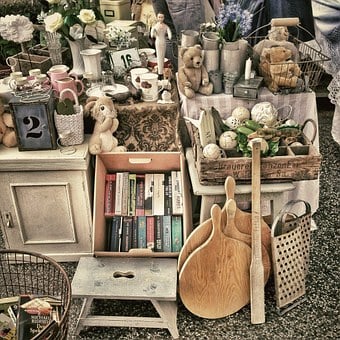 I’m already expecting that I will need to purchase cabinets and/or organizational tools to help me better place my things. Before I just go out willy-nilly to purchase something, I want to be really sure on where it is, what it is, and how I will use it. (See #4.)
3) Its going to take more than one pass.
I totally agree with the idea that both my guest bedroom closet and my office will need a few passes of critical assessment because after a while of making the hard decisions to relieve one of clutter, I can and do become a bit more emotional. In the cleaning of my personal closet, it has taken me quite a few passes and, unfortunately, I did not pay attention to tip #4 below and have created a new mess for myself in my closet. My closet organization is not as bad as before but can get there if I don’t soon intervene.
4) Avoid recreational shopping.
I realize now that I shopped out of boredom or wanting a new experience of buying a thing. What I was looking for was a panacea of sorts, a relief from my mental burden where I stifled my creativity. This is a lesson from the Pandemic that I’ve learned and wish to correct. I used to enjoy shopping and would purchase anything I wanted because I could – even if I really couldn’t. This created a poor habit of addressing my own mental discomfort through the purchase of a new dress or lipstick instead of addressing the real source of my unrest. My shopping over the past 18 months has become very specific because a weekly excursion to the mall just wasn’t part of anyone’s plan. The allowed me to see just how I’ve “coped” throughout my life, and be able to feel better by addressing the real issue.
That’s the plan for my office reset or starting over. In researching the “how to” of my project, I found Joshua Becker’s channel quite helpful, too, and found that I already do many of his tips in this video. This made me feel a bit better about my starting point and helped me to see that I can continue to improve. I’m very curious to see that, if after I’ve completed my project, if I’ll feel different about sitting in the space, or if I’ll need to move my office into my foyer! I’m intrigued because of the idea that we are all energy fields that can be manipulated, including objects that would appear to be solid. Every object in our world vibrates at different rates which creates their form. There are millions of possibilities depending on the object, placement, temperature…the combinations are endless and miraculous, aren’t they? When you think about the world at large, with all of the people, places, and things, the world is vibrating all around us. How can you not feel overwhelmed at times? Wishing you peace this July 4th.
[EDIT: And, as if the world is blessing this post, one of my favorite O.G. YouTubers, Renee Amberg, just posted this video. I love Renee’s videos as they show her transitions and struggles which make me feel less alone in my own journey. She discusses all things very honestly, openly and does not sugar-coat her experiences. Definitely worth the watch just for the inspiration alone.]
Keto Update: For those of you keeping up with all things Keto, I’m still doing well. Seeing some improvement on my psoriasis and my weight is stable. It is going up and down since my carbohydrate restriction isn’t as low as I’d like it to be. I’m under 100 carbs a day – usually around 50. This works for my “right now” time as I continue to adjust. I’m learning that there are some foods, while lower in carbohydrates, are not good for me to have in the house. Dr. Atkin’s bars are something other worldly delicious and I’m not to be trusted with them. Yet. In all things, there is progress.

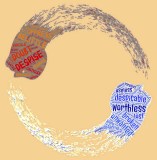 My own personal negative thinking was out of control and virtually undetectable except in bitter self-talk that was so ingrained, this talk “
 Really? What is shocking is how bad this guidance is because wouldn’t any reasonable person think that, if I could do this, I would do this? Does my doctor or therapist really think I like being obese? If you’d taken the time to actually pay attention to me, you’d realize that I’m a highly intelligent and educated woman who is struggling. There was another answer for me and I couldn’t find a decent medical professional to actually help me.
 So, now that you are educated in this area, why don’t you examine if you, too, have a fat bias? If you struggle with your weight, honestly consider if a fat bias is preventing you you from realizing your own goals. How might decades of ingrained thinking be impacting you? Are you looking for that magic pill to fix your situation? (Don’t, there isn’t one.) Be kind with yourself and accept that we are all trying our best and that you are a product of your environment and perceptions, self including. It is my hope that this information helps you to fight for what you need and to not let someone else’s – or your own – bias prevent you from living the life you were meant to live. Peace.

 The cycle continued until I no longer enjoyed falling down as part of my skating effort, or I was unwilling to risk my physical and mental injuries caused by an accidental fall. Note I said I was unwilling to take the risk. Was this a conscious decision on my part? Nope. Just woke up one day and said, yep, I’m done with falling down. I began to see my falling down as extremely tiresome and, well, painful, and alchemized the desire to not fall down to result in my desire to stop roller skating. The scars of falling down, however, have lived in me for many decades. I have a fear of falling and – up until recently – a fear of humiliation or disappointing my parents. Skating, you ask? Yep. This fear doesn’t necessarily stem from skating but from how I handled the falls and resulting mental anxiety from the idea of falling. This became a personal filter for me, along with many other filters from living life.
 she mentions the idea of filters in how we view our lives. “Although we can’t control what happened to us in childhood, as adults we still seem to carry that baggage with us, often without realizing it.” Moorjani continues: “We still view the world through that same old lens that no longer applies! We may thing we’re seeing the truth, but actually we’re viewing the world through our own filters.” (Page 124) I believe that these filters cause us to operate at a certain frequency or vibration – or an energy. The idea of energy has intrigued me for my entire life. (For years, I’ve pondered the question of what makes my heart continue to beat.) Those types of introspection were common for me. I also used to wonder how and why people see things so differently when we all see the same event. Isn’t that fascinating? Take being a witness to a crime. In obtaining the witness’ recollection of the crime or event, each witness will respond very differently, even down to the description of the individual. How does THAT happen? It really boils downs to what we pay attention to and how mentally attuned we are to the situation. If you know that you are in the middle of some event where you may need to recollection the activities of said event, you pay attention. Just like in school, when you know if have a test and haven’t studied, you may pay more attention. It is attention management that is really key in both of these situations, and, frankly, in how we live our lives.
 Our filters create an unconscious response that continues to perpetuate the filter, or we are creating our own stories. All the time. I don’t even listen when I’m in the middle of creating my own filtered story because I was operating in a world where my filter was my reality. In trying to always multi-task, I’m giving those filters a lot of room for expansion because I never set my attention on something long enough to even identify my personal filters. (Yuck!) Remember, too, that everyone has their own filters. This is why listening
  In fact, the number one definition on the Merriam-Webster online dictionary defines the term “alchemy” as “…
 We are all gold just as we are but may not believe that because we’ve actually alchemized our living experiences through the brain’s filtration system and came out with the wrong answer. The idea of disappointing my parents is a filter that is realized by my skating but also comes through in very different ways, too. This single filter is huge and has impacted – or alchemized – my life experiences.
 mind. You see, my hands just don’t seem to “see” my creations in the same way as my brain because my hands really don’t execute the vision all too well. My hands are very solid and have served my utilitarian needs quite well, of which I’m extremely thankful. They have not, however, been able to interpret just what my mind’s eye sees to be able to create the masterpieces I dream of. It all ends up in a mess on whatever I’m painting/drawing/sculpting…you name it. (It seems to all end up being ashtrays.) My hands just don’t really keep up with my mind’s eye of what I see.
 I just did not have these feelings for my own art as I was way too self-judgmental, a handy trait to have in business but not necessarily for a creative person. I think my mindset was more of a “Why let other’s beat you up when you are doing such a fine job of the task?” This is what art does – it creates an introspection of feeling and expression. Those feelings are what the art evokes and is why we all appreciate art because it makes us all feel….something.
 At the same time, I was trying to handle a failing personal relationship. In a deeply personal moment, I read my poetry to my father’s body giving him a piece of me to take with him on his new journey, and I included my poetry in his casket for cremation, like a piece of my heart is always with him. And, THAT, is what art is: A piece of one’s heart.

 For those of you unfamiliar with Dr. Kross’ work as I was, linked here is an
  This is an easy-to-watch, 30-minute primer for you to see if this book may resonate with you as much as the message resonated with myself. Kross is a professor of psychology and management at the University of Michigan and director of the Emotion and Self Control Laboratory with the University. Or, no slouch. The book is chock-full of referenced information and studies so this is not just one person’s opinion.
 Both are excellent reads and touch on very similar subject: the voice inside us. Each tackles the idea of mental chatter, and the source, dangers, and necessity but from different perspectives. This chatter creates the emotions or feelings that then drive our behavior. How we think about something (or, the chatter) really determines how we feel and, accordingly, how we respond. I’ve done quite a lot of blogging on my realization that I even had this voice – and the negativity it espoused. An area that Dr. Kross discusses is about the power of nature and awe in such a unique – yet, not unique – kind of way. This is something that has provided me comfort throughout my life yet I never realized why. How did you feel looking at the photo? Did that sense of wonder give you a bit of a release from your own personal chatter? The comfort of nature and feeling my own smallness has helped me in the past but I was never aware of why. I just knew it worked. With the knowledge I know have from Kross’ book, I can move forward to use the power of nature and awe more deliberately in my life. I’ve learned this month that deliberate intention helps to frame the situation so that we can achieve the maximum amount of benefit from the experience in whatever way we choose.
 In a video game I finished called Concrete Genie, the main character (Ash) is chased and bullied by other kids who are struggling with their own demons. Ash is painting his world more beautiful and removing the shadows of leftover emotions in the town. When my character is captured and held by these children, he is unwaveringly calm and not fearful. These bullies ask why he is not scared, he responded that he realized their anger towards him was not about him but about them. You know, it always is that way, even with our own anger. Many times, we mistake this negative thought about one’s self as an external “trigger” and the misunderstandings escalate; this trigger is actually internal and under our own control. Couple this with our inability actually listen with an open mind, these misunderstandings grow and grow, based on a false or misunderstood premise. We then argue over something that is so far and away from the true issue that we forget the real matter and just are trying to be right. (Speaking from experience.)
 When my first husband became comatose about three weeks after we were married, I sat for days outside, with my own thoughts, in my Adirondack chair, noticing how the spring came in, watching my backyard begin the ritual of a seasonal change. Being in nature gave me the peace of mind I needed to begin each day and understanding that the world had its own plans and that my little life plans were really unimportant in the larger view of life. This feeling, at its truest, positive sense, was a feeling of awe. Once I settled into the idea that the life I had planned with him was not to be, my greiving became more about missing the person and not the life we were supposed to have – obviously, the life we had planned was not to be. I was crying over the loss of the expectation of life being a certain way. In my daily trips to the hospital, I would open my sunroof in my car to feel the air outside and the sunlight and comfort of being warmly cuddled. This gave me strength to sit by my spouse and ensure he was being being cared for. It was during one of these trips that I felt the extreme release of just giving up as I sat in my car, struggling with my emotions. It felt like a turning point of allowing me to stop mourning something that was never to be. In this, I felt a sense of awe, of smallness. I had figured out something about myself and that my role was to help my spouse exit his life as it was done – and was not going to include me anymore; my life was meant to continue but without him. The awe I felt at this realization was extremely humbling and allowed me to move on, both in my mental space and my heart space.
 I figured he was baking for the elves since they did not taste the treats that Santa obviously devoured when visiting our house! To this day, even on the other side of the country which is where I now live, sunsets like this create a sense of awe in me with the fondest of memories, too.
 ,
,  found that I loved English chocolate treats, and would enjoy it all. I was so excited to find something new and different each day, too! We traveled to a new site – a
  cathedral like Salisbury Cathedral shown here, or stately manor or palace, or museum, or even just the shops in town – and took it all in with a sense of awe. When I would come home, my mother would wonder if I ran out of money since I had lost weight and must have stopped eating at some point during my trip. Very interesting that I would lose weight while really enjoying life. Yet, in my day to day, I struggle with weight and body image issues. (Not sure what to make of this but I find the link with awe very fascinating and something I will be exploring for myself.)
 Some people experience it when they see Bruce Springsteen in concert, read an Emily Dickinson poem, or take in the Mona Lisa at the Louvre. Others may have awe-drenched experiences when they see something extraordinary in person, like a high-stakes sports event or a legendary object like the U.S.. Constitution, or witness something intimately monumental, like an infant taking its first steps. Evolutionary psychologists theorize that we developed this emotion because it helps unite us with others by reducing our self-interest, which provides us with a survival advantage because groups fare better against threats and can achieve loftier goals by working together.” Fascinating work, Dr. Kross, with tons of practical application.
 This is a new series I will be starting as a reflection of the month that just passed. I do so much living in my head with all of my best and worst memories keeping me company. Instead of just keeping them all company myself, you, Dear Reader, will be pleased to hear that I would prefer to leave the past back in my rear view mirror. Like many of you, we can do so much living in our memories that these experiences color our perspective of today. Today cannot be compared to anything: past or future. Sort of like, living in the present without the noose of the past, looking forward to what will be. (I highly recommend it.)

 clearly is not “life or death” unless one is in
 Perspective – in our news and our lives – is so important to maintain. When something doesn’t feel right to you, it helps to distance yourself and examine the situation without emotion, without judgment, and just be within the feeling. I’m currently working through the idea of resistance and how the resistance to the feeling actually magnifies the situation. I’ve come to also realize that how someone else “feels” is not really my business but their own. If feelings are to help shape perspective, who am I to deny you, Dear Reader, the ability to shape your own world just how you’d like it to be…for you.
 As I began to contemplate the “for me” aspect to my life, I began to journal and this helped me to get my thoughts out of my head and on to paper. Since I am a visual person, I’ve learned that writing things down when I’m bothered or when I have an important decision to make really helps clarify my thinking. I guess “seeing is believing” holds true in this aspect of mentagility, too. I’ve realized that everything in my life has happened for me to learn and respond to…there is no emotion that would need to be included here although I have certainly spiced my life with all kinds of emotions – good, bad, and everything in between. We all have done this, haven’t we? It is how we are taught to live our lives – or it is the lack of teaching at a young age that is now requiring correction as an adult. I cannot imagine what my life would look like now had I learned this at age 16 when first presented with these aspects of myself. I was unready for such knowledge as this greater understanding only comes after years of experience for the knowledge to really sink in. About two years ago, I heard the other voice that Singer describes and was startled at the realization of the voice in my head…and what it was saying that kept me so small. I wrote an entire blog post of the experience, too, without knowing just what happened and have an understanding of what this event meant to me and my future.


 The Wobble