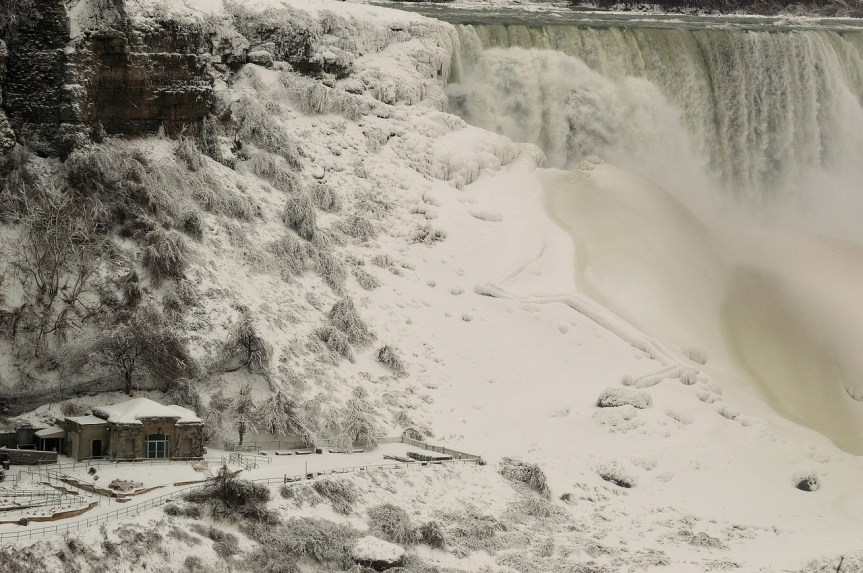
When you saw the featured image for this post, the photo of Niagara Falls, did that give you any pause to wonder at the beauty and awesomeness of nature? Did you stop and think about the photo and how cold it may be? Or, what might the thaw be like in a few months? Or, did you just move over the photo of such majesty to my writing for this month? If you moved right over, take a moment to look back at the photo for a few moments – 30 seconds tops – and wonder about the large scale of the photo and just how cold the surrounding weather may feel on your skin and face. Close your eyes if this helps. See if you can feel the freezing spray on your face and hands. How cold is it? Does your coat and hat give you adequate warmth? How does that feel? I’ll wait here for you.
Done? Welcome back, Dear Reader. Welcome to the end of February. This month is loosely titled “The Power of Awe” and how being in a state of wonder makes our lives a bit easier to live. Didn’t the Falls leave you in a state of wonder? Like, how small I am in the world? It is this feeling of awe, of wonder, that we begin to pass over in our adulting. We think we’ve seen it all, know all, and, well, are experts in this thing we all call life. And, I’ve learned how just a bit if wonder creates that feeling of childlike playfulness that we lose by degrees through living. The power of wonder or “awe” cannot be diminished. Read on, Dear Reader, and I hope you get a little bit of inspiration in your “awe”.
During this month, I read a new book by Dr. Ethan Kross called Chatter: The Voice in Our Head and How to Harness It.  For those of you unfamiliar with Dr. Kross’ work as I was, linked here is an interview by Anderson Cooper on his show Full Circle with Anderson Cooper.
  This is an easy-to-watch, 30-minute primer for you to see if this book may resonate with you as much as the message resonated with myself. Kross is a professor of psychology and management at the University of Michigan and director of the Emotion and Self Control Laboratory with the University. Or, no slouch. The book is chock-full of referenced information and studies so this is not just one person’s opinion.
For me, this information also correlates to companion to another book of a similiar nature called The Untethered Soul by Michael Singer. 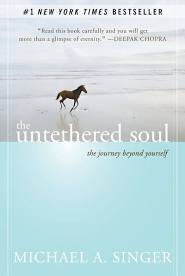 Both are excellent reads and touch on very similar subject: the voice inside us. Each tackles the idea of mental chatter, and the source, dangers, and necessity but from different perspectives. This chatter creates the emotions or feelings that then drive our behavior. How we think about something (or, the chatter) really determines how we feel and, accordingly, how we respond. I’ve done quite a lot of blogging on my realization that I even had this voice – and the negativity it espoused. An area that Dr. Kross discusses is about the power of nature and awe in such a unique – yet, not unique – kind of way. This is something that has provided me comfort throughout my life yet I never realized why. How did you feel looking at the photo? Did that sense of wonder give you a bit of a release from your own personal chatter? The comfort of nature and feeling my own smallness has helped me in the past but I was never aware of why. I just knew it worked. With the knowledge I know have from Kross’ book, I can move forward to use the power of nature and awe more deliberately in my life. I’ve learned this month that deliberate intention helps to frame the situation so that we can achieve the maximum amount of benefit from the experience in whatever way we choose.
To harness this type of thinking, one must be conscious of our perceptions and, most importantly, be open to correct our misperceptions. Many times, our perceptions can come from outside influences or factors. However, these external features must process through our discerning brains and, violá, misperception is created. (I think my name could be Miss Perception, but I digress.) Both of these books discuss our inner voices, the feelings that drive our behaviors and beliefs. Many of us don’t even realize this voice is separate from yourself; the voice is how you make sense of your world, and it is designed to keep you safe. It formulates our perceptions, both internal and external. The voice, however, if left untended, can take over the how you think of something, too, through a pattern of behavior that we’ve found helps us cope with “whatever” – stress, anxiety, fear. Times of extreme ‘whatever’ heighten some of these perceptions or beliefs and create all kinds of challenges that, as humans, we love to overcome.
During these days of the Pandemic, we see this in our daily news. People are trying to cope through making sense of their situations. As a result, we can be more susceptible to false narratives because they are convenient and we really want answers, to understand. These narratives make some sort of sense to us or come from a source that is known and, usually, reliable. But, are they real? Many times, when we question our beliefs, we are faced with the facts of the situation and the realization that our thinking was wrong. Yet, we continue to defend this thinking because we don’t want to be or cannot accept that we were wrong. Facing our wrong assumptions takes guts and vulnerability. In the middle of a Pandemic, my guts and vulnerability are on high alert so our sense of self protection is highlighted. Many of us get a lot of our sense of self from being right so, when faced with “wrong”, the response may be out of the norm: explosive, violent.
Like water, we humans like to find the easiest route to or through things. This voice comes out in how people perceive you and you them. The voice impacts your assessment of the present situation and the resulting conclusion or judgement about the matter. You can tell a lot about someone by how they respond and, most importantly, you can tell what it is they believe about you, themselves, and the situation.  In a video game I finished called Concrete Genie, the main character (Ash) is chased and bullied by other kids who are struggling with their own demons. Ash is painting his world more beautiful and removing the shadows of leftover emotions in the town. When my character is captured and held by these children, he is unwaveringly calm and not fearful. These bullies ask why he is not scared, he responded that he realized their anger towards him was not about him but about them. You know, it always is that way, even with our own anger. Many times, we mistake this negative thought about one’s self as an external “trigger” and the misunderstandings escalate; this trigger is actually internal and under our own control. Couple this with our inability actually listen with an open mind, these misunderstandings grow and grow, based on a false or misunderstood premise. We then argue over something that is so far and away from the true issue that we forget the real matter and just are trying to be right. (Speaking from experience.)
See how sneaky the ego gets into the middle of this? As get older, we get much better at this way of thinking, too, and it becomes comfortable. As humans, we want to have some understanding of our surroundings This may be why older people could be more narrow-minded in their thinking: Their mind just stopped listening yet kept judging. When we stop listening, we lose the ability to view the extremes of a situation. Stopping listening = stopping thinking. Once you are in this pattern, how can you stop yourself as that voice keeps egging you on? Continue reading, Dear Reader.
I’ve noticed this pattern with myself where I can stop listening as I’m in my head, thinking about things, tossing over, ruminating. At times of extreme stressful thinking, I tend to go outside in nature and find comfort in having my thoughts filtered through my surroundings. Being in nature has always helped me to slow my thinking down, becoming more at ease. I struggle with rushing to judgement before actually paying attention to the details, like trying make sense out of something that just cannot be understood. It is these times where our faith is tested; our faith in our beliefs and, basically, ourselves.  When my first husband became comatose about three weeks after we were married, I sat for days outside, with my own thoughts, in my Adirondack chair, noticing how the spring came in, watching my backyard begin the ritual of a seasonal change. Being in nature gave me the peace of mind I needed to begin each day and understanding that the world had its own plans and that my little life plans were really unimportant in the larger view of life. This feeling, at its truest, positive sense, was a feeling of awe. Once I settled into the idea that the life I had planned with him was not to be, my greiving became more about missing the person and not the life we were supposed to have – obviously, the life we had planned was not to be. I was crying over the loss of the expectation of life being a certain way. In my daily trips to the hospital, I would open my sunroof in my car to feel the air outside and the sunlight and comfort of being warmly cuddled. This gave me strength to sit by my spouse and ensure he was being being cared for. It was during one of these trips that I felt the extreme release of just giving up as I sat in my car, struggling with my emotions. It felt like a turning point of allowing me to stop mourning something that was never to be. In this, I felt a sense of awe, of smallness. I had figured out something about myself and that my role was to help my spouse exit his life as it was done – and was not going to include me anymore; my life was meant to continue but without him. The awe I felt at this realization was extremely humbling and allowed me to move on, both in my mental space and my heart space.
I’ve had this feeling of awe throughout my life but at the strangest times. Many times, I just disregarded the power of awe through a mechanical understanding of the science behind the “awesomeness” I’m witnessing in the moment. Have you ever had the powerful awe of a beautiful sunset where you just feel so small and inconsequential? (This is the oppposite of how your ego believes things to be.) You can just behold the sight of those rainbow hues, or you can just rationalize that this is a result of light and weather and is nothing to really be excited about. My mother used to tell us that Santa Claus was baking cookies and the beautiful orange, red and purple hues that would jet across the evening sky was the heat and love from his oven. I used to think that Santa had a really big oven, too, given all the kids he visited. I also used to wonder why he needed to bake his own cookies when we left them for him already.  I figured he was baking for the elves since they did not taste the treats that Santa obviously devoured when visiting our house! To this day, even on the other side of the country which is where I now live, sunsets like this create a sense of awe in me with the fondest of memories, too.
I think this type of thinking has a correlation in mainstream religous teachings, too. Forgive my lack of bible education but I do recall the story of Adam and Eve who, after eating from the tree of knowledge, began to see the Garden of Eden differently – or with greater knowledge. It was this knowledge that removed the wonder, the awe, of living an Earthly life. Just because, as adults, we now have greater knowledge should not change how you look at life or you, too, will begin to forget how small we all are in the world. Why not view life with the childlike wonder of a small boy receiving a much desired toy for his birthday, or the “Tooth Fairy” dropping by a few coins or trinkets in exchange for the loss of a baby tooth? In its simplicity, the belief creates a sense of awe just like the frozen waters of Niagara Falls. When you have a sense of wonder, you see things differently and are less apt to put your old, tired judgments into your thinking.
I’m reminded about other times where I’ve felt a sense of awe and had no idea – and my health actually improved. In my late teens and early twenties, I did some traveling throughout Europe with a dear friend. Each trip was usually 4-6 weeks, and I’d come home about 20 pounds lighter. Not for lack of eating – oh, no – for I ate the local cuisine, tried all of the local beers (Hello, Germany!) ,
,  found that I loved English chocolate treats, and would enjoy it all. I was so excited to find something new and different each day, too! We traveled to a new site – a
  cathedral like Salisbury Cathedral shown here, or stately manor or palace, or museum, or even just the shops in town – and took it all in with a sense of awe. When I would come home, my mother would wonder if I ran out of money since I had lost weight and must have stopped eating at some point during my trip. Very interesting that I would lose weight while really enjoying life. Yet, in my day to day, I struggle with weight and body image issues. (Not sure what to make of this but I find the link with awe very fascinating and something I will be exploring for myself.)
I still live in nature as it has provided me with a sense of comfort, of being in the world. The awe is all around me, like the wonder of huge mountain ranges that have stood throughout generations and generations. The dense trees that have stood hundreds of years, raising families of trees through their natural process. A few years back, I took a 5K walk through the woods at Mohonk Preserve with a person who was much more physically fit than myself. I know it is 5K because, when I got home, in my utter exhaustion, I trail-mapped our route. During our hours-long hike, I struggled with the heat and hills, making it up to a prominent vista where we could sit and enjoy views of the Hudson Valley from high atop a mountain. (I contemplated the embarassment of giving up and needing to be airlifted from the tower, too. ) Want to know what I remember when I think of this event? The view, my company and the wonder of how beautiful nature is; the soreness of my body for three days later are of diminished memory now. The awe? Still with me – and makes we want to go again.
I’ve realized that a sense of awe is extremely powerful, and something we just take for granted. Because I know the science does not mean that I can’t still be amazed and delighted at thinking that all of these trees came from something so basic that it (life) exists despite all of our efforts to tame nature. Because we know how something may have formed into existence should not remove the awe we have in its appreciation. As we get older, however, the sense of awe gets diminished with the daily trials of life. This doesn’t mean you need to go outside all of the time to get this sense of awe. Dr. Kross so eloquently states that “…the feeling of awe, however, is by no means restricted to nature and the great outdoors.  Some people experience it when they see Bruce Springsteen in concert, read an Emily Dickinson poem, or take in the Mona Lisa at the Louvre. Others may have awe-drenched experiences when they see something extraordinary in person, like a high-stakes sports event or a legendary object like the U.S.. Constitution, or witness something intimately monumental, like an infant taking its first steps. Evolutionary psychologists theorize that we developed this emotion because it helps unite us with others by reducing our self-interest, which provides us with a survival advantage because groups fare better against threats and can achieve loftier goals by working together.” Fascinating work, Dr. Kross, with tons of practical application.
As I was writing about my lessons learned from January and how perception and beliefs shape our thoughts, I was simultaneously thinking about how much better February was going to be, and I immediately felt a sense of relief. “Perception, Bitch!” is my new mantra for February ala Jesse Pinkman-style. The reason I thought it would be better is because my horoscope told me so. No fact, just pure belief changed my mindset while blogging which really stopped me in my tracks. Just how much of my perception is decided through a dirty lens that I have left untended? During these months going out in nature is hard and my natural coping mechanism is inhibited by mounds of snow and ice, and with extreme temperatures. I have found something new for my awe: myself. You see, I think I’m pretty awesome; it has taken me half a century to realize this. Not in an unhealthy, better than you way. No, for, Dear Reader, I think you are pretty awesome, too! If you are joining me on this rock we call Earth, moving at such speeds we cannot even fathom, give yourself a pat on your back as being really awesome! What you make out of life is truly what you get. You can take the minute you spent talking to a nice lady in a grocery store, spending a little extra time to help her reach a high shelf, and learn so much about yourself in the process in that you create your own “awe.” (I did!) Life is a series of these moments; no judgment, just moments. It is how you perceive these moments that gives you anxiety or grace. You get the choice. Choose wisely. Peace.
41.920902
-73.961289


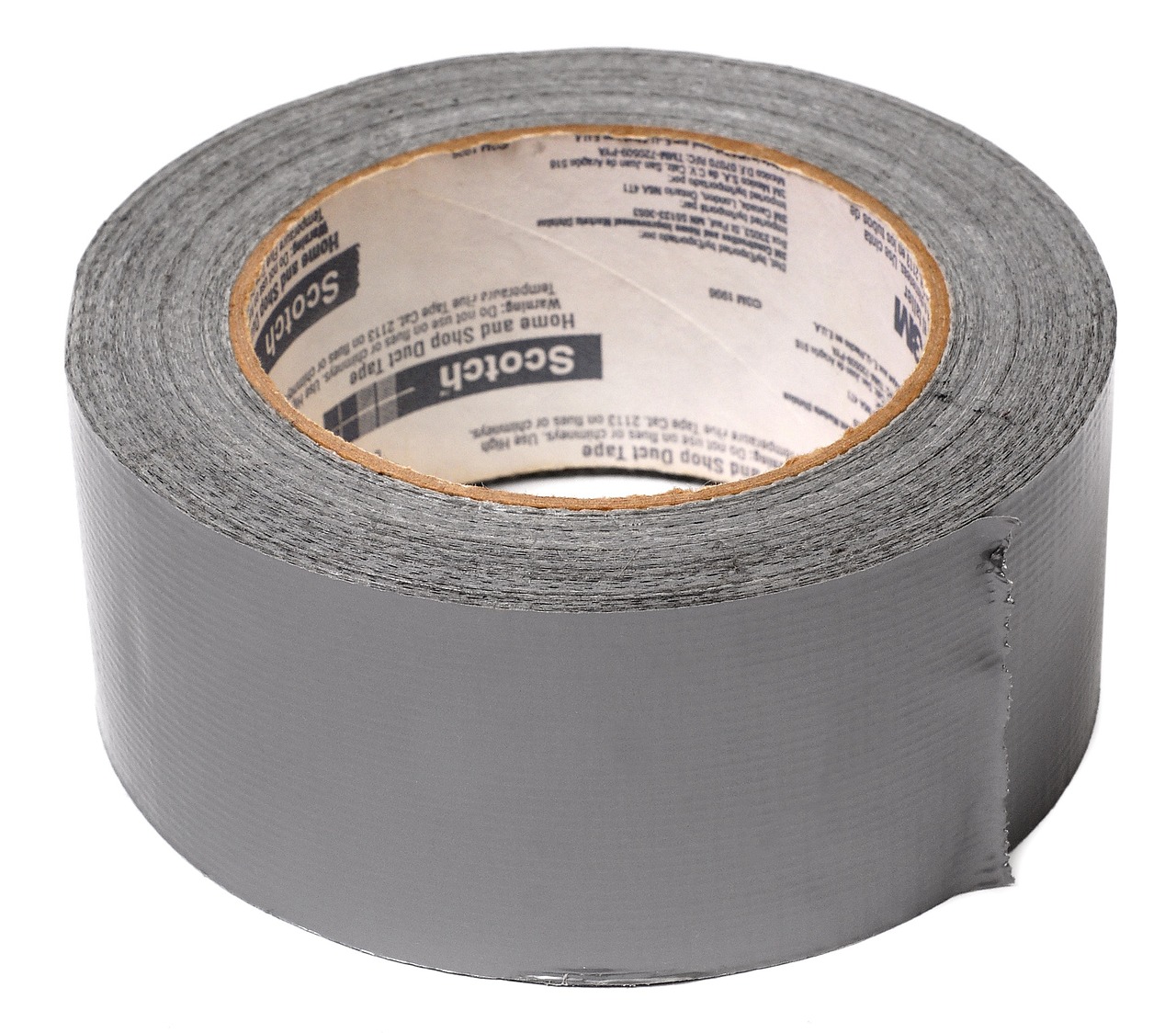 Does the duct tape make me stronger? Or, are the cracks so deep that they are irreparable? I’m not sure and, like life, time will definitely tell. I like to think that the cracks, held together with the sticky duct tape, make me stronger for I know where my weaknesses are now, don’t I? Because of the crack, I’ve been able to define why the crack exists and how to repair the crack to create a new sense of stability.

 The Wobble