I’m not sure when “being connected” became something I needed and, ultimately, dreaded. In retirement, my days begin with my being immersed in my phone looking at email, social media, my bank account, investments, and local news. (Did I take my morning medication? Maybe, maybe not.) I think the habit of “checking in” with media began back in the early 2000’s when I commuted into New York City each day – about 2.5 hours from my house to my desk, door-to-door – with watching the news. I got the weather forecast, city news, commuting information, and everything I needed to decide if this was the day I needed to stay home. The was before mobile phones had internet. I was always hoping and looking for happiness in staying home, snug in my bed, which became overwhelming and very tempting. Everyday, I’d have coffee with Maurice DuBois, the news anchor, who would inform me of everything I thought I needed to know. Then, I’d tell myself to get to the office as I needed to support my family. THIS was my single motivating factor for working. (I did not realize this until retirement and at a significant personal cost.)
Fast forward a few years with the advancement of technology. My phone became my pocket assistant, reminding me of everything I wanted to do and usually failed at: To do lists, appointments, calendar notes, texts, goals – you name it, I berated myself for not being one of those people who could walk, talk, text, and laugh all at the same time. The tool I had in my hand was so powerful that I knew, one day, it w/could be my personal assistant…and THIS would be when I finally would be happy. Life would be coordinated into this little device and would finally give me a sense of peace. Fulfillment. Happiness.
<Sigh.> Just WHAT was I thinking about here anyway. Today, I consider this way of thinking as looping between searching and living. Yet, it took me many years to figure this out (ergo “looping”). Sometimes, we are searching for something in our living within the phone – or not. I do think people have varying degrees of engagement with technology depending on many psychological factors. For me, my identity shifting became wrapped up in my phone. And, this shift is just not as simple as leaving the phone in another room. No – the shift needs to be in my mindset and how I see the phone as a tool. This is a struggle I have each day because I fall back into old patterns as I am still working on replacing these patterns with better habits. I haven’t found them just as yet and have realized that the habits will find me when my timing is right – for me.
Life is about timing and phases, and understanding that each of these will change without me needed to DO or BE anything. My job these days is to notice how I’m feeling and adapt. Yep. Whatever “adapt” means to me – at that time. All of my life, I have fought against the current to build these muscles because I thought that was my job in this life as a human. Being different. Being unique. Making a big difference. I find myself tired – truly tired – of fighting against the current. I’m desiring a bit of meandering, finding my flow, and just being easy. With myself. With others. Having no agenda. Maybe this should be my New Year’s resolution: No Agenda, No Plan. And, Breathe.
Is this too easy? Hell no. As a recovering overachiever, doing nothing is still something. With my ADHD, I can always have my body sit still. OK, maybe my foot is tapping and I’m banging my finger on my leg – still for ME. My mind, however, is doing back flips and intricate problem solving that I’m totally unaware of until I blurt out some random sentence and realize I’ve had this whole conversation with myself in the middle of another conversation – WITH PEOPLE! Yet, I am a serial procrastinator as I know what I need to do and cannot make myself do this thing. This is when I realized my procrastination wasn’t an identity. It is a RESPONSE – and usually with an emotional tie. What is the procrastination telling me? Depends on each situation. I did decide that having the label was not fair to myself so I’m working on removing this label from my sense of self. I realized that I am someone who cannot make myself do something I don’t want to do without a SIGNIFICANT toll on my mental health. This is the ADHD impact. And, I’ve routinely told myself vile and hurtful things as a type of motivation….that isn’t. There are repercussions to this way of motivation that I’m currently unpacking – in my own time.
I broke my kitchen garbage can the other day. The can – this one – has a pedal that one must depress with their foot to open the lid. Below the pedal is a stabilizing metal bar that keeps the can from toppling forward when in use. The stabilizing bar is what broke…again.
This is supposed to be the trash can that can survive an apocalypse. The first time it broke was late last year and we chalked this up to a faulty mechanism or bad design. “Is nothing made as it used to be?” we wondered once again, lamenting for those good old days that were neither good nor long enough ago. We both turned into MacGyver, turning the can over, and assessing the situation. A strong adhesive to glue in the corners of the stabilizing metal bar and plastic fittings was completed. Crisis averted? Or, just delayed?
Last week, while depressing the foot petal to raise the lid, I heard that telltale sound of a crack to the stabilizing bar. Recognizing the sound, I stopped to check my own behavior, or to check in with myself. (This is new – paying attention. My ADHD internalized so much!) I’ve become more aware of my own participation in life and “things”, and my tendency to shove everything into an external blame situation. My mind began with “what a piece of crap” and stopped mid-thought with a new idea. Instead of blaming the poor kitchen receptacle that just sits in judgment of me, was there something I did that contributed to it breaking? Did I press too hard with my foot? (Enter sense of shame.) Just how sensitive is this thing anyway? (See, the habit is a hard one to break!)
That was when I recognized the issue I needed to handle was not about the trash can at all. In fact, it is the same issue with a new and exciting flavor: mindfulness with a dash of presence. Or, how can I get more out of my head. I’m being guided and shown this idea in a variety of situations. (Yes, guided. More on that topic to come.) Situations that are a lot more serious than a broken piece of a garbage can.
I learned that, in caring for my dying mother, the responsibility was so tremendous, and I felt honored and humbled by the turn of events. My sister and I took extra care of her, cleaning her, reading to her, talking to her, and ensuring her comfort… just like when she did for us as babies. We kissed her, loved on her, and tried to be the best daughters to the best mother in the world. This required my full attention and presence. When I was distracted, I effortlessly pulled my focus back to my mother. This was a life and death situation and needed me totally aware so the correct decisions were made. Since then, my husband and I also cared for our dying and much beloved dog, Toby, which was also an honor of a different kind – yet, it taps the same feelings of love and protection but with differing angles. In caring for Toby, I found myself becoming angry at “having to do” and did not like the feeling at all! I didn’t understand these emotions as they felt disingenuous and conflicted with my heart. These new emotions did not honor nor represent my feelings for my beloved miracle pet and felt just wrong. So, instead of squelching this into some new package, I felt the emotions. These were sadness, loss, grief, and a sense of loneliness – and the same emotions I felt in processing these losses. What was I to learn by these events?
What changed in both of these situations was me: my mindset of gratitude and acceptance of both the situation and myself. I allowed myself to feel these emotions in a more healthier way. I cried, hugged, cooked, cleaned – all the physical things to make my body as tired as my mind felt. Sleep and distraction were also my friends along with a dose of “pulling myself up by my bootstraps.” Such a difficult yet educational time in my life that I’m glad I learned something from these situations!
Now, back to the can. I accepted that I heard a crack and that I had once again broken the can. Stopping mid-stride away from the can, I began to assess just what happened. Being in the present moment – or being mindful of this moment – was key for me. The crack of the can brought me out of a state of unawareness and into a present sense of reality. The ideas of being mindful and being present are issues I have been working on in myself for a while now through a program of meditation. You see, my particular brand of ADHD is dreamy and very internal. I can drift off in my mind to some other place and am not be fully present during a conversation. Usually something said will trigger something in my brain and I get transported to another place. Trauma meets ADHD – or life floating on a cloud. Sounds nice, right? Not really. In serious conversations, I would frequently lose the thread of the conversation. I used to try and engage the speaker so I could grasp this weakening conversation thread only to interrupt the speaker and distract them in the same way that I was also distracted. Then, because I was very good at recovery (practice makes perfect), I could interject a few words here, sound amazing, and the speaker would just be left confused.
This is a key aspect of my brand of ADHD and my neurodivergent brain –or my personal superpower. It is a learned response and not necessarily a good one. I can mentally travel years in a single second! Forward or – sometimes in reverse. Yet, my memory is for shit. During these times – it’s not always – I would be yelling at myself for this habit, chastising myself for being selfish or standoffish, and not even having a correct recollection due to my own distraction! (Imagine living in THAT place?) “Why can’t I pay attention?” I’d lament to myself. “How…” insert label here “…stupid/dumb/ugly/fat/awful/mean…..are you? You name it, I’ve called myself this name. Many times over. Thinking this was abnormal and that I was broken. Yes, maybe this isn’t normal but it is MY normal – and I have a legitimate physical reason for the behavior. I’m not stupid/dumb/ugly/fat/awful/mean for this.
Today, I am in a place of acceptance. I’m not selfish or standoffish – as my mother used to say to me. I’m DISTRACTED by my own thoughts that are now layering in yours and getting all jumbled up and confused. Sometimes I need to stop and re-frame my thinking – and ask for time needed to ‘catch up’ or for someone to repeat themselves. This can be very difficult for the person speaking and has caused troubling interactions and unintended offense. Today, I’ve learned that this tendency originates from a neurodivergent brain. This diagnosis gave me the ability to accept ADHD as part of me, an explanation for certain behaviors. This is not my entire identity but gave me greater awareness and, thus, the ability to create positive behavior strategies.
Or, I stopped trying to ‘fix’ myself. I am accepting my mental dreaming as part of my own personal human uniqueness. This is why the ADHD diagnosis is so important. It explained so much and gave me the ability to accept what is and without the condemnation of self. This wasn’t a behavior problem to be solved. My issues were my natural coping mechanism and my ability to focus and be present.
I began to see the trash can more as a mirror for me to recognize that I was doing something wrong. No, wrong isn’t quite correct. That is my old self talking. Today, I’m doing something out of congruence with my feelings. Self-acceptance is very powerful and a key tool for me. What am I being told by the breaking of the stabilization bar? Well, obviously I’m using too much pressure on the can with my foot.
So, instead of complaining about the can or being angry at something breaking, I became curious. Why is the pressure I’m using breaking this can feature? Is it my superhuman foot strength that has never been in evidence before? Should I take my newfound strength to the NFL as a field goal kicker? I must be really strong, no?
No.
A fun and meandering argument with myself takes me out of the shame loop and gave me space between thoughts. This was when I realized I was needing be be more mindful and see the situation in the moment. Here is what happened: Instead of stopping and opening the lid with my foot, I walked towards the can mid-stride to open the lid while simultaneously walking away from the can. Economical, aren’t I? I “walked” by the can to open the lid while on my way somewhere else. This caused too much pressure to be used. Or, I was too busy just to stop and use the garbage can. Isn’t that something of a realization? Too busy to focus on pressing a pedal with the correct amount of pressure.
Trust me, I never, ever want to be that busy. The idea of slowing down, paying attention to the pressing of the foot pedal, raising the can lid within a state of mindfulness was appealing to me. I wasn’t sure why and I had to think on this point. Why does the idea of slowing down appeal to me? The idea reminded me of Aki and his content created on YouTube in his Samurai Matcha channel. He has a video linked here that I have watched a few times on cleaning. These are not “how to” videos but “why” and, importantly, how one engages their mind in the physical act of cleaning. I had not done this in my kitchen cleaning duties. Aki has had quite a few physical challenges of late where mindset has been key. His ideas of cleaning translated to mindfulness in very serious health situations, too. Just how powerful is this idea?
Once again, back to the can. I realized that I was not being present or mindful in my cleaning activities as Samurai Matcha recommends. Apparently, I automatically labeled my situation in my head as a chore or being mundane or unimportant. These ideas are what caused me to gloss over the moment and seeking the important things outside of my current activity – or increased my distraction. If I see the moment as unimportant, I am missing the joy of the activity. How can I see all moments as important? Well, one must first have the realization that they have not applied the most helpful mindset for this particular moment. I had not even realized that I had even labeled the idea of pushing the foot pedal as anything other than a chore on my way to something else. This slight cracking noise of the breaking connection totally took me out of the mental reverie I didn’t even know I was in because I was physically busy. Interesting idea.
One thing I’ve learned is that there is a lesson in most everything in life. So, I’ve stopped trying to actively change myself and am trying to become more of an observer. This is a struggle that I’m finding a constant yet rewarding battle with my ego. I’m doing OK. I do have certain behaviors that do not please me for any reason other than wanting to be happier. Mindfulness – or presence – in even the mundane can be a struggle. Sometimes, life throws an experience for you to learn the simplest of ideas – like a broken trash can. Being mindful feels like slowing down. Yet, is mindfulness truly slower? Or, our natural state. I like to think they are both the same thing.
In life, we can have easier roads and those that are more challenging. What I’m realizing is that, just because the journey is a challenge, doesn’t mean that one shouldn’t travel down said road. If we can put our emotions aside during those challenging times and focus on moving through and past whatever “it” is, do we always just move past without learning anything? Isn’t that what life truly is? A journey of learning? What happens when I just sit in the situation to observe it while, simultaneously, not rushing to fix the situation? Hmm.
Right now, my husband and I are caring for our aging dog, Toby. He will be 16 next month and, for a dog of his size, he has been on borrowed time for a few years. Toby, however, has a genetic condition that has made his care extremely precarious and, at times, very costly. Yet, Toby handles this all with the same cute face and attitude. Watching how he navigates what only can be said is a very confusing time for him has taught me so much about myself. What I would have lost had I not just sat during these times – as uncomfortable as they are – just to see how I could grow from the experience. Don’t opportunities for growth come out of ALL experiences? Can I make a difficult time be a welcome opportunity for growth just like happy times are welcome? In the difficult and challenging situations, we just may not realize that we are growing until the situation has passed because the feeling is not desired. We are so worked up about the emotions of the situation that we don’t see our own potential for growth through the challenge.
I don’t know about you but I really like a happy moment better than a moment that involves cleaning up bio messes! There is no glory in this level of care. No rewards from your co-workers. No “Atta Girl!” for standing outside with Toby at 2AM while he pretends to do his business. (Oh, I’m on to him!) All of these “chores” are handled quietly and within a certain dignity and respect. I started to view the aging process a bit differently in trying to gauge my emotions over my failing and devoted canine companion. Aging can be viewed as a necessity of living or the acquisition of a greater amount of knowledge of the world and myself. Personally, I like the latter way of thinking because one is truly more mindful than the other and it is this – mindfulness – that I’m striving to perfect.
Mindfulness is a broad term so let me explain the context. I have found that, in my ADHD journey, I thrive on mental stimulation as my brain loves to turn over ideas and creations. (One of my reasons for sharing so many crafting project ideas!) This stimulation can be driven both internally – like me – and externally. The external stimulation is much more nuanced in that we really believe we have a choice of just how much external “noise” we will allow. The “noise” isn’t always loud and in your face. The quiet sound of the refrigerator motor or air conditioning is also stimulation. In a person with ADHD, these noises all jumble up and become really aggravating so I retreat internally to work on balancing these two sources. Or, when you are speaking to me and I get a far away look on my face, I have not been listening and even I never realized that fact until that moment. Many times, I have my “to do” list running in my head as you are speaking. No, not deliberately….well, mostly not deliberately. (LOL!) I’m just afraid I’ll forget something (cue Executive Function and ADHD) and haven’t taken the time to write this really important thing I’m going to forget into my notes or planner. (This also explains why I gravitate towards paper planners!) Or, in a moment of creative genius, I resolved whatever problem I had been tossing around in my head (for there is always thinking going on) and cannot execute on the idea because I’m talking to someone on the phone. Thinking I can be doing two things at once? The ultimate self-deception. Sure, I can do two things and each one gets a split of my attention that is available while I’m externally working and also thinking about cooking dinner. Nothing I work on gets my full attention and this deficit is really keenly felt. It gets into the over-stimulation of distraction.
This tendency to distraction rules my thinking almost exclusively which ramps up my over-stimulation. (Actually, I didn’t even realize this was “a thing” until watching this YouTuber who makes the most pleasing and calming videos. The idea of over stimulation was something I accepted in myself but did not understand.) With ADHD, there is now clarity for me as I’ve learned that I seek the stimulation as part of a hormonal surge that, once completed, leaves me feeling really high only to fall really low. Recently, I’ve been trying to be more artistic to balance my need for mental stimulation through creation and not thought. Or, trying to get myself out of my head. My morning routine involves some sort of technical connection (phone), and a really external focus (e.g., news, social media, cat videos, etc.). This morning, however, I decided to things differently because Toby needed my assistance. And, as a result, I’m now writing a blog post and doing something more creative than ‘doom scrolling’ arrest videos. It occurred to me that, by caring for my beloved pet, I actually was kinder to myself. WOW!
Yesterday, to test this theory, I handled my day as normal. However, whenever I had the urge to pick up my phone, I didn’t. I diverted my attention to something I had wanted to do but never had the time. (OK, it was vacuuming.) I felt so good about setting my bedroom up with a clean and fresh-smelling carpet (lavender oil) and would have missed this opportunity to feel good by watching another video of criminal lawyer reacts. (I do love me some Bruce Rivers!) Distraction is helpful for me to release some pressure; a fun vacation. Mindfulness – or managing my stimulation – is really helpful. Knowing that there is a difference? The WIN!
This is a blog post that will change everything for me. Sometimes, we have such a profound experience that the experience must create a new path or trajectory for our life. This is one of those moments that I’m sharing in the hopes that someone else impacted by this can obtain additional information and seek treatment. Here is my story thus far – more to come. And, this is a story of my own personal joy. Joy at having found an answers I didn’t understand I was seeking.
In the path of our lives, we realize certain personality quirks or traits that we accumulated or were taught through the observation and emulation of others’ behaviors. This can be a parental influence or some other authority figure which then creates a weight with us. Like “Mom must know, she is always right about these things” or “Dr. So-and-so said that blah, blah, blah….”. We take whatever that is and adapt it into our own traits in a type of maladaptive behavior without truly understanding. There is a cost to this which we pay in various ways which I’m realizing can eat at one’s own person/being. Bite by bite, the cost can be felt at various key moments yet they aren’t tied back to the original source of the issue but whatever is being reflected in that moment. We take the moment, process it, and move on but fail to consider another causality. Another possible reason.
I’ve been spending the past two weeks with my mind really cooking up a glorious buffet of possibility. I’m letting my big brain run amok – giving it permission to ramble and meander through some of the mental dust I’ve gathered over the past five or so decades, and sift through the memories of what…well….was. I’m referring to my thinking as my “big brain” by design for I’m learning so much about how I think and the experiences from this journey. Learning from the past to change my present has always been one of my hallmark behaviors. This “lack of control” of my big brain is not my normal course but, frankly, I’m really tired. Exhausted. Tired of fighting my big brain. So, I’ve let the brain run amok, unfettered, like a horse which senses the freedom that running provides. My big brain is cascading over its retaining walls of controls that I have created over the course of my lifetime. My big brain is leading me on a variety of adventures and, you know what? My exhaustion is slowly fading with the understanding that this rambling is, for me, my normal behavior – and is OK.
Wow. I’m OK.
I’m doing this “big braining” on purpose – an experiment if you will – based on an “ah-ha” moment of realization….the realization that my brain may not work the same as other’s brains. Or, my “Eureka!” moment finally arrived.
My husband and I were having a tired argument of my not listening to him. I say it is tired because he always has the same complaint and my answer to him was always that I am listening to him I just can’t process what he is saying as I miss parts in my head. I cannot imagine how frustrating that may feel for him – you’ll note here that HE is my first concern, not me. (I’m a classic people pleaser.) This time, I decided to Google the terms relating to why I miss what someone says either the beginning or the ending of their statements. (I find I lose my train of thought with most people so this is not a husband/wife thing. In leadership training, this was a problem for me as well.) Usually, I find a lot about active listening: how to listen, engage, and reflect to the individual. (This may be why I write a lot about communication in this blog?) I began to read again on active listening to find that “thing” I’m doing wrong, or not doing at all. This is my normal M.O.: Find out was is wrong and fix it. The data the Google search returned was not quite correct for my situation. Further refinement was made and – Holy Moley! – I got the shock of my life: ADHD? Naaaaaaahhhhh.
Attention Deficit Hyperactivity Disorder? Hyper? (WT proverbial F! GOOGLE! How stupid are you?) I’m not hyper and am carrying an extra 100 pounds on my frame to prove it. Yes, well, my brain is very hyperactive. Am I impulsive? No, not really…NOW. (Actually, in editing this, I must admit I am still impulsive but I’m selectively impulsive and my 100 lipsticks prove it!) I think we all have a bit of impulsiveness in us but, when the impulsivity leads us to bad situations, it becomes an issue. How about the time I spent $1,000 at 18 on skis and boots because I was going to become a downhill skier? Unfortunately, I ran out of money because I bought this all on my first credit card and used the entire credit line for the skis and boots. Bindings? Couldn’t afford them – and skis are useless without them. (Took me three years to pay that off.) My father used to joke with me that it would be cheaper for me to wash my clothing and not keep buying new. Most of the new clothes, however, would not fit long and were for a body that I did not have. I really spent money I didn’t have until I was on my own, hungry, with no money. I also got tired of ducking bill collectors. (Yes, that person was ME!) I really began to be able to save money when I met my husband who is a very good saver. My saving habit thus far had been involuntary 401K deductions for the idea of retirement and needing to fend for myself. I mirrored him on his spending and saving habits. And, because he was so good with money, I became better and began saving because I was saving for us….not just me anymore.
Mirroring is something I became very good at doing – naturally. I mirrored every boss I ever worked for until I found something that was off in them which created an issue in me. I would meltdown into goo and try to figure out what happened and how I can “fix” myself. I moved from California to New York without ever having been to New York. Why? My mentor, who I emulated, was not the person I thought and I needed a different mentor – and found a new one across the country. In this journey, however, I found I was never true to myself. I had no idea who I was, what I wanted in life for I wasn’t sure a choice was every presented. What was hammered into me at a very early age was that I am the only person who can take care of myself and that I needed to do whatever I could to ensure that I had a roof over my head, food on the table, and a bit of cash in the bank. Period.
Circle back to today. The ADHD possibility and my hyperfocused research in the area has stirred up some painful and long dormant memories that, when seen in an ADHD light, clearly show a pattern of an issue that would have been helped had I received proper treatment as a child. (I have family who will remain nameless who could be the poster child for ADHD and has not received ANY treatment.) My issue began at age 8 when, in fourth grade, I was caught cheating on my math homework. (I didn’t do the homework as it was boring.) I also could not organize the assignments because this teacher gave them out verbally and I did not have the ability to take this abstractly stated messaging into actionable steps; I needed help that I didn’t get. The year was 1971 and, if I wasn’t the kid running around in the class, I was not considered hyper even though my mind was out of control. I’ve since learned how to set up myself for success thinking I needed visual cues as I was a ‘visual learner’…and this path took many years of sheer grit. Using an external release ‘valve’ was also how I finally succeeded in college: On line. Lectures in college were torture – so much so that I’d rather have my teeth pulled out without anesthesia then to sit in a lecture about something I had little to no interest in. I’d fall asleep, snoring loudly. Or, I’d need to get up or would fidget by tapping my toes in my shoes. I learned that, in order to complete my college work, I would need to give into my desire to be physically active so I could distract myself and concentrate on the assignment. This physical work allowed my mind to tumble the paper and research so that I could write my paper…and always at the last minute. (I would set up strategies of how I could chunk out the tasks yet could not do what I knew would help me or make my project easier.) I also had the benefit of a clean house. (Yay for #smallwins!) I learned that I could also distract myself by eating – something salty and crunchy. The sound of the crunch and the tactileness of the salty chip allowed me to focus on reading. These worked for me and I had no idea that these are very typical of someone with ADHD.
The results of being caught cheating? I really don’t recall as I was not punished or spoken to and, up until this moment, it never occurred to be to ask why. My parents told me at that time that I was smart but lacking in social skills. (Or, I was immature – still am. LOL) I got the information correct but the teachers could not see my work. I was smart, but the details were way too confusing to me and I didn’t know how to express this. It felt like I was deficient. (I actually discovered the same trait in my professional career, too. TLDR (Too Long Didn’t Read) should be my initials.) I believe I may have been thought “willfull” in my lack of attention because I could be super-focused to the point of indistraction if I was interested…and, for heaven’s sake, don’t ever try and talk to me while having the television playing. I can guarantee you I will not be hearing you. I’ll see your mouth move, yes. I won’t, however, be able to process what you are saying to me. This has been my running joke: If you want to distract me, turn on the TV. In medical offices, I’ve learned to turn my back to the TV or I can zone out on HGTV.
What I also recall being discussed was my reading comprehension where the teacher would read and I would need to answer verbally-given questions. If she read something I liked, I was there. However, if the materials were boring or my head was particularly spacey that day, I would just go off into my own little world of dreams. The teacher became the “blah, blah, blah” so common in the Peanuts character shows. No one bothered to ask me because I was smart enough to cover this lack. I created little coping mechanisms throughout my years which helped me “deal”. I believe I was labled as “willful” and assigned special seats in class as a result of my coping. My parents were told that my problem was that THEY didn’t speak English to me at home. What I believe occured is that my parents were treated with unconscious bias because they spoke heavily accented German so my issues, my teachers surmised, were from their lack of language skills.
What the teachers failed to “get” was that my parents DID NOT TEACH US GERMAN. Having lived through WWII Germany, they immigrated to the U.S. to give their family a better life…so they taught us English so we could be successful. My issue was that I was inattentive because my big brain couldn’t be managed – I did not yet possess those tools. I, too, blamed myself for my inability to focus but my focus – or lack of focus – was inconsistent. (That didn’t matter for this was and is still seen by me as a personal failure.) I could not make myself sit through things I thought were boring or uninteresting – even if I needed the class. I began working at 17 full time to compensate for my inability to sit in a classroom….and NO ONE NOTICED! I didn’t apply for college….had the applications but couldn’t organize them to figure things out. My IQ tested off the charts yet I went to Community College and flunked out as I could not sit in lectures and became very spacey with homework.
The idea of ADHD brought back all of my life and things just began to click into place. All of my habits I’ve created to cope. All of my odd behaviors and the genus of these. My lack of attention let me believe I was a bad friend or partner. A personal failing or that I was a failure. I write about the really critical voice I named “Leroy” which is typical of one with ADHD. I had no idea and wrote of these things as if we all had them – and I was sharing information you may not have considered. The hypercritical thinking was diagnosed as depression, body dysmorphia, and Seasonal Affective Disorder (SAD). These may be true but there is another cause: Untreated ADHD. Yep. ALL OF IT CAN BE TIED TO THIS.
I’m seeing my doctor next week. If this is, in fact, the cause of my situation, I cannot imagine the profound difference being treated will make for me to just ease up a bit in my mind. To be able to gauge my current impact, I have begun to identify my various coping mechanisms and overthinking habits to cease them in an attempt to mentally rest. My appointment is in the afternoon and I’m considering cancelling my entire day so I don’t forget and can get there on time. This is classic ADHD behavior that, in the past, Leroy would have said I didn’t need to do that and would have corrected me. Now that Leroy is on vacation, I wonder what trouble I’m going to get into?
The moral of my story is this: Don’t rest until you get your answer and don’t judge when the answer is unexpected. This is where ADHD is a super power.
Peace.
Author’s edit: While reviewing this post, I’ve gotten up, used the restroom, put a load of laundry in the dryer, made another cup of coffee, and have returned to be able to focus. Yes, I already had laundry going when I began this post! If I’m not always simultaneously doing at least two things at once, I think I’m failing at life. Also, some progress. When I woke up this morning, I thought it was Monday and began to prepare for work. Concerned, I checked that a storm was coming in (Monday) and wondered who won the Super Bowl. ”Wasn’t that yesterday?” I thought. Hmmm….was a few moments before I realized that the game hadn’t been played as yet. Or, that it was really Sunday and not Monday. No Leroy to yell at me for getting this wrong and I’m OK just being me.
In New York State, we have what are called ‘service roads’ on the side of some of the parkways. When I first moved to the East coast, this was a new phenomenon that I witnessed mostly on Long Island; these are streets that run parallel to the main road and allows people to enter and exit without many barriers. This also allows emergency vehicles to easily bypass traffic snarls to get to the problem. I see my gut health journey very similarly where I am the road, the traffic becomes snarled, and I take the service road to exit and try and address the cause of the traffic snarl. I’ve been on this road a long time and have had many traffic jams where the service road, or alternative thinking, allowed me to bypass the snarl and continue on my journey. The second milemarker is an important one because these issues are foundational, and I have discovered that fixing my gut may be key to my overall health improvement.
Yummy.
My gut issues began as a teenager, caused by both anxiety (I will explain this in a later post from Depression/Anxiety Lane) and overuse of antibiotics for teenage cystic acne. (I was on tetracycaline for almost a year. The acne was, I believe, a result of overeating of processed foods. My mother told me it was too much chocolate. I hate to admit that she was somewhat correct but I’ve discovered that my issues were both sugar and, more recently, the common oil ingredients found in processed foods.) As a child, I also suffered from mysterious allergies that caused sinus issues, headaches, coughing, mouth lesions, and assorted hay fever type of sympoms. Additionally, around the age of five, I was exposed to an outbreak of some bacteria from a public drinking fountain. This was also immediately treated as I had developed significant painful and puss-filled lesions in my mouth and was told to gargle with hydrogen peroxide. I cannot recall if I was given any other medications for the bacteria exposure; I do recall I started an alert for the local health department. 😀 For my ‘sinus conditions’, the doctor prescribed ‘Dimetapp’ which was only available by prescription. The year was 1969-ish and I drank this sweet grape syrup for years between the ages of 6 and 10. As a child, I was not allergy tested as the Dimetapp seemed to handle the effects of whatever was ailing me and the thought was that these symptoms would be outgrown.
I believe that these treatments had negative impacts to my gut which was exacerbated by food sensitivies yet to be diagnosed. These two factors (use of antibiotics and allergy medications) created a soup of sugar dependency and food sensitivities that ultimately lead me to a number of medical conditions including cancer. When I began to present with my first stomach issue, I was 16 years old. I took myself for my first ‘adult’ appointment to a gastroenterologist who gave me a diagnosis that, frankly, I don’t even remember. I think I was told to use antacids and needed to buy stock in the Tums company. Wouldn’t diet have been a topic that should have been covered? My weight had skyrocketed from 140 to over 215 pounds in about three years. This event, too, was seen as a my ‘personal failure’ by the medical establishment – and it never occurred to anyone to question this assumption. The only guidance I was provided by my family, friends, and doctors: Don’t eat as much. (This should have been called “How to Develop an Eating Disorder.”) In looking back, I recognize (and, importantly, accept) that volume of food was never my issue. I’m learning that it was the type of food and how my body reacted to it. My choices as a teenager and adult leaned into processed (fast) foods even though my genetics really would not support these ‘foods.’ I was raised differently. In hindsight, I had become addicted to the sugar “high” of the processed carbohydrate, and the resulting hormonal imbalances.
In my twenties and thirties, I had GERD, acid reflux, and all kinds of biological responses that were so innumerable, I can’t even recall the path. I also presented with physical symptoms resulting from massive stress, both physical and mental. I was diagnosed with PCOS having suffered through all kinds of female hormonal disasters. Again, no help. I received a seasonal affective disorder and body dysmorphia diagnosis at 30, or depression. (I have learned that this, too, for me, is gut related.) At 35, I was diagnosed with metabolic syndrome and was told there was nothing that could be done. (I now have learned that this is not true. My current endocrinologist who has diagnosed me with pre-diabetes stated that this diagnosis should have been a ‘heads up’ for me.) High blood pressure, thyroid cancer, gallbladder removal, and the psoriasis were clear signs – if someone were paying attention – that there was something significantly wrong. We treat each issue as its own problem, don’t we? Why would we do this if these symptoms are all in one person?
What I realize now in reviewing my journey, this viewpoint resulted in mistreatment by the medical establishment. My ‘issues’ were never seen as a part of something else because that physician was only focused on my gastric condition and not my overall health; there was too much volatility in my daily condition to really give an accurate diagnosis. Food, however, fed this variability but was never seen as part of the problem. The doctor did not consider what got me to their office examining table which, in my opinion, needs to be part of the assessment conversation. The term for this type of practice is ‘functional medicine’ However, our medical establishment does not focus on prevention but on treatment. In this article for a pre-natal care study, six countries with varying medical systems demonstrate that the cost of these systems for preventative treatment is more beneficial than the U.S. model of treating once diseased. Given the costs, it would appear that prevention has a greater financial benefit to a system that is based on treatment. While the study is old, another more recent study that discusses prevention actually created a quasi-road map to improving preventative treatment. Instead, the U.S. government attempts to gut these provisions. (Yes, that is true.) This behavior does not create a positive prognosis for the future of preventative health management. It is the younger generation which concerns me for they may not have the perspective needed to properly evaluate and challenge bad doctoring. This happened to me in 1979, and continues today.
Dietary restriction has always been the answer I was provided for most of anything that I had which required medical attention. Sprained ankle? You need to lose weight. Psoriasis? What are you doing to lose weight? I actually had a doctor ask me if I knew what a carbohydrate was…I told him that I did not get this weight by not understanding eating. In fact, I felt that doctors actually blamed me for my illnesses or injuries, having written me off based solely on my weight. The self-blame (really, it is shame) I used to carry is now gone for I understand that I was caught in a “Catch 22” of self-blame (shame) which caused my disordered eating views and the physical cravings for more sugar. In working to eliminate the self-blame (shame), I realized that the idea of restriction is an old style of thinking and does not work for my long term health. However, I do need to change my eating to help my gut which may include some form of restriction or ‘moderation’, right? My thinking has always focused on a mindset of: Eat ‘right’, exercise, and stay away from ‘bad’ foods. My knowledge included what should have been my course of action yet I could never take any action! To anyone who listened, I used to say that if I could figure out my ‘how’ I would be successful. In many ways, I was waiting for the momentum to be created and, finally, recognized that I needed to create my own momentum. The momentum created my ‘how’ – and this realization is what I wish for you.
How is this done, you may ask? I think I have found my own answer – and this is the key. Individual assessments must be made which cannot be ‘wholesalely’ marketed. (Again, prevention is hard to sell.) And, don’t underestimate your current mental state and the impact of your diet! While this post is a discussion of gut health, there is a correlation between gut health and mood or personality disorders. If the gut ‘feeds’ one’s mood disorders, how does one break a cycle of poor self image? In 1979, there was no path forward for me. In 2023, however, I now have a path forward. It took 44 years but I think I finally have an answer. What I now realize in writing this series of posts regarding my current journey, there was no consideration for me, as a teenager, presenting with very severe symptoms. I was compartmentalized into a medical ‘type’ and written off as having a self-induced sick when I followed medical guidance and guidance on a proper diet. Weight was not seen as a medical result of something but of a personal failure.
And, here is a more recent example of said failure which solidified these viewpoints. In my last doctor visit in March of this year, the proverbial camel’s back was broken by that psoriatic straw. In this visit, my psoriasis was, apparently, a surprise; I was asked if I needed a dermatological referral. I actually thought she was joking as I had been seriously discussing this with her for YEARS. YEARS! I decided I was done and the realization that I was on my own in helping myself became a drum beat or cadence on how I was going to move forward. My path is now clear.
Footnote: As I write this, I’m down 32 pounds and not through restriction. I’m making smart choices and determining what foods help me to thrive, and those which do not. I’m feeding my body what it likes to perform at its best. Interestingly, I learned that soybean oil makes me really sluggish and depressed. I also found I’m sensitive to sunflower oils which give me cramping, GERD, diarrhea, and, frankly, also foul mood. (With all of that bathroom stuff going on, it’s no wonder I was cranky! LOL) And, in doing my own reconnaisance, I found that sunflower oil is in a lot of our foods because it is supposedly superior. (Note who sponsored this story.) There is also science that debunks the current belief that seed oils, including sunflower oil, are bad for you. What isn’t discussed are the possible food sensitivities a person may have because the gut is not right. (BTW, this link is a very interesting article from the Cleveland Clinic that should be required reading for anyone with a stomach.) The moral of this story? Don’t accept the status quo. Follow your gut.
This journey to healing is what I plan to begin posting in an effort to see if others have had a similar journey. I’ve constructed a few ‘pillars’ in my journey to improving my health that I will reference as decision points or “milemarkers” where I made a turn on Recovery Blvd – six to be exact: Psoriasis Road, Gut Service Road & the Gut Health Highway, Depression/Anxiety Lane, Thyroid Street, Joints Turnpike, Highway to Obesity, and Longevity Drive. (The actual healing journey that I am taking is separately documented using a daily journal and will be published at some point.)
Now, when you hear the term “psoriasis”, what comes to mind for you? Used to be that, for me, psoriasis is what people got in their hair. Dandruff. Purchase the appropriate hair shampoo and you are cured. When my psoriasis appeared as a little spot the size of an ingrown hair on my left leg, my inclination was to slap some cream on my really dry skin, quit whining, and move on with life. As you can see, the little red dot on my leg has turned into quite the situation.
My first ‘milemarker’ in my journey is healing my psoriasis. This process is the most confusing and is driving my trip to Longevity Drive. The realization that that this part of my journey is to be a major cornerstone for my own longevity and bright future rests well with me for it is my main obtacle to overcome. I’d like to also help others with similar situations with is why I’m taking my time to really sort this out. I have found that my focus needs to be on improving my health and not just ‘losing weight’. This is the first photo I took of my legs (red sock). I sent the photo to my mom to have her see what I kept referring to as my dry legs. This was after over 10 years of trying to get rid of the lesions. It is a very slow moving disease with me.
Yes, my psoriasis began – or so I thought – with the appearance of a small and barely noticeable lesion that would not heal. Determined I had skin cancer, I made the first of what would be rounds of dermatology appointments. However, later in my journey, I began to realize the my psoriasis was the result of something much more, and began much earlier than the presentation of a small dot on my leg. This journey was fraught with misinformation or just ill-informed medical professionals who are to geared to a drug prescription pad solution. Here are a few ‘shocks’ I discovered along the way which really shaped my treatment plan…or lack thereof.
Shock #1 – Medical Treatment of an Autoimmune Disorder. When my psoriasis lesion presented in 2003, I was told to just watch it. I’ve since come to realize that this advice was very bad. Because the lesion was too small to be treated and, with my history of cancer, no one would prescribe really strong drugs for such a small issue. (Good, because I didn’t want them anyway.) I also had a severe Vitamin D deficiency; where normal was 40, I had 10. This factor was overlooked by my dermatologist.
While the guidance of ‘do nothing’ was bad, this doctor could have prescribed strong drugs to kill my immue system when, in fact, my immune system was working as expected. My doctor just didn’t view psoriasis that way. I hope that the past 20 years have helped to educate him.
What I didn’t know is that I would hear this phrase for the next 20 years: Too small, not severe enough, etc. When did this little skin issue become “severe enough” to be treated? Surely, there was some cause, wasn’t there? More little spots began to appear looking like a little scrapes or knicks. Again, too small to be given oral medication (Again, Thank You!), and too much to be totally ignored. Yet, I did just that with one exception: I began to document my journey in pictures. This is the same leg, about a month later, right after a flare up. A few things to notice here. While the lesions look about the same, the redness surrounding them indicate a flaring of the wound. During a flare, everything becomes inflamed. Swollen legs and feet. My joints would ache. Towards the end of whatever would exacerbate the lesions, I would observe that the red areas now became part of the whole. Like the spread of ooze, my psoriasis crept into the healthy skin. This photo is at the end of a flare when my legs became normal again and I could see the psoriasis become larger as a result of the flare. Also, I noted the difference in leg size. This was when I realized that there may be a correlation of swelling to flare ups. My legs would swell for about two days and, then, become really thin. I could not correlate to any cause but knew there was something else, something more insidious that was part of my daily life.
I also noted that the lesions became larger within the inflammation itself. While swollen legs, feet and hands had afflicted me pretty much my entire life, I had always discounted this as just part of being me. Instead of deciding that I just skulk off into the corner, I began to become more proactive about whether or not everybody suffered as I did with swollen legs and feet. (I learned they didn’t.) Then, I began to question the treatment plan and considered this question: What if the treatment plan that has been proposed was inappropriate? (It was, for it did not search the cause but offered BandAid solutions.) During this time, I began to test certain things and looked for a dietary correlation. Changing my perspective a bit, I wondered if there was another ’cause’ for my brand of psoriasis and is there any role of bodily inflammation in a skin disorder? Inflammation is my name; disease is my game. More on that in another post. The journey was very long, windy, and extremely helpful…which lead me to shock #2.
Shock #2. Psoriasis has an internal causation. My own research showed me that psoriasis is not a skin disorder. While it presents on the skin, the ’cause’ is internal and psoriasis is labled as an ‘autoimmune’ disorder. And, do you think the medical doctor EVER told me this? No. I had to research this myself. Why would I not have been sent to an autoimmune specialist? Well, because psoriasis is labeled by the medical establishment as a skin condition because that is all people see.
We need to look past the presentation and, like obesity, challenge that these disorders are reflections of personal behavior because, frankly, they aren’t. That viewpoint, then, impacts one’s treatment options when your medical doctor believes that you are the cause of your own disease. Our medical establishment treats results because that is monetized and can be clearly justified. So, in a cut, we treat the result by using stitches and bandages. However, if the person endured their cut during an argument or violent fight, treating the injury does not solve the problem, does it? While this is an extreme example, it clearly highlights that disease may be a result of something else and not necessarily just my body going bad. Bodies don’t go bad, they are mistreated and have an unexpected result from the mistreatment.
Shock #3 – There is no treatment that will “fix” my psoriasis. Let’s fast forward now so that all of the boring past, trials and tribulations, can serve as my ‘road to recovery’. This is my psoriasis on June 19, 2021. I really believe the worsening of my symptoms was exacerbated by the Pandemic and being confined to the house. This, too, is the subject of a series of prior posts so I won’t go into this right here in any detail. Just know that I gained a siginficant amount of weight and leaned into anything and everything I ate from my childhood. This is also where I learned that I used food to soothe my anxiety and depression. The back of my leg is equally as inflamed with these sores. I’m showing only my left leg in comparison just to save and limit the yuckiness of my legs. My right leg is a bit better but shows the same progression. (The original lesion from 2003 was on my left leg so I call it ‘my older sores’.) Each spreading was denoted by small red spots or blotches that just became larger and larger. Today, this has spread to my elbows, hands, face, and nose. All of this spreading is after light treatment, oral therapies (yes, one doctor presribed one where I got extremely ill), topical therapies, and various different diet options. Nothing helped.
Shock #4 – The medical establishment does not provide prevention tips; they treat the disease. This may not always be the best course of action. This was not a new idea to me but I always just wondered more like a “What if” scenario. What if this skin disorder wasn’t caused by my body deciding it was breaking? Throughout my entire psoriasis experience, I would wonder about this and actually asked a few times about dietary correlations or other environmental causes. The answer of your body is just broken made more sense to my doctors when, in fact, I later discovered that my psoriasis IS the reflection of some underlying cause. This, I learned, by researching medical journals and SCIENCE. Yes, SCIENCE. Then, I took a step back and really looked at medical treatment and if I even received adequate treatment. Up until that point, the thought would just pass in and out, like a fleeting image. And, just recently, life gave me my answer.
This is one of those moments where you are just stunned into the truth of the matter. Sort of a ‘stunned to silence’ situation. I have a few of them in my life and this most recent experience was definitely one of them. It was this experience that solidified my hypothesis that is Shock #4. My GP/doctor is monitoring me for high blood pressure. In my most recent appointment in 2023, I was congratulated for losing 30 pounds. My weight, however, was incorrectly recorded for I had only lost 6 pounds. These 6 pounds, however, were and still are a monumental achievement for I lost them not through restriction but through conscious choice. Looking confused, my doctor read my recorded weight taken just 10 minutes prior – and I had to correct her because the last two numbers were transposed. A slight error? Well, in this same visit, I was asked if I wanted a dermatological referral – a full 20 years after my initial psoriasis diagnosis AND after I discussed in depth with this doctor during prior visits. Horrified and stunned, I just clammed up and that was that. This event was also when I realized that I needed to, once again, be my own counsel for the medical establishment was ill-equipped and unprepared to handle more complex situations of multiple symptoms that do not appear related. I needed a medical establishment that supported proactive healing and not always a pharmaceutical “solution”. And, after this recent visit, I don’t believe such exists…in this country anyway.
I began to consider my non-pharmaceutical options and once again began my research but with a new focus. You see, one of my GPs about 10 years ago muttered something about ‘vascular’ and told me to continue to see the dermatologist but we may want a vascular referral. (She has since left that practice.) I really had no idea what she meant. The only ‘vascular’ doctor I was aware of were surgeons and I certainly was not going to waste a surgeon’s time without a formal referral.
The idea, however, of an internal vascular cause for my psoriasis stayed with me. My research considered this and I began to search for a vascular possibility as the cause of my skin condition and I found a more formal term for my swelling: inflammation. By this point, I had noted and correlated the severe swelling in my legs and feet that I had always had to my psoriasis flares. In fact, I was so concerned that I was screened for psoriatic arthritis as a result of joint pain. (Negative for psoriatic arthritis, positive for osteoarthritis. Again, I have since learned that this is textbook progression of our aging process.) In bringing inflammation up to my doctor, however, the idea was quickly dismissed and the steroid route was once again discussed. This was when I realized that my psoriasis would continue despite my use of steroid and vitamin creams; I just knew that there had to be some other ‘source’ or the ‘original site’ of whatever was resulting in my psoriasis. I began to conduct my own research on vascular issues and skin disorders. Then, and this is very random, I began to wonder if the ‘particles’ or whatever my body was interpreting as a skin or autoimmune disorder was ‘pooling’ in my lower extremities due to poor circulation. Could that be a thing? I witnessed my mother-in-law and my own mother dealing with water coming through the skin on their legs. In both cases, my mother-in-law and mother would have been helped with exercise. Could psoriasis be like this but not with water but with ‘body junk’ or the results of some environmental cause that was slowly killing me? Then, I began to ponder that, in this case, what was the one thing I could do to help myself?
And that single question, my friends, was when I stumbled on the beauty and adventure of my lifetime.
My road to healing began with an exercise bike and a manicure.
At my office, I have the cleanest desk. It is so clean that people remark about how organized I appear to be. (LOL) The surface of my desk has work equipment (laptop, keyboard), phone, stapler, pens, and my paper calendar. That’s it. Anything else is put away in a drawer or cabinet so the effect is a pretty clean desk. I find myself really productive in my office except, of course, when interrupted by a person or task. Since I’ve been working from home and using my home office, I’ve been unable to create this same feeling. My home office desk is cluttered with these items plus all of my art supplies, paper, files, and just a bunch of things that have no real home space. When sitting at my desk now, I feel a bit overwhelmed and unable to really think clearly. The contrast between my home office and my work office – and the level of organization – came to my attention as something needing sorting.
I began to focus on the idea of minimalism, its roots, and why some people really like this style of living. (The link is a very good explanation of a new channel I found in writing this post. I plan to check out more of her work. She couples minimalism and intention which, IMHO, is extremely important.) I began to wonder what benefits I might achieve with a “less” mindset? Will this impact my intentional thinking about myself, my goals, and dreams if I don’t feel so overwhelmed by my “things” and have a “less is more” mindset?
In the beginning of the Pandemic, I began to rethink my office set up at home to be more like my work set up: streamlined and minimalist. While my home office served me well when I used the office sporadically, working in the space full time began to create a level of discomfort that I correlated to having a messy desk. To make my home office similar to my official office, however, is a much more daunting task because the items in my home office have no where else to live. It’s not like I have all of my art supplies at my desk at work. In order to make my home office more comfortable, I almost need to reset my entire house because cleaning and organizing one space creates havoc in other areas of the house. (EDIT: Let me be completely honest with you…and myself… about my Pandemic mindset which began fueling this desire to streamline my stuff. I thought that, if I died, I did not want anyone to have to sift through my “things”. This was something I wanted to do. That realization made me see all of my “collections” in a very different way – more like a burden than an achievement. I also realized that I’d prefer to spend my money on “experiences” and not “things” so getting rid of my “things” really began to weigh on me. More on that another time.)
To help me better address this claustrophobic feeling in my office space and how to best handle the overwhelm, I began a household “review” of my space, any unused space, and how best to feel less overwhelmed by my stuff. Now, I don’t have a lot of stuff but what I do have is really unorganized and, frankly, overwhelming. To experiment, I began to review my china cabinet and take an unsentimental assessment of my “things.” I found that I owned over 40 different wine glasses for a person who does not drink wine. These glasses have been unused in my cabinet for the past 20 years and have been screaming (OK, not literally) at me to use them. What I “heard” was this: “I am made for celebrations and parties, not for display!” Glassware has a usefulness so I have always felt okay with collecting it. However, my wine goblets and pretty crystal stemware were not being used for their intended purpose. I decided to “rehome” most of them by donating most to my local Habitat for Humanity for resale. I really believe these glasses were almost happy to be able to grace someone else’s home/table. Feeling better, I added two platters that were unused (I have three left), two over-sized crystal vases, and some gently-used plastic cake/cupcake carriers. Immediately, I felt like the energy in my dining room eased a bit: I felt really good about the donation and I realized that there was a bit more air for breathing. On a roll, I removed a wall hanging from one of my walls in our foyer adjacent to the dining room that I had purchased on a whim and never quite liked. In its place, I put an older art piece where I liked the aesthetic of the dark frame on a light wall. I find myself drawn to that area of the house now because the aesthetic pleases me because the air feels lighter. Wow.
I began to wonder why that is? How can the excess and free space impact me so immediately? I realized through my studies that “things” all have energy and operate at different levels of vibration. Or, the science of physics. (I call it ‘thing energy’ as opposed to ‘people energy’. How original, right?) Some of us are more sensitive to ‘thing energy’ than others; some people can actually feel the vibrations of someone who may have owned the object at one time. The latter situation is called psychometry which is not my issue for I don’t feel that so keenly and individually. It is the energy (vibration, maybe?) of the collection of a lot of objects that feels like a wave of something that hits me square in the chest, and makes it difficult to breathe. Like, I don’t have enough space to find the air in the room. I’ve always felt “thing energy” quite keenly and am just realizing that my desire for an echoing room is to give myself more creativity and openness. When I go into a crowded grocery store, I feel overwhelmed by the “stuff;” the same is true in a crowded Department store or anywhere there is a large accumulation of stuff. I quickly leave the space, feeling claustrophobic and just a sense of overwhelm. I noticed that I feel a bit like that in my office space, too, which has lead me to really take a critical look at the lack of organization in my office and the idea of the reset was born.
In my experiment and with a mind to my planned office reset, I began to wonder if having my things organized – or put away – tempers the feeling. Like, if I did not have a china cabinet with glass doors but a buffet with solid wood doors, would the feeling be different because I could not visually “see” all of my things? Hmmm. I’m not sure. However, I am going to try an experiment this week on resetting my home office to see if removing and organizing my personal clutter will help me to be more creative and have less stress sitting at my desk. I plan to remove all of the stuff in my office: desks, computers, chairs, printers, etc. and then place these back with a little more thought as to my desired minimalist aesthetic and concentrating on storage/organization with the goal of a clean desk. I’d also like to create an area where I do my “work” and an area where I can be “creative.” Right now, I see these as two distinctly different areas in my room; I wonder if I can change that based on removing or rearranging my stuff. I’ve decided to also follow this particular YouTuber’s tips; her videos and delivery inspired me to also follow these guidelines. I’m a new subscriber to her channel and look forward to learning more. Here are some of her tips that I plan to follow:
1.) Figure out how much time you have and how much time it will take.
I’ve taken a week off of work so that I can separate this into some very doable tasks. My first task will be to remove everything from the surface that is not heavy furniture. This includes mail, inboxes, books, pen holders/containers, books (there are a lot of them!), and computer bags and accessories. In applying the four principles, however, I realized that in order for me to apply #2, below, I need to begin in my guest bedroom to ensure that I have sufficient ability to clear out my office. (Right now, my guest bedroom closet is spilling out onto the floor. It is filled with old formal wear that no longer fits, concert t-shirts from the 80s, empty hangers, and all of my holiday decorations. It is time to clear that close because if my green blazer ever fit again, the shoulder pads would rival Joan Collins’ best day and, frankly, I’d never wear the jacket anyway unless it was Halloween and I was revisiting 40 years of history.) Yes, my personal clutter has gotten so bad that in order to clear out an entire room of my house, I need to clear a place to put the stuff out of the way.) So, before I can even work on the office, I plan to de-clutter my guest bedroom closet first which, having done my own closet years ago, should be relatively straight-forward. Once my guest bedroom closet is straightened up, I plan to then begin my office de-clutter. (Now you know why I planned a full week for this.)
As I put things back into the office, I will then consider if I want to keep the item, addressing what purpose the item serves, and ensuring everything has its own place. If the item does not have a place, then it is not needed and will be thanked for its service, and discarded or donated. This allows me to get the office down to the walls and carpeting, and really get a feel for the office while also honoring the vibration of my “things.”
2.) Minimize distractions.
This will be difficult for me because moving and decluttering create their own “rabbit holes” of memories. I like Nourishing Mom‘s idea of the “to put away” box which helps to keep me focused on the task and not going into another room to then work in that room. However, because I realized that I will need to make room in my guest bedroom to temporarily move things from the study, I’ll need to separate this into two projects because I will find myself overwhelmed with now having two rooms to declutter. I’m already expecting that I will need to purchase cabinets and/or organizational tools to help me better place my things. Before I just go out willy-nilly to purchase something, I want to be really sure on where it is, what it is, and how I will use it. (See #4.)
3) Its going to take more than one pass.
I totally agree with the idea that both my guest bedroom closet and my office will need a few passes of critical assessment because after a while of making the hard decisions to relieve one of clutter, I can and do become a bit more emotional. In the cleaning of my personal closet, it has taken me quite a few passes and, unfortunately, I did not pay attention to tip #4 below and have created a new mess for myself in my closet. My closet organization is not as bad as before but can get there if I don’t soon intervene.
4) Avoid recreational shopping.
I realize now that I shopped out of boredom or wanting a new experience of buying a thing. What I was looking for was a panacea of sorts, a relief from my mental burden where I stifled my creativity. This is a lesson from the Pandemic that I’ve learned and wish to correct. I used to enjoy shopping and would purchase anything I wanted because I could – even if I really couldn’t. This created a poor habit of addressing my own mental discomfort through the purchase of a new dress or lipstick instead of addressing the real source of my unrest. My shopping over the past 18 months has become very specific because a weekly excursion to the mall just wasn’t part of anyone’s plan. The allowed me to see just how I’ve “coped” throughout my life, and be able to feel better by addressing the real issue.
That’s the plan for my office reset or starting over. In researching the “how to” of my project, I found Joshua Becker’s channel quite helpful, too, and found that I already do many of his tips in this video. This made me feel a bit better about my starting point and helped me to see that I can continue to improve. I’m very curious to see that, if after I’ve completed my project, if I’ll feel different about sitting in the space, or if I’ll need to move my office into my foyer! I’m intrigued because of the idea that we are all energy fields that can be manipulated, including objects that would appear to be solid. Every object in our world vibrates at different rates which creates their form. There are millions of possibilities depending on the object, placement, temperature…the combinations are endless and miraculous, aren’t they? When you think about the world at large, with all of the people, places, and things, the world is vibrating all around us. How can you not feel overwhelmed at times? Wishing you peace this July 4th.
[EDIT: And, as if the world is blessing this post, one of my favorite O.G. YouTubers, Renee Amberg, just posted this video. I love Renee’s videos as they show her transitions and struggles which make me feel less alone in my own journey. She discusses all things very honestly, openly and does not sugar-coat her experiences. Definitely worth the watch just for the inspiration alone.]
Keto Update: For those of you keeping up with all things Keto, I’m still doing well. Seeing some improvement on my psoriasis and my weight is stable. It is going up and down since my carbohydrate restriction isn’t as low as I’d like it to be. I’m under 100 carbs a day – usually around 50. This works for my “right now” time as I continue to adjust. I’m learning that there are some foods, while lower in carbohydrates, are not good for me to have in the house. Dr. Atkin’s bars are something other worldly delicious and I’m not to be trusted with them. Yet. In all things, there is progress.
This is a new series I will be starting as a reflection of the month that just passed. I do so much living in my head with all of my best and worst memories keeping me company. Instead of just keeping them all company myself, you, Dear Reader, will be pleased to hear that I would prefer to leave the past back in my rear view mirror. Like many of you, we can do so much living in our memories that these experiences color our perspective of today. Today cannot be compared to anything: past or future. Sort of like, living in the present without the noose of the past, looking forward to what will be. (I highly recommend it.)
We made it through the first month of 2021 and many of us are already writing the year off and wishing for 2022 already. During the first week of January – January 6th precisely – an attempted “coup d’état” or a “coup” for short was had on the U.S. Capitol building in Washington, D.C. For those of you who don’t believe that the definition applies, check the dictionary at the link to the word. I’ll wait until you come back.
<Cue Jeopardy music.>
This “coup” was beyond a shadow of a doubt instigated by the sitting “president” of our country. I quote the title because I’ve never seen less presidential behavior and we’ve gone through the gamut of behaviors. The lesson, however, has been a deep one for me on how to handle adversity or disagreements – and what NOT to do. Many times, this lesson of what not to do is actually more important than following someone’s example. This realization gives one a viewpoint of the choice we all have during these moments of extreme emotion; a bit of a “step back” to really “see” the situation without emotions or without a “dog in the race” so to speak. I think that “stepping back” is my mantra for 2021. The examination of life, today, versus what life was like at any past time is a comparison. There are no emotions in the comparison if one just observes as if from the heavens, or “above it all.” (I like that saying because it just is a different perspective. If you think that the term “above it all” is triggering, that may be something you can examine to help you.
If we accept that what is in our “present” moment is truly all we can expect of ourselves, and that all is okay, how does that make you feel? Better? Worse? There is no right or wrong answer with feelings for they are just little tidbit indicators to us on our perspective. It is the higher expectations that cannot be fulfilled that can create a feeling of defeat…or help me to adjust my expectations to something that feels better. If you feel a sense of frustration, that is a cue to stop and examine why. Frustration is our own internal barometer of our expectations. Many of us feel frustrated as a response to something unknown or uncomfortable. Our frustration, however, can be based on the expecation of our own personal performance…or a perception of a lack of performance. We can see this in almost every aspect of life and we’ve never really been taught how to handle frustration in a constructive manner. Work, play…it is always there.
Take my goal setting, circa 2020. Last year, I began my normal “Cultivate What Matters” exercise. I’ve found this tool extremely helpful in the past two years. However, for 2020, everything just fell apart by March and my life was and continues to be barely recognizable to what was in February 2020. My lack of control for anything really pressed me so much so that my “Cultivate What Matters” effort became very basic: Survival. In March, I had planned to visit my family in Florida and, now, it has been almost two years since I’ve seen my mother and sister. (The thought brings me to tears as I write this.) I have also been unable to see any of my husband’s family as they are over two hours away and the journey would require that we stop for a bathroom break which may be unavailable. Then, we’d only be able to look at each other and the feeling of wanting a hug or touch would be overwhelming. All of my relationships, friendships, and any plans I may have had were flushed down the toilet by the beginning of April 2020.
Boy, was I frustrated which resulted in a spiral of depression. I realized about September – yes, I ruminated that long – that I can dwell on what I cannot change, become miserable and a crying blob, or I can focus on what is: The choice is mine. Either is OK and each just gives me different living experiences. Not good, not bad; these are valuations or judgments. The experience is just different. Last year, I chose the totally scrap my CWM and figure the BIG PICTURE of just how to survive. Setting goals like finding an exercise class or art class were out if the gyms are shuttered and art classes cancelled. Rather than crying over the spilled milk, I cleaned up the spill and poured another glass. Done. What I’ve learned from the experience has helped me to grow in new ways – ways that I would have never been able to access pre-Pandemic. I’ve been able to peel back the “onion” of my life with each layer resulting in my returning to memories for comfort. In that rumination, I’ve been able to correct some judgments and to learn from the experiences as an adult.
During this process, I recognized that I had absolutely and unequivocably no control over anything outside of my response or reaction to life and living. How I viewed the situation – or my perspective of the situation – would create the feeling of that situation for me in my world, today. My past experiences created judgments in me that I applied to the current day so, in effect, my life in the present was based on the judgments of my past. If my judgments were “off” as, I imagine, is quite common with children having more “adult” experiences, how would these judgments impact my perspective for today’s world? Dear Reader, it is simply this: I found I was using my prior experience to judge today and I was creating limitations for myself on what I thought was the limit – and not the true limit – for there are no limits except those that we assert on ourselves.
For a survival situation, the ability to make a quick and correct decision may be the difference between life or death. Deciding on a can of vegetables in the grocery store clearly is not “life or death” unless one is in The Last of Us, Part II, of course were a can of peas is a Godsend. (Oh, such a great game, too! Don’t get me started. ) I’m seeing more clearly and I use my own self perception a bit differently. Yes, I said “Use my own self” because I’ve realized that there is a lot more to me than this carbon based lifeform I currently occupy. Resourceful ways. Exciting ways. It is how we think of things that determines our perception. Period.
Let me give you a real life example and you tell me which mental construct “feels” better to you.
Photo taken by Author
This is my dog, Toby. He was adopted from a rescue shelter about eleven years ago. He is 12-1/2 and is in good health. There were a few points, though, where he almost died due to a genetic disposition to make bladder stones. This happens in some Dalmatians, and Toby is one of these dogs. We were twice given a choice: Surgery or die. This was very traumatic for us as he is our baby and, like all animal parents, you feel like this little animal, who trusts you and depends on you, is relying on your decision-making skills. His eating habits are very odd because of complications from these surgeries which resulted in poorly managed stomach acid during the his first surgery that scarred his esophagus making eating solid foods very difficult. His esophagus narrowed so he is now on a mushy or liquid diet which takes some preparation. This will probably be for the rest of his life. It took us years to realize this because he cannot tell us what is happening! Poor thing. He is doing better and has a very strict diet that involves liquidizing or grinding his meals. Given my work schedule and commute, my husband had the chore of feeding Toby twice a day and to give him his medicines to help manage the stomach acid. With my working full-time at home now, I have taken over feeding him breakfast and his early morning medications, which is probably one of the highlights of my day. Why?
It wasn’t always like this. Due to the preparation, feeding Toby felt like a burden. As I was preparing his breakfast one morning and felt that feeling of negativity – the burden – wash into me, I asked myself a question: Is feeding Toby really a burden? Or, are you just used to feeling that way when you have something that is difficult to do? That also got me thinking about the different energies and how a burden feels as opposed to a privilege. Does my negative energy drift into the food I was preparing for my loyal and trusting canine? Oh, the thought of that really made me stop and realize that I get the opportunity to care for this little creature whose big brown eyes look at me in patient anticipation. How could I ever think my sweet boy was a burden for me? I began to see my feeding him as the privilege it is – many people would have not been able to care for him. He (and us) were so lucky to have him in our lives. We have not had a proper vacation in many years as our boy cannot be boarded with such serious medical issues. And, do you know something, both my husband and I believe ourselves blessed to care for him.
Perspective – in our news and our lives – is so important to maintain. When something doesn’t feel right to you, it helps to distance yourself and examine the situation without emotion, without judgment, and just be within the feeling. I’m currently working through the idea of resistance and how the resistance to the feeling actually magnifies the situation. I’ve come to also realize that how someone else “feels” is not really my business but their own. If feelings are to help shape perspective, who am I to deny you, Dear Reader, the ability to shape your own world just how you’d like it to be…for you.
Caution: If you are planning to watch “The Mandalorian” don’t read any further unless you want to hear of a major plot spoiler. You’ve been warned.
During the Pandemic, I’ve been able to complete a lot more studying of different subjects. Many of these subjects involve some aspect of the human condition or mental accuity. I’m in the middle of listening to The Untethered Soul by Michael Singer as a book recommendation from a work colleague who shares an interest in all things leadership and human potential. [This is a book I’ll need to buy for my library as highlighting an audiobook doesn’t work too well for me. 🙂 ] I highly recommend this book for additional reading for anyone interested in a better understanding of the composition of the universe and their higher power – or “the Force.”
I’ve long been a believer of “the Force” but not as described by the Star Wars books where it can be directly manipulated to such a degree….I wish. (Can you imagine the fun you’d have?) No, this “Force” is our mindset or perspective. It is the feeling we have within ourselves when we don’t know the feeling. The Untethered Soul discusses this in great detail. Singer has also written a book called The Surrender Experiment which will be the next book in my collection. A very good interview with Singer and Tami Simon of SoundsTrue can be found on YouTube which discusses both of his books. In fact, Singer has shared his information very freely and there are many interviews of note that provide very different aspects of what Singer means by an untethered soul and surrendering. I believe that it is our life’s journey to work within The Force, to live our life as we intend; it is what happens that creates new opportunities for learning more about “The Force.” For example, if you believe that there is no coincidence in life, then the daily activities that encompass what we consider as “life happenings” would have no meaning. Like finding out that we avoided a car accident by taking a left turn at a light earlier than you normally do. Coincidence? Perhaps. Maybe not. Think about these life coincidences this way: What if these life happenings are happening FOR us, not TO us? Did you notice that the feeling with each thought is different? Sit with this for a while and really think on this: How would you respond if you believed that life is happening FOR you for a greater purpose? Wouldn’t some of these happenings, then, have a different context? I like the correlation of how “for us” and “the Force” sound so much alike. Hmmm.
As I began to contemplate the “for me” aspect to my life, I began to journal and this helped me to get my thoughts out of my head and on to paper. Since I am a visual person, I’ve learned that writing things down when I’m bothered or when I have an important decision to make really helps clarify my thinking. I guess “seeing is believing” holds true in this aspect of mentagility, too. I’ve realized that everything in my life has happened for me to learn and respond to…there is no emotion that would need to be included here although I have certainly spiced my life with all kinds of emotions – good, bad, and everything in between. We all have done this, haven’t we? It is how we are taught to live our lives – or it is the lack of teaching at a young age that is now requiring correction as an adult. I cannot imagine what my life would look like now had I learned this at age 16 when first presented with these aspects of myself. I was unready for such knowledge as this greater understanding only comes after years of experience for the knowledge to really sink in. About two years ago, I heard the other voice that Singer describes and was startled at the realization of the voice in my head…and what it was saying that kept me so small. I wrote an entire blog post of the experience, too, without knowing just what happened and have an understanding of what this event meant to me and my future.
Cue to The Mandalorian. I love all things Star Wars, Marvel, DC, anything fantastical with powers. Maybe it was my desire to overcome a bullying childhood? I’m not sure but one area I’ve always loved is how Luke Skywalker used the Force to fight the evil Empire. Now that the Empire is sort of in the back seat for the Republic (Is evil really ever gone from the world?), my husband and I began watching The Mandalorian a few weeks ago…and already finished the two seasons in about a week. This is a record viewing for us as we normally take our time between watching television and video gaming, playing all types of immersive games. So to watch two seasons in a week had us set aside our normal gaming time. All of the enemies in The Last of Us, Part II get a reprieve. (BTW, finished that game just yesterday. What a thrill of both shock, horror, and of overcoming odds!)
Our tale opens with the Mandalorian character struggling between the new world order and the ways of his people from the planet, Mandalore. The main character is Din Djarin who plays most of the series with his armor and helmet protection as is custom for Mandalorians. He finds a creature that is childlike and is considered a bounty for some of the Empire evil-doers. Djarin – as The Mandalorian – fights to return the creature to his own people and it is Djarin’s struggle for his version of “right and wrong” that we view in each episode. In the final scene of the second season, with all of the characters in the Control Room of the Empire’s ship with Moff Gideon‘s Death Troopers pounding the door in – and making this a good effort, too – a lonely X-Wing fighter comes and lands in the ship. The characters in the Control Room see this “help” as insufficient because there is only one ship and dozens of these Death Troopers (which were really scary). The X-Wing’s entry actually brought a stop to the attempts to break in the door as these Death Troopers turned their full attention to the new arrival. Just who is coming to help? These evil killing machines all turned to attention and awaited the arrival of the single occupant aboard the ship.
Our rescuer has the posture of a Jedi, cloaked in black, and is really handling the light saber like an expert. Still and confident, the Jedi strides through this ship making quick work of an entire platoon of Death Troopers without even the appearance of a struggle. (I’m conversely cheering and crying about now, hoping that my “friends” in the Control Room are saved through some miracle.) The lone occupant, wielding a light saber, expertly deals with these soldiers who just drop at the slash of a saber or the sudden crushing movement of large containers. (Prior to this, we witnessed the Mandalorian and all of his comrades fighting a losing battle against the Death Troopers so this was such a relief!) After handling the squad, the Jedi waits at the door for the Control Room occupants to release the lock. In the meantime, Moff Gideon, played by the unbelievably talented Giancarlo Esposito, realizes just who may be at the door for his eyes widen and he becomes visibly shaken. Gideon, who covertly moved his robes to hide a dropped weapon from the previous battle, takes this hidden gun out to quickly try and commit suicide. Gideon would rather kill himself that realize his fate at what awaits in the dark Jedi robes. Watching Gideon’s face as he sees the Jedi striding towards them, and seeing the realization of just who is approaching, is such a beautiful piece of acting that I’m going to link this here. Giancarlo Esposito is one of my favorite actors. Who can forget his masterful work in “Breaking Bad”? Esposito truly plays complex and dark characters as if he was truly evil. He isn’t and I digress but, if I ever meet Mr. Esposito in person, I will still be very, very cautious. (Yikes!)
Back to our story. The Control Room door opens. Dramatically, the black robed and hooded igure steps in the room to remove his cloak hood and reveal himself as Luke Skywalker – a young Luke Skywalker. Oh…how my heart just skipped a beat watching the Luke Skywalker of my childhood engage with The Mandalorian’s crew. What a fulfilling ending to this season! I’ve watched the end scene three times now and will probably watch it a few more times. There are certain scenes in movies and television shows that are so iconic, they must be watched a few times to be fully absorbed. Remember the final blow to the Empire in Star Wars? Or, the iconic final dance number in Dirty Dancing with Patrick Swayze and Jennifer Grey. Swayze’s character utters the famous line that “nobody puts Baby into a corner” is just repeated on its own and most folks know the reference. (That is, most folks my age but I digress. You get my point. Oh, and for those of you keeping track, I had a fine time rewatching that Dirty Dancing scene again for this post.)
This final scene from Season Two of The Mandalorian was one of those scenes I had to rewatch but not necessarily only for the obvious reason. Oh, yes, the scene was an exciting one for fans of the Star Wars saga. What impressed me was that the Jedi never went looking for the fight; he/she let the fight come to him/her. When the fight reared its arms to punch, the Jedi dodged to the opposite side to avoid the punch which put him in a better position to duck and shift his weight to combat from the opposite side. In other words, the Jedi waited for the other to be the aggressor so he could respond to the action in a way that was not reactive but responsive. When the aggressor Death Trooper hit left, the Jedi gave way to give him access to the open spot that the Death Trooper made through it’s aggression. Perhaps one could say that he waited for his opponent to make their first move before he responded.
Waiting for an action where clear response is necessary is the key to many of life’s challenges. If you believe that you control your destiny, you will always be striving to get ahead of what appears to be “bad.” “Bad” is emphasized here because that is a judgment based on one’s values to “bad” to me is not necessarily “bad” to someone else. We’ve heard the saying to wanting to “get ahead” of the situation; I use this term quite often in my daily life. Many times, “getting ahead” means identifying the common root cause of an event to be able to prevent the event or the resulting response from said event. As humans, we may be actually doing this on the regular without the realization that, if we just let life flow a bit, we may ride the situation a while to find out a very different alternative. This “flow” is an energy that we interpret as thoughts, emotions, feelings, or any other more esoteric energy. Many times, the interpretation is based on our own frequency of where we are at the present moment. Like, if you are frustrated, you may only see those things that are frustrating you because the energy matches the frustration. This is how the power of positive thinking is derived. Think positively and you’ll only notice the positivity. If we only knew that what we surround ourselves with and immerse ourselves in each day may “set” this frequency and you don’t even understand that this is happening. We may have been taught that these energies are external from us, that are happening to us.
What if these events are happening FOR us?
Would we be so quick to try and control these events?
I began to realize that life is happening FOR me is an easier way of living – for me. I emphasize the “for me” because I believe each of us needs to find our own approach. Living with the realization that life is happening FOR me is such a relief that I have been working to see this in all aspects of my life. The “FOR ME” gives me a feeling of an observer which takes all of my emotion and thinking outside of myself. So, today is the beginning of February and many of us here in the northeast are planning to hunker down due to inclement weather. What if this is happening FOR me? What can I do to make this belief be my normal energy? More on this in our next discussion. For February, stay warm, enjoy your cocoa, and be thankful for your blessings. In life, it is ALL a blessing. Peace and prospertity to you all.
I’ve been writing these past few weeks about the idea of adding and subtracting of myself, or the shifting of mental and life “blocks” to review, reset, and repurpose. I see this all as a type of restoration of the self. Like my favorite HGTV programming, you take the good, toss the bad, and leave a little “dinge” – or the good old stuff. (Hi Erin and Ben!!)
This resetting may be the best way of defining The Wobble. My idea of a wobble came from a yoga practice in which I was struggling in a posture. In my mind, I was thinking about how I was failing. However, my teacher exclaimed how good the wobble was because the struggle was creating new muscles and that these muscles were performing in new ways…or “The Wobble”. I’m exploring how the Wobble may not only be a physical adaptation of the body but may also be the metaphysical “Wobble” of the mind…the illuminated mind. What does this mean? Let me explain.
In some of my work to achieve better physical health, I realized that my own mindset could sometimes “trip” me up in my efforts for mostly anything. There is also a mental component to physical acheivement, isn’t there? This mental component is critical to successful achievement and through the effort of physical acheivement, I realized just how much negativity I spewed to myself. Through that dirty and, well, false lens, I failed to appreciate my world for its beauty and splendor and saw only my personal failures. How much of my view was obscured by my own self-hatred?
Did I think myself too small to jump the hurdles in my life with success? This was such an eye-opener for me that since that realization, I’ve begun a journey back to see just how much I “poo-pooed” my achievements. Like, the time I won the “Employee of the Month” at my job — in 1986. (Yes, my good friends, this has gone a LOOOOng time.) My view was that it was my turn. But, was it? How much did I diminish the achievement because of my own lack of self-worth? How much of my own limitations were….ummm….self-imposed. (Yikes!) This brings me to my current situation and my new lesson in self-blame.
Last week, the office I run had to make a difficult decision on who to promote. The decision is unimportant, really, because it was my reaction to the decision that was extremely startling…and a true eye-opener in my Wobble. There was a choice made (and, it wasn’t my choice to make, either) and the person who was not choosen was disappointed. So disappointed in fact that there was an emotional response from the individual and I felt myself begin to assume their pain at the loss…and, then, I realized what I was doing. STOP! My inner dialog was something like: “Yes, let me heap some of your disappointment on ME. I will take the blame for you so I don’t feel so bad at having to make a decision that I knew would disappoint you. This reinforces my bad feelings for myself.” The rational part of me said: “Wait…what are you doing? Why are YOU feeling bad because someone else did not qualify for a promotion? Isn’t it their job to ensure they qualify and that their supervisor agrees?”
I began to sift through my feelings a bit more, and with the help of my very learned partner, I began to formulate a question in my mind that required further study: Why would I take responsibility for someone else not getting a promotion? (As I write this, I’m realizing that this situation is much more psychologically involved so, please, take my experience for just that: experience. Seek your own professional assistance as I am in no way a medical professional. <3)
For me, this comes down to needing to be liked, and assuming a posture of self-blame for not being liked. While I was reduced to weeping, I finally realized that this situation was not for me to be upset about…and began to feel better. I certainly have empathy for my colleague and I really want to promote everybody I meet. (Really!) I even went to my boss to ask about the possibility of promoting everybody for potential opportunities even though they were not the best fit for the job just so that I wouldn’t have to disappoint THEM. (I am highlighting this as the lesson of my needing to be liked was what I needed to learn.) In fact, the heart of the decision was the assessment made by one of my direct-reporting supervisors of someone else’s performance and how it may “fit” into the office. In this case, then, isn’t the performance up to the applicant for the job? And, why am I assuming this disappointment and taking responsibility for their lack of showing up?
It was this latter question that got my mind going and turning this around for a better way of looking at the situation. (Byron Katie’s “The Work”. All you need to know.) The shifting of the responsibility to where it belongs is now me, wobbling, in a very good way. Normally, I’d just assume the blame and begin my negative inner dialog of blame, criticism, and just such harsh dialog that I’d NEVER, NEVER say to anyone else. Yet, this WAS different. I recognized that I am being paid to make tough decisions for the good of my company and that they rely on my knowledge of the brand, my leadership, and fair-treatment. All of those factors were used in the decision-making. It was a fair decision given all things. So, why do I now feel so lousy?? More to follow once I figure THAT out. Anyone who says life is easy isn’t living. Peace and be well.


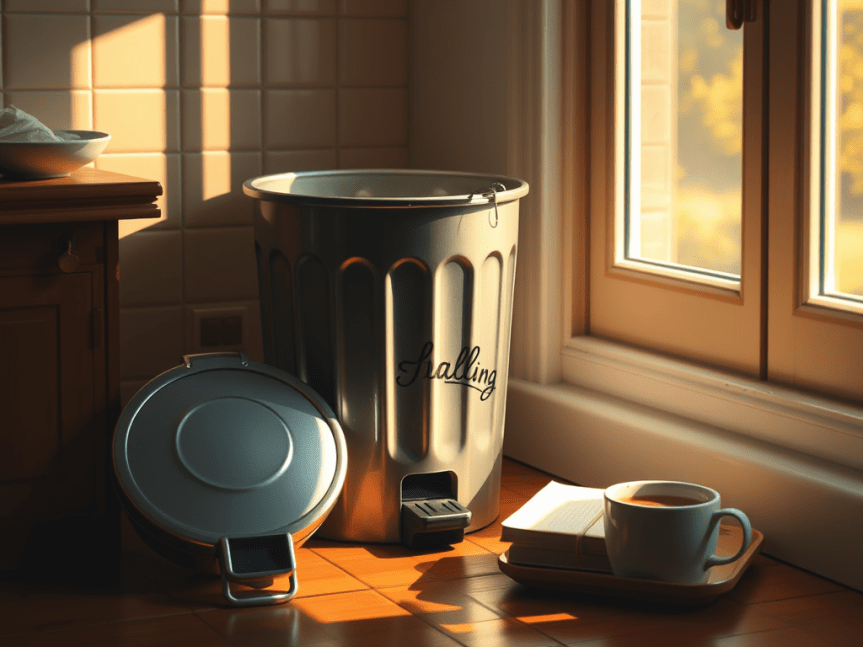









 I found that I owned over 40 different wine glasses for a person who does not drink wine. These glasses have been unused in my cabinet for the past 20 years and have been screaming (OK, not literally) at me to use them. What I “heard” was this: “I am made for celebrations and parties, not for display!” Glassware has a usefulness so I have always felt okay with collecting it. However, my wine goblets and pretty crystal stemware were not being used for their intended purpose. I decided to “rehome” most of them by donating most to my local
  I began to wonder why that is? How can the excess and free space impact me so immediately? I realized through my studies that “things” all have energy and operate at different levels of vibration. Or, the
  It is filled with old formal wear that no longer fits, concert t-shirts from the 80s, empty hangers, and all of my holiday decorations. It is time to clear that close because if my green blazer ever fit again, the shoulder pads would rival Joan Collins’ best day and, frankly, I’d never wear the jacket anyway unless it was Halloween and I was revisiting 40 years of history.) Yes, my personal clutter has gotten so bad that in order to clear out an entire room of my house, I need to clear a place to put the stuff out of the way.) So, before I can even work on the office, I plan to de-clutter my guest bedroom closet first which, having done my own closet years ago, should be relatively straight-forward. Once my guest bedroom closet is straightened up, I plan to then begin my office de-clutter. (Now you know why I planned a full week for this.)
 I’m already expecting that I will need to purchase cabinets and/or organizational tools to help me better place my things. Before I just go out willy-nilly to purchase something, I want to be really sure on where it is, what it is, and how I will use it. (See #4.)
 This is a new series I will be starting as a reflection of the month that just passed. I do so much living in my head with all of my best and worst memories keeping me company. Instead of just keeping them all company myself, you, Dear Reader, will be pleased to hear that I would prefer to leave the past back in my rear view mirror. Like many of you, we can do so much living in our memories that these experiences color our perspective of today. Today cannot be compared to anything: past or future. Sort of like, living in the present without the noose of the past, looking forward to what will be. (I highly recommend it.)

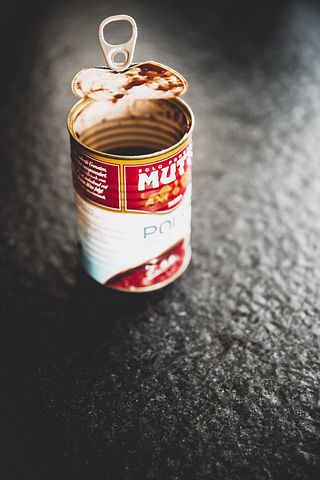 clearly is not “life or death” unless one is in
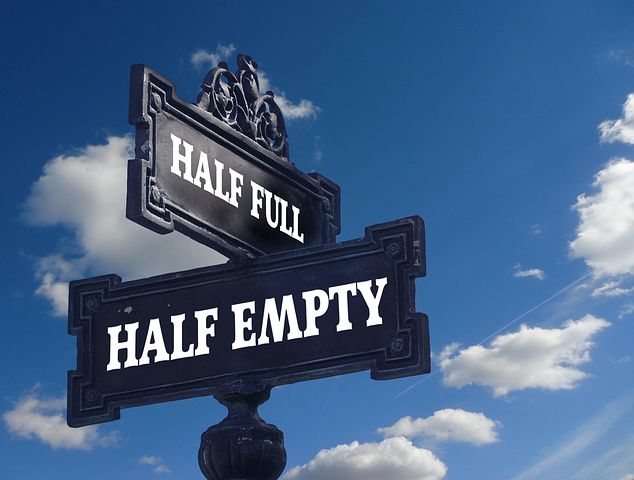 Perspective – in our news and our lives – is so important to maintain. When something doesn’t feel right to you, it helps to distance yourself and examine the situation without emotion, without judgment, and just be within the feeling. I’m currently working through the idea of resistance and how the resistance to the feeling actually magnifies the situation. I’ve come to also realize that how someone else “feels” is not really my business but their own. If feelings are to help shape perspective, who am I to deny you, Dear Reader, the ability to shape your own world just how you’d like it to be…for you.
 As I began to contemplate the “for me” aspect to my life, I began to journal and this helped me to get my thoughts out of my head and on to paper. Since I am a visual person, I’ve learned that writing things down when I’m bothered or when I have an important decision to make really helps clarify my thinking. I guess “seeing is believing” holds true in this aspect of mentagility, too. I’ve realized that everything in my life has happened for me to learn and respond to…there is no emotion that would need to be included here although I have certainly spiced my life with all kinds of emotions – good, bad, and everything in between. We all have done this, haven’t we? It is how we are taught to live our lives – or it is the lack of teaching at a young age that is now requiring correction as an adult. I cannot imagine what my life would look like now had I learned this at age 16 when first presented with these aspects of myself. I was unready for such knowledge as this greater understanding only comes after years of experience for the knowledge to really sink in. About two years ago, I heard the other voice that Singer describes and was startled at the realization of the voice in my head…and what it was saying that kept me so small. I wrote an entire blog post of the experience, too, without knowing just what happened and have an understanding of what this event meant to me and my future.


 The Wobble